


Your Journey, Our Expertise...
Menu

Yala Peak Climbing

15 Days • Strenuous • Best season: Autumn/ Spring
Yala Peak Climbing
Yala Peak Climbing
Yala Peak Climbing

Overview

Yala Peak Climbing is one of the most rewarding short climbing adventures in Nepal, perfect for trekkers who want to experience the thrill of mountaineering without extreme technical difficulty. Situated in the beautiful Langtang Valley, close to the Tibetan border, Yala Peak (5,520m) is considered a non-technical trekking peak, making it an excellent choice for both beginners and adventure enthusiasts.

This 15-day journey blends the cultural charm of the Tamang villages, the wilderness of Langtang National Park, and the alpine beauty of the Himalayas. Starting with a scenic drive from Kathmandu to Syabrubesi, the trek gradually ascends through lush forests, rivers, yak pastures, and Buddhist monasteries, reaching Kyanjin Gompa, a traditional village surrounded by towering snow peaks. Here, you’ll acclimatize and even hike to Tserko Ri for breathtaking mountain views before heading to Yala Base Camp.

The climb to Yala Peak is straightforward, requiring basic use of crampons and an ice axe. The summit rewards you with panoramic views of Shishapangma (8,027m) in Tibet, Langtang Lirung, Dorje Lakpa, and many other Himalayan giants. After the climb, the trek retraces the route back through Langtang Valley, returning to Kathmandu with unforgettable memories.

With a well-paced itinerary for acclimatization, professional climbing guides, and full support, Yala Peak is an ideal introduction to Himalayan climbing while also offering rich cultural and natural experiences.

Highlights of Yala Peak Climbing – 15 Days

  • Experience an adventurous climb to Yala Peak (5,520m), one of Nepal’s most accessible trekking peaks.
  • Explore the cultural richness of Langtang Valley, home to Tamang and Tibetan-influenced communities.
  • Visit the historic Kyanjin Gompa, a centuries-old monastery surrounded by snowcapped peaks.
  • Acclimatization hike to Tserko Ri (5,000m) for panoramic Himalayan views.
  • Witness diverse wildlife and landscapes inside Langtang National Park, including rhododendron forests, rivers, and yak pastures.
  • Stunning summit views of Shishapangma (8,027m) in Tibet, along with Langtang Lirung, Dorje Lakpa, Gangchempo, and more.
  • A balanced combination of trekking, cultural immersion, and mountaineering experience—ideal for beginners and intermediate climbers.
  • Guided by professional climbing experts with proper equipment and safety measures.

Yala Peak Climbing

Trekking & Hiking Adventure

Region Langtang Region
Duration 15 Days
Grade Strenuous
Meal B/L,D
Group Size 1-30
Accomodation Hotel/Lodge
Best Season Autumn/ Spring
Start/End Kathmandu
Max Altitude 5732
Activity Climbing
Day 1 — Arrival in Kathmandu
Elevation 1400 m

Upon arrival at Tribhuvan International Airport in Kathmandu, travelers are warmly welcomed by their guide and driver. After clearing immigration and collecting luggage, you’ll be transferred to your hotel in the city, where you can rest, refresh, and recover from your international flight. Depending on your arrival time, you may have the opportunity to explore the vibrant streets of Thamel, the main tourist hub, or enjoy a traditional Nepali meal at a local restaurant.

Kathmandu, the capital of Nepal, is a fascinating city that blends ancient culture with modern life. You’ll notice the bustling markets, colorful temples, prayer flags fluttering in the wind, and historic architecture as you walk through its streets. This day is primarily for adjusting to the city’s rhythm, resting, and preparing for your upcoming trekking adventure or sightseeing tour. Your guide will also provide a briefing on the trek ahead, including tips on packing, acclimatization, and local customs. Overnight stay is at a comfortable hotel in Kathmandu, offering a convenient base to begin your Nepal journey.

Accomodation: Hotel
Meals: Lunch & Dinner
Day 2 — Preparation & Briefings in Kathmandu
Elevation 1400 m

After breakfast at your hotel, the day is dedicated to preparing for your upcoming trek and optional Kathmandu sightseeing. Your guide will assist you with checking trekking gear, reviewing your itinerary, discussing acclimatization tips, and answering any last-minute questions to ensure you’re fully prepared for the adventure ahead.

For sightseeing, Kathmandu offers a wealth of cultural and historical attractions, including Swayambhunath (Monkey Temple), Boudhanath Stupa, Pashupatinath Temple, and the vibrant streets of Thamel. These visits provide a glimpse into Nepal’s rich heritage, spirituality, and local life, allowing travelers to connect with the country before setting off on the trek.

Note: You can choose to enjoy Kathmandu sightseeing either before your trek or after it concludes. Please note that only one day of sightseeing is included in your package. If you wish to explore the city on both days, additional costs may apply. This allows you to experience the highlights while keeping your trek schedule comfortable and focused.

Overnight stay is at a comfortable hotel in Kathmandu, giving you a chance to rest, enjoy city views, and finalize preparations for the adventure ahead.

Accomodation: Hotel
Meals: Breakfast, Lunch & Dinner
Day 3 — Drive from Kathmandu to Syabrubesi
Ups ↑ 150 m
Down ↓ 000 m
Elevation 1550 m
Distance ⟺ 122 km

The day starts early in Kathmandu (1,400 m / 4,593 ft) as you leave the busy city behind and head north toward the Langtang region, the gateway to Yala Peak Climbing. The drive follows the Pasang Lhamu Highway, gradually moving away from urban scenery into lush green hills, terraced farmlands, and winding river valleys.

As the road climbs higher, you pass through small roadside towns and villages, where local life unfolds—tea shops, prayer flags, schoolchildren, and farmers working their fields. The drive frequently follows the Trishuli River, whose fast-flowing turquoise water creates a constant companion throughout the journey. On clear days, you may catch distant views of snow-capped peaks and forested ridgelines, hinting at the Himalayan adventure ahead.

The final stretch becomes more mountainous and rugged, with narrow roads hugging steep hillsides. Waterfalls cascade down cliffs, and dense forests of pine and rhododendron surround the road. After several hours, you arrive at Syabrubesi (1,550 m / 5,085 ft)—a lively mountain village nestled beside the river. This village marks the official starting point of the Langtang Valley trek. The evening is spent resting at a comfortable lodge, enjoying a warm meal, and preparing mentally and physically for the trek that begins the next day.

Accomodation: Lodge
Meals: Breakfast, Lunch & Dinner
Duration: 6-8 hours
Day 4 — Trek from Syabrubesi to Lama Hotel
Ups ↑ 920 m
Down ↓ 200 m
Elevation 2470 m

The trekking journey officially begins from Syabrubesi (1,550 m / 5,085 ft) after an early breakfast. The trail starts by crossing a suspension bridge over the Bhote Koshi River, instantly immersing you in the Langtang region’s rugged landscape. Soon after, the path follows the Langtang Khola, winding through dense forests of oak, bamboo, and rhododendron, with the constant sound of rushing water beside you.

The trail gradually ascends and descends, passing through small settlements like Bamboo and Pairo, where simple tea houses offer rest stops for water and snacks. Along this section, trekkers may spot langur monkeys, red pandas (rare but possible), and various bird species, especially in the quieter forest stretches. Several wooden and suspension bridges cross roaring streams, adding adventure and variety to the walk.

After Bamboo, the trail becomes steeper, climbing steadily through thick forest and shaded paths. The air feels cooler, and the surroundings grow more peaceful as you gain altitude. By late afternoon, you arrive at Lama Hotel (2,470 m / 8,104 ft), a small cluster of lodges nestled deep within the forest. The evening is spent resting, enjoying a warm meal, and listening to the sounds of the river and forest, a perfect end to the first full trekking day.

Accomodation: Lodge
Meals: Breakfast, Lunch & Dinner
Duration: 5-6 hours
Day 5 — Trek from Lama Hotel to Langtang Village
Ups ↑ 960 m
Down ↓ 000 m
Elevation 3430 m
Distance ⟺ 14-15 km

The day begins quietly at Lama Hotel (2,470 m / 8,104 ft), surrounded by dense forest and the sound of the Langtang Khola flowing nearby. As you leave Lama Hotel, the trail immediately starts a steady uphill climb, winding through thick forests of pine, oak, and rhododendron. In spring, the rhododendrons add color to the path, while in autumn the forest feels crisp and golden. The ascent is gradual but consistent, allowing your body to continue adjusting to altitude.

As you gain height, the forest slowly begins to thin, and the trail opens up to wide alpine clearings and yak pastures. Small settlements such as Ghora Tabela appear along the way, where trekkers often stop for lunch or tea while enjoying the first real mountain views of the Langtang range. Here, you can clearly feel the transition from subtropical forest to high Himalayan terrain. Prayer flags, mani walls, and stone chortens become more frequent, signaling the strong Tibetan Buddhist influence of the region.

Continuing onward, the valley widens dramatically, revealing Langtang Lirung (7,227 m) rising high above the trail. The path follows the river through open landscapes, with glacial streams, grazing yaks, and traditional stone houses scattered across the valley floor. By late afternoon, you arrive at Langtang Village (3,430 m / 11,253 ft), a historic settlement rebuilt with resilience after the 2015 earthquake. The village offers comfortable lodges, warm meals, and stunning mountain surroundings, making it an ideal place to rest and reflect after a rewarding day of trekking.

Accomodation: Lodge
Meals: Breakfast, Lunch & Dinner
Duration: 5-6 hours
Day 6 — Trek from Langtang Village to Kyanjin Gompa
Ups ↑ 440 m
Down ↓ 000 m
Elevation 3870 m
Distance ⟺ 6-7 km

The day begins in the open valley of Langtang Village (3,430 m / 11,253 ft), where the morning light slowly touches the surrounding peaks. Leaving the village, the trail follows the Langtang Khola, moving gently upward through a wide alpine landscape. Unlike the forested days before, today’s walk feels more open and expansive, with snow-capped mountains dominating the horizon and the valley stretching far ahead.

The path passes yak pastures, stone huts, and mani walls, with prayer flags fluttering in the wind. You’ll cross small wooden bridges over glacial streams, their icy water flowing down from nearby glaciers. As you gain altitude, views of Langtang Lirung, Kimshung, Yala Peak, and Dorje Lakpa become more dramatic and constant. The trail remains relatively short and gradual, making it a comfortable trekking day while still gaining height.

By late morning or early afternoon, you reach Kyanjin Gompa (3,870 m / 12,697 ft), a peaceful settlement surrounded by towering peaks and glaciers. The area is famous for its ancient monastery, yak cheese factory, and incredible panoramic views. The afternoon is free to rest, explore the village, visit the monastery, or simply sit outside your lodge, soaking in the raw beauty of the Langtang Himalayas.

Accomodation: Lodge
Meals: Breakfast, Lunch & Dinner
Duration: 3-4 hours
Day 7 — Acclimatization & Exploration Day in Kyanjin Gompa (Tserko Ri / Kyanjin Ri hike)
Ups ↑ 1130 m
Down ↓ 1130 m
Elevation 5000 m
Distance ⟺ 7-8 km

Today is dedicated to acclimatization, which is crucial before moving higher toward Yala Peak. Instead of resting completely, the body adapts best by following the rule “climb high, sleep low.” After an early breakfast in Kyanjin Gompa (3,870 m / 12,697 ft), you head out for a day hike to either Kyanjin Ri or Tserko Ri, depending on fitness, weather, and energy levels.

Option 1: Kyanjin Ri (Approx. 4,350 m)

The hike to Kyanjin Ri begins directly behind the village, climbing steadily over rocky slopes and grassy ridges. The trail is short but steep, making you feel the altitude quickly. As you gain height, the entire Langtang Valley opens below, and you’re rewarded with stunning views of Langtang Lirung, Yala Peak, Dorje Lakpa, and Langshisha Ri. Prayer flags at the top mark the viewpoint, and the sense of height and silence is incredible.

Option 2: Tserko Ri (Approx. 5,000 m)

For strong and experienced trekkers, the hike to Tserko Ri is the ultimate acclimatization climb. The trail ascends gradually at first, crossing open alpine slopes and glacial terrain, before becoming steeper and more demanding. This hike pushes the body close to 5,000 meters, making it perfect preparation for Yala Peak. From the summit, you get one of the best panoramic views in the Langtang region, with snow-covered peaks and glaciers stretching endlessly in every direction.

After spending time at the viewpoint, taking photos, and allowing the body to adjust, you descend carefully back to Kyanjin Gompa. The afternoon is free to rest, hydrate, enjoy warm meals, and explore the village, including the ancient monastery and yak cheese factory. The evening feels calm and confident—you can feel your body adapting, and the mountains no longer feel distant.

Accomodation: Lodge
Meals: Breakfast, Lunch & Dinner
Duration: 6-7 hours
Day 8 — Trek from Kyanjin Gompa to Yala Peak Base Camp
Ups ↑ 1230 m
Down ↓ 000 m
Elevation 5100 m
Distance ⟺ 8-9 km

Today, the trek takes you from Kyanjin Gompa (3,870 m / 12,697 ft) to Yala Peak Base Camp (5,100 m / 16,732 ft), marking the start of the high-altitude climbing section. The trail begins with a gradual ascent through moraine slopes and glacial streams, offering trekkers breathtaking views of Langtang Lirung (7,227 m), Langshisha Ri, and other surrounding peaks.

Along the way, trekkers will encounter small glacial lakes, scattered rock formations, and patches of alpine meadows, providing excellent opportunities for photos and acclimatization stops. Navigating rocky trails and small ice patches requires careful pacing, as altitude and rugged terrain make this a moderately challenging trek.

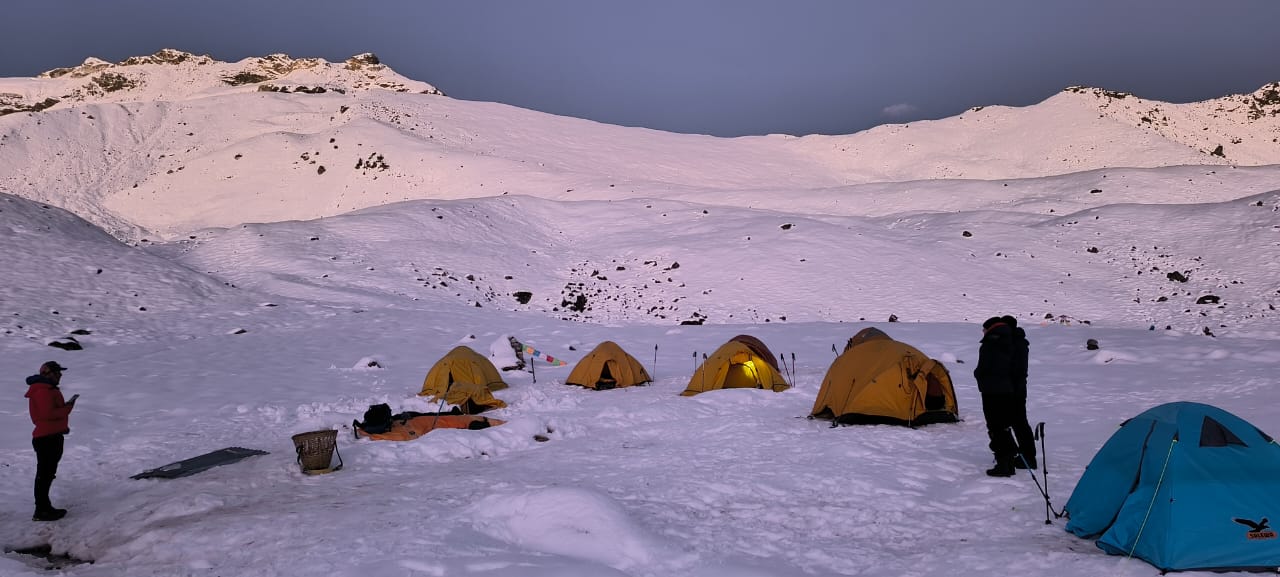
Arriving at Yala Peak Base Camp, climbers are greeted with dramatic views of Yala Peak (5,520 m / 18,110 ft) and its glacial approach, giving a first sense of the challenge ahead. The base camp offers tent accommodations and lodges, where climbers can rest, organize gear, and prepare for the summit attempt. This day is crucial for both physical and mental preparation, as the next day involves the summit climb.

Accomodation: Camp
Meals: Breakfast, Lunch & Dinner
Duration: 5-6 hours
Day 9 — Summit Yala Peak & Return to Base Camp
Ups ↑ 420 m
Down ↓ 420 m
Elevation 5520 m
Distance ⟺ 6-7 km

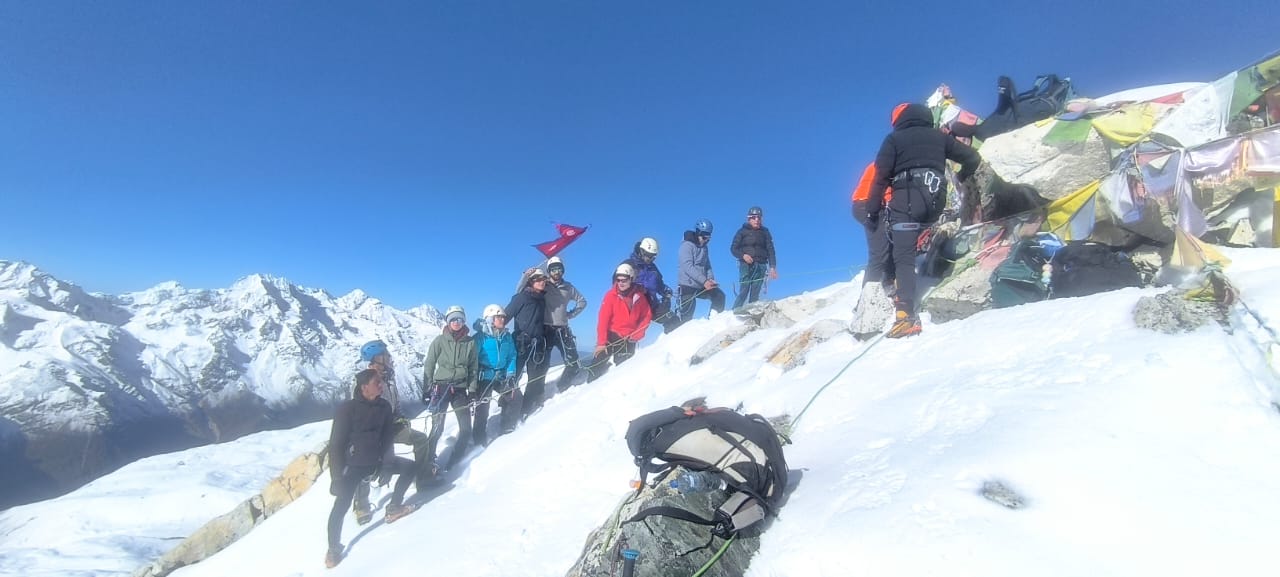
The day begins very early, usually around 2–3 AM, to take advantage of stable weather and firmer snow during the pre-dawn hours. Trekkers depart from Yala Peak Base Camp (5,100 m / 16,732 ft) and start ascending the glacial slopes toward the summit (5,520 m / 18,110 ft). The climb involves walking on snowfields, negotiating icy patches with crampons, and using ropes in steeper sections, guided by experienced mountaineering guides.

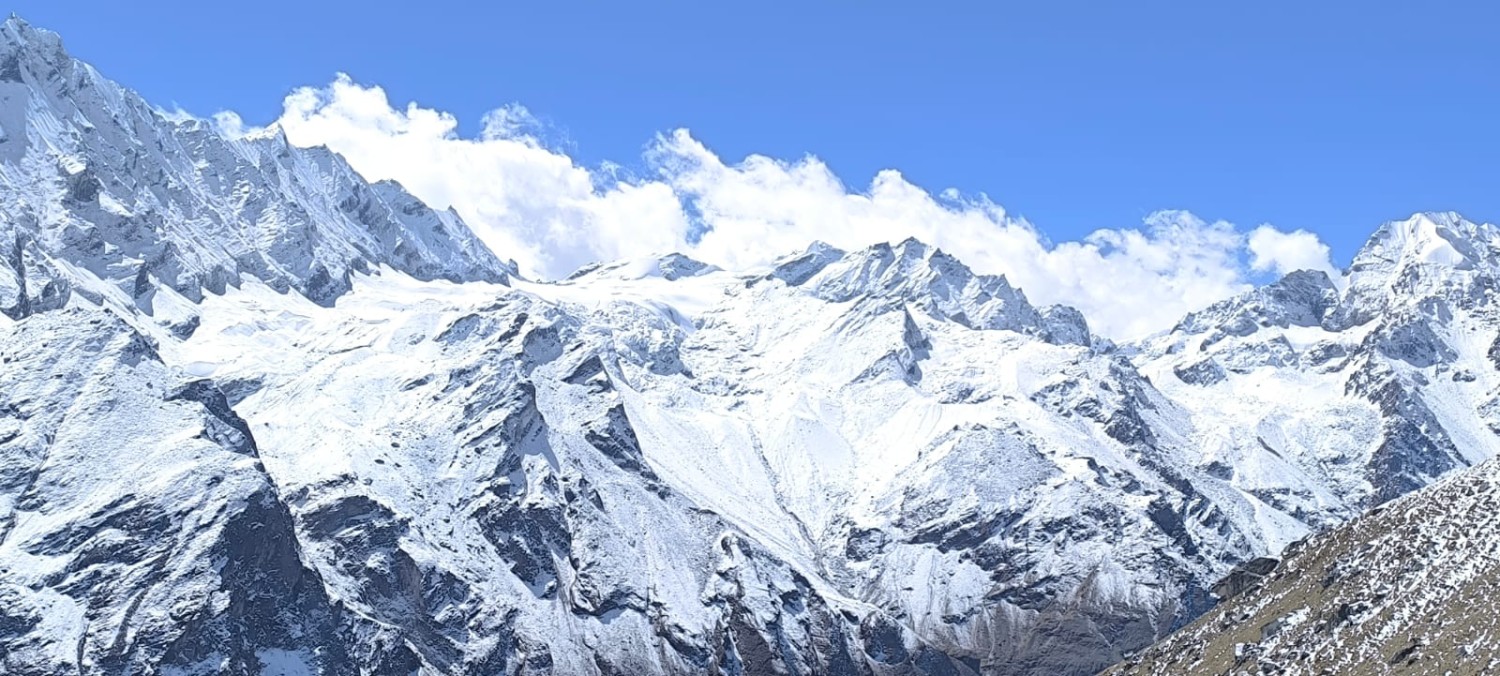
As you ascend, the surrounding Himalayan panorama unfolds—Langtang Lirung, Ganesh Himal, Dorje Lakpa, and surrounding peaks dominate the skyline, while the glaciers and moraines below shimmer in early sunlight. At the summit, trekkers are rewarded with 360-degree panoramic views, offering an unforgettable sense of achievement and the perfect photo opportunity.

After spending some time at the summit, trekkers carefully descend the same route back to Base Camp, navigating the glacial slopes and rocky sections with caution. The afternoon is spent resting, hydrating, and celebrating the successful climb at Base Camp. This day is physically demanding but immensely rewarding, completing the Yala Peak adventure.

Accomodation: Camp
Meals: Breakfast, Lunch & Dinner
Duration: 8-10 hours
Day 10 — Yala Peak Base Camp to Kyanjin Gompa
Ups ↑ 000 m
Down ↓ 1230 m
Elevation 5100 m
Distance ⟺ 8-9 km

After the exhilaration of the summit, today’s trek is a descend-focused day, taking you from Yala Peak Base Camp (5,100 m / 16,732 ft) back to Kyanjin Gompa (3,870 m / 12,697 ft). The trail winds down across glacial moraines, rocky slopes, and alpine meadows, offering a more relaxed pace compared to the previous summit climb.

Along the descent, trekkers can pause to admire the vast Himalayan panorama, including Langtang Lirung, Langshisha Ri, and the surrounding snow-capped peaks. The glacial streams and small lakes encountered en route add to the scenic charm, and trekkers may also spot mountain wildlife like Himalayan blue sheep or birds. The gradual descent helps the body recover from high-altitude exertion while allowing plenty of photo stops and rest breaks.

Upon reaching Kyanjin Gompa, trekkers are welcomed back with lodge accommodations, where they can rest, enjoy warm meals, and reflect on the successful summit climb. The day offers a mix of achievement, recovery, and continued Himalayan beauty, making it a satisfying conclusion to the high-altitude section of the trek.

Accomodation: Lodge
Meals: Breakfast, Lunch & Dinner
Duration: 4-5 hours
Day 11 — Kyanjin Gompa to Lama Hotel
Ups ↑ 000 m
Down ↓ 1470 m
Elevation 3870 m
Distance ⟺ 10-11 km

After the high-altitude adventure, today’s trek is a descent-focused day, taking you from Kyanjin Gompa (3,870 m / 12,697 ft) down to Lama Hotel (2,400 m / 7,874 ft). The trail gradually winds through rhododendron forests, small streams, and terraced fields, providing a soothing and picturesque route compared to the summit climb.

Along the way, trekkers pass through Langtang village ruins and alpine meadows, offering excellent spots for photo stops and short breaks. The Langtang River flows nearby, and several wooden suspension bridges add charm and excitement to the descent. The trail is mostly downhill with gentle slopes, allowing for relaxed pacing and recovery, and trekkers can enjoy views of Langtang Lirung and Langshisha Ri from different angles.

Upon arrival at Lama Hotel, trekkers are greeted with comfortable lodge accommodations, hot meals, and a chance to rest after the high-altitude trekking. This day allows the body to gradually adjust to lower elevations while reflecting on the success of summiting Yala Peak.

Accomodation: Lodge
Meals: Breakfast, Lunch & Dinner
Duration: 5-6 hours
Day 12 — Trek from Lama Hotel to Syabrubesi
Ups ↑ 000 m
Down ↓ 850 m
Elevation 2400 m
Distance ⟺ 15 km

Today’s trek is the final walking day of the Yala Peak adventure, as you descend from Lama Hotel (2,400 m / 7,874 ft) to Syabrubesi (1,550 m / 5,085 ft). The trail follows the Langtang Khola valley, weaving through lush forests of pine, oak, and rhododendron, with the soothing sound of flowing streams accompanying the journey.

Along the route, trekkers cross several suspension bridges spanning glacial rivers and enjoy panoramic views of surrounding peaks like Langtang Lirung in the distance. You pass through small villages and terraced fields, catching glimpses of local life and culture. The trail is mostly downhill, allowing for a leisurely pace, giving your legs a gentle finish after several high-altitude days.

Upon reaching Syabrubesi, trekkers are welcomed back to comfortable lodges with hot meals and a chance to relax and reflect on the successful Yala Peak climb. This day also offers the opportunity to interact with local Tamang communities and enjoy the peaceful Langtang Valley environment one last time.

Accomodation: Lodge
Meals: Breakfast, Lunch & Dinner
Duration: 5-6 hours
Day 13 — Drive from Syabrubesi to Kathmandu
Ups ↑ 000 m
Down ↓ 150 m
Elevation 1550 m
Distance ⟺ 115 km

Today marks the conclusion of the Yala Peak Climbing adventure as you journey from Syabrubesi (1,550 m / 5,085 ft) back to Kathmandu (1,400 m / 4,593 ft). The day begins with a scenic drive through the Langtang Valley, descending past small villages, terraced fields, and riverside settlements. The drive offers panoramic views of the surrounding mountains, including Langtang Lirung in the distance, providing a last glimpse of the Himalayan landscape.

Along the route, you may stop at local villages or viewpoints to capture the picturesque scenery, interact with Tamang and Sherpa communities, and enjoy traditional Nepalese hospitality. The road winds through dense forests and riverside paths, giving a sense of continuity from the trekking adventure to a more relaxed journey. Upon arrival in Kathmandu, you are transferred to your hotel, where you can rest, freshen up, and celebrate the successful completion of Yala Peak.

Accomodation: Hotel
Meals: Breakfast, Lunch & Dinner
Duration: 5-6 hours
Day 14 — Kathmandu Sightseeing

After the exhilarating Yala Peak adventure, today is a relaxing and cultural exploration day in Kathmandu, giving trekkers a chance to soak in Nepal’s rich heritage. The day typically includes visits to the famous Pashupatinath Temple, one of the most sacred Hindu temples in the world, where you can witness rituals and the serene Bagmati River, and the Boudhanath Stupa, a UNESCO World Heritage site and a spiritual hub for Tibetan Buddhism.

The tour continues to Kathmandu Durbar Square, showcasing ancient palaces, temples, and traditional architecture, providing an excellent opportunity to photograph centuries-old carvings and cultural sites. Depending on time and preference, you can also explore Swayambhunath Stupa (Monkey Temple), perched atop a hill with panoramic views of the Kathmandu Valley. Throughout the day, travelers can shop for local handicrafts, Tibetan artifacts, and souvenirs, and enjoy authentic Nepalese cuisine at local cafes or restaurants.

Note:

You can choose to do Kathmandu sightseeing either before or after the trek, but only one day of sightseeing is included. If you wish to extend and visit additional sites on both days, an extra cost may apply.

Accomodation: Hotel
Meals: Breakfast/Lunch/Dinner
Day 15 — Departure Day

Today marks the conclusion of your Yala Peak Climbing adventure with Nepal Voyage Treks. After breakfast at your hotel in Kathmandu, you will be transferred to Tribhuvan International Airport for your onward journey. The day is designed to be relaxed and stress-free, allowing you time to reflect on the memories, achievements, and breathtaking Himalayan experiences from the trek.

This is also the perfect moment to exchange contacts with fellow trekkers and guides, and if time permits, to purchase any last-minute souvenirs from local shops. As you board your flight, the majestic Himalayan ranges fade into the horizon, leaving you with unforgettable memories of high-altitude adventure, Sherpa culture, and Nepal’s natural beauty.

Meals: Breakfast
Cost Includes
  • Airport pick-up and drop-off by private vehicle.
  • 3 nights’ accommodation in Kathmandu at a 3-star category hotel with breakfast.
  • Best available teahouse/lodge accommodation during the trek.
  • Camping accommodation at Yala Peak Base Camp (tents, mats, and all necessary gear).
  • All meals during the trek and climb (breakfast, lunch, dinner with tea/coffee).
  • Licensed and experienced English-speaking trekking guide.
  • Professional climbing guide (Sherpa) with all wages, equipment, and insurance.
  • Porters to carry luggage (1 porter for every 2 trekkers; max weight 15kg per trekker).
  • Climbing permit for Yala Peak, Langtang National Park entry permit, and TIMS card.
  • Group medical kit and safety equipment.
  • Farewell dinner in Kathmandu with cultural program.
Cost Excludes
  • International airfare to/from Kathmandu, Nepal.
  • Nepal entry visa fee (available on arrival at Kathmandu Airport).
  • Personal travel insurance covering emergency rescue and medical expenses.
  • Meals in Kathmandu (except breakfast and farewell dinner).
  • Personal climbing gear (boots, crampons, ice axe, harness, sleeping bag, etc.).
  • Alcoholic beverages, soft drinks, bottled water, and snacks during trek.
  • Tips for guides, porters, and drivers (customary but not compulsory).
  • Costs due to delays, natural disasters, flight cancellations, or personal reasons.
All Information
Equipment Checklist for Yala Peak Climbing

Equipment Checklist

FAQs

Yala Peak is considered a moderate trekking peak, suitable for climbers with basic mountaineering experience. The trek includes altitude gain up to 5,500 meters (Yala Peak summit), requiring good physical fitness, stamina, and acclimatization. While technical climbing skills are minimal, you will need to use basic mountaineering equipment like crampons, harness, and ice axe under the guidance of an experienced climbing Sherpa.

The ideal climbing seasons are spring (March to May) and autumn (September to November). During these months, the weather is generally clear, temperatures are moderate, and the Himalayan views are spectacular. Winter can be extremely cold with heavy snow, making climbing more challenging, while the monsoon season (June–August) brings heavy rainfall, slippery trails, and higher risks of landslides.

No advanced experience is required, but basic trekking experience is recommended. You will receive professional guidance from licensed climbing Sherpas, who will train you in the use of ropes, crampons, and ice axes before the summit push. Climbers should be comfortable with moderate altitude trekking and physical exertion for multiple days.

To climb Yala Peak, you will need the Yala Peak climbing permit, issued by the Nepal Mountaineering Association (NMA). Additionally, a Langtang National Park entry permit and Trekking Information Management System (TIMS) card are mandatory. All permits are arranged and included in the package, so travelers don’t need to worry about the paperwork.

Accommodation is a combination of teahouses/lodges during the trek and camping at Yala Base Camp. Teahouses offer basic rooms with attached or shared bathrooms, while meals are provided throughout the trek. In Kathmandu, you will stay in a 3-star hotel with breakfast, and a farewell dinner is included at the end of your journey.


During the trek, meals include Nepali, Tibetan, and continental options. Typical dishes include dal bhat (lentils with rice), noodles, soups, potatoes, and bread, along with tea and coffee. At the Base Camp, meals are simple but nutritious to provide energy for climbing. Travelers with special dietary requirements (vegetarian, vegan, gluten-free) can request adjustments in advance.


Yes, Yala Peak reaches an elevation of around 5,500 meters, so altitude sickness can occur. To reduce risks, the itinerary includes gradual acclimatization days, and guides will monitor your health closely. Common symptoms include headache, nausea, and fatigue. Staying hydrated, avoiding alcohol, and following the guide’s advice are essential for safe climbing.


The climbing package includes group technical gear such as ropes, harnesses, and ice axes. Personal gear you need to bring includes:

  • Climbing boots and trekking shoes
  • Warm clothing layers (thermal wear, fleece jacket, down jacket)
  • Gloves, hat, and sunglasses
  • Sleeping bag (rated for -15°C to -20°C)
  • Trekking poles
  • Backpack (30–40L for day use)

Yala Peak is suitable for moderate to fit trekkers. You should be able to walk 5–6 hours daily on hilly terrain, carry a daypack, and endure cold temperatures at higher altitudes. Pre-trip preparation with cardio exercises, hiking practice, and strength training is highly recommended to increase your success rate.

Yes, while the package includes 1 porter for every 2 trekkers and an experienced climbing Sherpa, you can hire additional porters if needed. This can help reduce your load and make the trek more comfortable, especially during the summit push.

Yes, travel insurance is mandatory for Yala Peak Climbing. It should cover emergency evacuation, helicopter rescue, medical treatment at high altitude, and trip cancellations. Your safety is a priority, and insurance ensures peace of mind in case of unforeseen events.

From the Yala Peak summit, you will enjoy panoramic Himalayan views, including Cho Oyu, Makalu, and other prominent peaks. The experience is rewarding, offering a mix of snow-capped mountains, glaciers, and the unique landscape of the Langtang region. Photographers and climbers alike will appreciate the 360-degree vistas.

#See Similar Trips

ASSOCIATED WITH

Tourism Board
Nepal Government
Keep
NMA Nepal
TAAN

WE ACCEPT