


Your Journey, Our Expertise...
Menu

Makalu Sherpani Col Pass Trek

22 Days •
Makalu Sherpani Col Pass Trek

Overview

The Makalu Sherpani Col Pass Trek is one of the most adventurous and challenging treks in Nepal, designed for trekkers seeking an expedition-style journey through remote valleys, glaciers, and high passes. Unlike popular routes such as Everest or Annapurna, this trek takes you deep into the Makalu-Barun National Park, a region known for its untouched wilderness, rare wildlife, and close encounters with Himalayan culture. Over the course of 22 days, you’ll journey from lush subtropical forests to the icy high-altitude world of snow-capped giants.

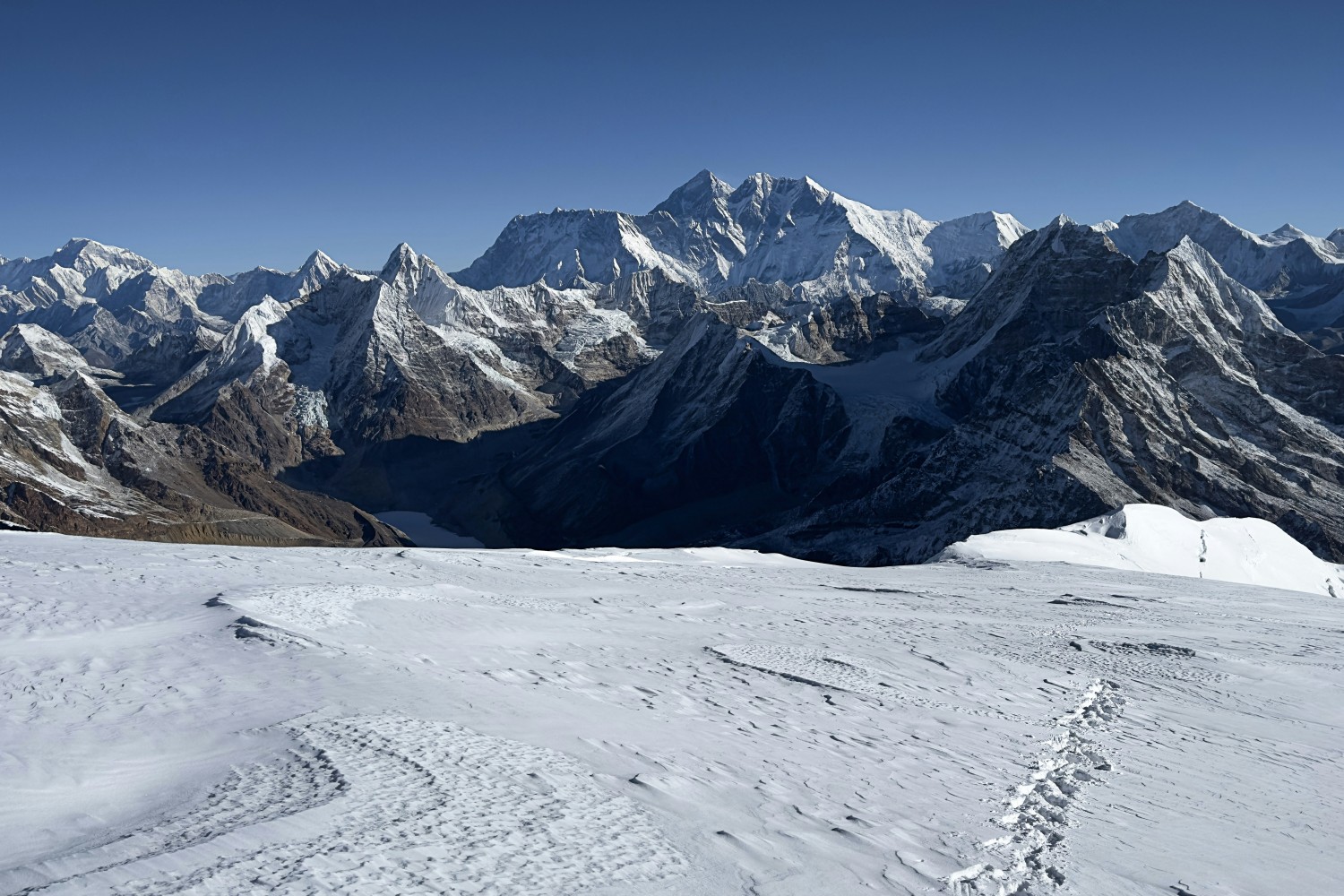
The adventure begins with a scenic flight to Tumlingtar and a jeep ride to Chichila, where the trekking trail officially starts. From here, you’ll pass through rhododendron forests, terraced fields, and villages like Seduwa and Tashi Gaon before leaving permanent settlements behind. As the trail climbs higher, the landscapes change dramatically—alpine ridges, yak pastures, and rugged moraine valleys lead the way to Makalu Base Camp (4,870m). Standing here, you’ll be face-to-face with Mount Makalu (8,485m), the world’s fifth-highest peak, alongside sweeping views of Everest, Lhotse, and Chamlang.

What sets this trek apart are the technical crossings of three legendary high passes: Sherpani Col (6,135m), West Col (6,143m), and Amphu Laptsa Pass (5,845m). These are not simple trails; they demand the use of ropes, crampons, and ice axes, making the trek both physically and mentally demanding. With the support of experienced guides and climbing Sherpas, trekkers navigate icy ridges, glacial moraines, and rope-assisted descents. The sense of achievement when you stand atop these passes, surrounded by towering Himalayan walls, is beyond words.

After crossing into the Everest region, the trek gradually transitions from isolated wilderness to lively Sherpa villages like Chhukung and Tengboche. Here, you’ll experience the warmth of Sherpa hospitality, Buddhist monasteries, and trails dotted with prayer flags and mani stones. Finally, the trek concludes in Lukla, where you’ll fly back to Kathmandu, carrying unforgettable memories of one of the toughest and most rewarding treks in the Himalayas.

The Makalu Sherpani Col Pass Trek is perfect for seasoned trekkers who dream of pushing their limits on remote trails, sleeping under the stars in high-altitude camps, and connecting two iconic regions—Makalu and Everest—in a single epic journey. If you’re looking for a true Himalayan adventure that combines culture, wilderness, and high-altitude challenges, this trek is an experience of a lifetime.

Makalu Sherpani Col Pass Trek

Trekking & Hiking Adventure

Region Kanchenjunga and Makalu Region
Day 1 — Fly Kathmandu to Tumlingtar, Drive to Chichila
Ups ↑ 600 m
Down ↓ 20 m
Elevation 1980 m

The adventure begins with a scenic flight from Kathmandu to Tumlingtar, flying eastward with views of Everest, Makalu, and Ganesh Himal. The landscape quickly shifts from the busy Kathmandu Valley to terraced fields and the lush Arun Valley. From Tumlingtar, a jeep drive winds through hills and villages before reaching Chichila, a small settlement surrounded by forests. Here you will meet your camping crew, who will be with you for the entire trek. Overnight at a tea house with meals included, marking the beginning of your Himalayan journey.

Accomodation: Teahouse
Meals: Lunch/Dinner
Day 2 — Trek from Chichila to Num
Ups ↑ 250 m
Down ↓ 1190 m
Elevation 1040 m

Your first day on foot takes you through rhododendron forests, which bloom beautifully in spring. The trail descends steadily until you reach the Arun River, crossing the first of many suspension bridges on this trek. Along the way, enjoy sweeping valley views and occasional encounters with locals carrying goods along the path. While the descent is long, it provides a chance to adjust to trekking rhythms. Overnight in Num at a tea house with full board.

Accomodation: Teahouse
Meals: Breakfast/Lunch/Dinner
Day 3 — Trek from Num to Seduwa
Ups ↑ 600 m
Down ↓ 140 m
Elevation 1500 m

A steep descent begins the day, dropping to the Barun River, where another suspension bridge crossing awaits. From here, the trail climbs sharply into the Makalu Barun National Park. Your trekking permits are checked before continuing uphill through forests and small hamlets. The trail is challenging, but Seduwa offers relief with its terraced fields and views of the valley below. Overnight in Seduwa, where tea houses provide hearty meals and rustic lodging.

Accomodation: Tea House
Meals: Breakfast/Lunch/Dinner
Day 4 — Trek from Seduwa to Tashi Gaon
Ups ↑ 650 m
Down ↓ 50 m
Elevation 2100 m

The trail leads through picturesque rhododendron forests and small settlements, including Hindrungma and Rupisa. The path climbs steadily but allows time to enjoy the cultural beauty of traditional villages. Tashi Gaon is the last permanent settlement on the way to Makalu Base Camp. Here, you can observe local farming practices and Sherpa culture. Overnight at a tea house, enjoying warm hospitality in this remote mountain village.

Accomodation: Tea House
Meals: Breakfast/Lunch/Dinner
Day 5 — Trek from Tashi Gaon to Khongma Danda
Ups ↑ 1450 m
Down ↓ 50 m
Elevation 3500 m

Today is one of the more demanding climbing days, with a steep ascent through thick forests and alpine meadows. Along the way, you’ll stop at Dhara, a small spot with a natural spring, perfect for a lunch break. The views become more dramatic as you ascend, revealing Chamlang, Peak 6, and Makalu itself. Khongma Danda, perched on a ridge, provides spectacular mountain vistas. Overnight at a lodge or tented camp with meals included.

Accomodation: Lodge
Meals: Breakfast/Lunch/Dinner
Day 6 — Acclimatization Day in Khongma Danda (3,500m / 11,482ft)
Elevation 3500 m

This day is dedicated to acclimatization as you prepare for higher altitudes. You can explore nearby ridges for short hikes, practicing slow ascents and hydration. Khongma is home to local Sherpa families, giving insight into daily life in the mountains. The day also allows you to rest, catch up with your team, and enjoy hearty camp meals. Overnight at Khongma Danda in a tea house or camping setup.

Accomodation: Tea House
Meals: Breakfast/Lunch/Dinner
Day 7 — Trek from Khongma Danda to Dobato
Ups ↑ 750 m
Down ↓ 750 m
Elevation 4170 m

Today you cross two passes – Ghungru La (4,055m) and Keke La (4,170m). The ascents are steady but rewarding, with breathtaking panoramas of Makalu and neighboring peaks. Trails pass through alpine ridges with occasional snow patches. Descend gradually into Dobato, a meadow-like settlement surrounded by forests. Overnight at a tea house with simple meals and accommodation.

Accomodation: Tea House
Meals: Breakfast/Lunch/Dinner
Day 8 — Trek from Dobato to Yangla Kharka
Ups ↑ 400 m
Down ↓ 350 m
Elevation 3557 m

The day begins with a descent through rhododendron and fir forests until you reach the Barun River. Following the river upstream, you’ll pass yak pastures and alpine meadows. The sight of grazing animals with mountain backdrops creates postcard-worthy scenes. Yangla Kharka offers a wide meadow camp, ideal for stargazing in the clear Himalayan sky. Overnight at a tea house or campsite.

Accomodation: Tea House
Meals: Breakfast/Lunch/Dinner
Day 9 — Trek from Yangla Kharka to Langmale Kharka
Ups ↑ 900 m
Down ↓ 50 m
Elevation 4410 m

Climbing higher into alpine landscapes, today is a steady ascent through rocky meadows and forest remnants. The altitude gain is significant, so trekking slowly and drinking water is crucial. Yak herders use these pastures in summer, giving a glimpse into high-altitude lifestyles. The views expand to include Chamlang, Peak 3, Peak 4, and Hongku Chuli. Overnight at Langmale Kharka with simple tea house lodging.

Accomodation: Tea House
Meals: Breakfast/Lunch/Dinner
Day 10 — Trek to Makalu Base Camp
Ups ↑ 500 m
Down ↓ 40 m
Elevation 4870 m

A demanding but rewarding day takes you to Makalu Base Camp, your first major milestone. The trail follows moraine ridges and glacial paths, sometimes requiring crampons in icy sections. Upon reaching base camp, you’ll stand before Makalu, the fifth-highest mountain in the world (8,485m). Views also include the Kangshung Face of Everest and the Barun Glacier. Overnight at a lodge or camping ground at base camp.

Accomodation: Lodge
Meals: Breakfast/Lunch/Dinner
Day 11 — Trek to Swiss Base Camp
Ups ↑ 400 m
Down ↓ 120 m
Elevation 5150 m

The route follows the western edge of the Barun Glacier, climbing gradually on rocky trails. Views of Everest, Lhotse, and Makalu’s ridges dominate the horizon. The moraine terrain is rugged and slow-going, but incredibly scenic. Swiss Base Camp sits in an isolated, dramatic location, surrounded by towering ice walls. Overnight camping at Swiss Base Camp with full board.

Accomodation: Camp
Meals: Breakfast/Lunch/Dinner
Day 12 — Acclimatization at Swiss Base Camp (5,150m / 16,896ft)
Elevation 5150 m

At this altitude, rest is essential before attempting higher passes. Spend the day exploring nearby ridges for short acclimatization hikes. Keep an eye out for alpine wildlife such as snow pigeons or blue sheep. The atmosphere at camp is peaceful, with close-up views of glaciers and snow ridges. Overnight at Swiss Base Camp with meals provided.

Accomodation: Camp
Meals: Breakfast/Lunch/Dinner
Day 13 — Day 13 – Trek to Sherpani Col Base Camp
Ups ↑ 600 m
Down ↓ 60 m
Elevation 5688 m

Leaving Swiss Base Camp, the trail climbs over rocky slopes and loose scree, demanding careful footing. The rugged terrain mirrors the towering icy peaks around you, creating an intense but awe-inspiring day. While the altitude gain is not extreme in distance, trekking here is slow due to thin air. Sherpani Col Base Camp is located in a stark but beautiful valley beneath snow ridges. Rest, hydrate, and prepare mentally for tomorrow’s big pass crossing. Overnight camping at Sherpani Col Base Camp.

Accomodation: Camp
Meals: Breakfast/Lunch/Dinner
Day 14 — Cross Sherpani Col & West Col to Baruntse Camp
Ups ↑ 750 m
Down ↓ 400 m
Elevation 6050 m

This is the hardest and longest day of the trek, crossing two high passes – Sherpani Col (6,155m) and West Col (6,143m). You’ll start before dawn to avoid high winds and cross snowfields with fixed ropes for safety. The climbs are steep, and crampons and ice axes may be required depending on conditions. From the top, the panorama of Makalu, Baruntse, and Everest is absolutely breathtaking. After descending into the Hunku Glacier Valley, you’ll set up camp at Baruntse Base Camp, exhausted but rewarded. Overnight at Baruntse Camp.

Accomodation: Camp
Meals: Breakfast/Lunch/Dinner
Day 15 — Trek to Honku Basin
Ups ↑ 150 m
Down ↓ 700 m
Elevation 5500 m

After yesterday’s intense crossing, today feels easier as you descend gradually into the Honku Basin. The landscape is glacial, filled with rocky moraines and icy streams. Breathing feels easier as the altitude decreases, though the trail is still rugged and remote. The Honku Basin is known for its wide open valley views surrounded by towering Himalayan peaks. Camping here provides a peaceful and scenic atmosphere, ideal for recovery. Overnight in tents at Honku Basin.

Accomodation: Camp
Meals: Breakfast/Lunch/Dinner
Day 16 — Trek to Amphu Laptsa Base Camp
Ups ↑ 300 m
Down ↓ 250 m
Elevation 5527 m

The trail ascends again, following rocky moraines and icy ridges toward Amphu Laptsa Base Camp. Though not a long trek, the altitude and terrain make progress slow and steady. You’ll walk past glacial lakes and snow-covered slopes, surrounded by the jagged peaks of the Hunku Valley. Amphu Laptsa Base Camp is nestled in a stunning location, serving as your staging point for tomorrow’s challenging pass. Rest well and prepare for the final technical crossing. Overnight camping.

Accomodation: Camp
Meals: Breakfast/Lunch/Dinner
Day 17 — Acclimatization Day at Amphu Laptsa Base Camp (5,527m / 18,134ft)
Elevation 5527 m

At this altitude, a rest day is essential before crossing Amphu Laptsa Pass. Spend the day hydrating, eating well, and taking short acclimatization hikes around the base camp. The surrounding views of glaciers and ice cliffs are mesmerizing, giving plenty of opportunities for exploration and photography. The crew may check and prepare climbing gear for the next day’s technical section. Overnight camping at Amphu Laptsa Base Camp.

Accomodation: Camp
Meals: Breakfast/Lunch/Dinner
Day 18 — Cross Amphu Laptsa Pass to Chukung
Ups ↑ 450 m
Down ↓ 1200 m
Elevation 4730 m

Today is another highlight and technical section of the trek. You will cross Amphu Laptsa Pass (approx. 5,845m), using ropes and crampons for safety. From the top, the view opens dramatically to Ama Dablam, Lhotse, and the South Face of Everest. After descending carefully into the Imja Valley, you’ll notice more trekkers and lodges as you enter the Everest Region. Chukung is a lively village with good tea houses, marking a return to relative comfort. Overnight at a lodge in Chukung.

Accomodation: Lodge
Meals: Breakfast/Lunch/Dinner
Day 19 — Trek from Chukung to Tengboche
Ups ↑ 300 m
Down ↓ 1070 m
Elevation 3960 m

The trail descends through Imja Valley, passing Dingboche and Pangboche, traditional Sherpa villages with rich Buddhist heritage. You can stop to visit Pangboche Monastery, one of the oldest in the Khumbu region. The route offers superb views of Ama Dablam, Thamserku, and Everest along the way. Tengboche is famous for its monastery, the spiritual heart of the Khumbu, where monks conduct daily ceremonies. Overnight at a tea house near Tengboche Monastery.

Accomodation: Tea House
Meals: Breakfast/Lunch/Dinner
Day 20 — Trek from Tengboche to Monjo
Ups ↑ 300 m
Down ↓ 1560 m
Elevation 2700 m

A long day of descent awaits as you trek through forests of pine and rhododendron, crossing suspension bridges over the Dudh Kosi River. You’ll pass through Namche Bazaar, the bustling Sherpa capital, where you may stop for lunch or coffee. After Namche, the trail descends steeply with multiple river crossings. Monjo lies at the edge of Sagarmatha National Park, surrounded by greenery and terraced fields. Overnight at a tea house with hearty local meals.

Accomodation: Tea House
Meals: Breakfast/Lunch/Dinner
Day 21 — Trek from Monjo to Lukla
Ups ↑ 300 m
Down ↓ 160 m
Elevation 2840 m

The final day of trekking takes you through charming Sherpa villages and across several suspension bridges. The trail undulates but feels easier as you near Lukla. This is your last night in the mountains, and a chance to celebrate with your guide and porters. Reflect on the incredible journey across some of Nepal’s toughest and most remote passes. Overnight at a lodge in Lukla.

Accomodation: Lodge
Meals: Breakfast/Lunch/Dinner
Day 22 — Fly from Lukla to Kathmandu
Down ↓ 1440 m
Elevation 1400 m

An early morning flight brings you back to Kathmandu, offering final aerial views of the Himalayas. Depending on flight schedules, you may land directly in Kathmandu or at Ramechhap, with a road transfer to the capital. On arrival, your guide will escort you to your hotel, where hot showers and city comforts await. In the evening, enjoy a farewell dinner to celebrate the completion of your trek. Overnight at a hotel in Kathmandu.

Accomodation: Hotel in Kathmandu
Meals: Breakfast
Cost Includes
  • Airport transfers: Pick-up and drop-off in Kathmandu on arrival and departure.
  • Accommodation in Kathmandu with breakfast before and after the trek.
  • Domestic flights between Kathmandu – Tumlingtar – Kathmandu.
  • Licensed and experienced trekking guide and climbing Sherpa for the high passes.
  • Porters to carry trekking gear (one porter for every two trekkers).
  • Three daily meals (breakfast, lunch, dinner) with tea/coffee during the trek.
  • Lodge accommodation in villages and tented camping at high passes where tea houses are not available.
  • All necessary permits: Makalu-Barun National Park entry, Restricted Area Permit, and TIMS card.
  • Group climbing equipment: ropes, tents, cooking gear, and safety equipment.
  • First aid kit and oxygen cylinder for emergencies.
  • Salary, food, accommodation, and insurance for guides, porters, and crew.
Cost Excludes
  • Nepal entry visa fees and international flights to/from Kathmandu.
  • Lunch and dinner in Kathmandu, except welcome/farewell dinners.
  • Travel insurance (must cover high-altitude trekking and emergency helicopter evacuation).
  • Personal trekking gear such as boots, sleeping bag, down jacket, crampons, and walking poles.
  • Snacks, soft drinks, alcohol, and bottled water during the trek.
  • Internet, charging, and hot showers at lodges (where available).
  • Extra costs from flight delays, bad weather, or natural disasters.
  • Tips for guides, porters, and support crew (highly appreciated but optional).
  • Any additional personal expenses or services not mentioned in the “Includes” section.
FAQs

The Makalu Sherpani Col Pass Trek is one of the most challenging treks in Nepal. It involves crossing three technical high passes – Sherpani Col (6,135 m), West Col (6,143 m), and Amphu Labtsa Pass (5,845 m). These sections require the use of ropes, crampons, ice axes, and sometimes ladders to cross crevasses. The trails are remote, rugged, and often above 5,000 meters, which means physical fitness, stamina, and prior high-altitude trekking or climbing experience are essential. It is not recommended for beginners.

The trek usually lasts 22–25 days, depending on the chosen itinerary and acclimatization days. It includes the journey through the Makalu-Barun National Park, crossing the three major passes, and finally connecting to the Everest region before ending in Lukla. Due to the remoteness of the region, trekkers must allow extra days for weather-related delays, especially with domestic flights.

Yes, some level of mountaineering experience is highly recommended. While you don’t need to be a professional climber, familiarity with using crampons, ice axes, and ropes is very helpful. This trek involves glacier crossings and steep icy slopes, where technical assistance from guides and Sherpas will be crucial. If you are a fit trekker with strong determination, experienced guides will train you on basic rope and ice skills during the trek.

The best time to attempt the Makalu Sherpani Col Pass Trek is during spring (April–May) and autumn (September–November). In spring, you will enjoy clear mountain views and blooming rhododendrons in lower sections, while autumn offers stable weather and crisp visibility of Everest, Makalu, Lhotse, Baruntse, and Chamlang. Winter is too harsh with heavy snow, and summer (monsoon) brings dangerous weather with landslides and slippery trails.

ou will need several permits:

  • Makalu-Barun National Park Entry Permit

  • Makalu Restricted Area Permit (compulsory for this region)

  • TIMS card (Trekkers’ Information Management System)

Since it’s a restricted area, trekkers must be in a group of at least two and hire a licensed guide from a registered trekking agency.

Accommodation during the Makalu Sherpani Col Pass Trek is a mix of tea houses in villages and camping in high passes where no lodges exist. In lower villages, tea houses provide basic rooms with shared bathrooms, while meals are usually Nepali dal bhat, noodles, soups, and limited Western options. In high-altitude sections, the trekking crew sets up tented camps with cooking staff who prepare hot meals. Facilities are very basic compared to Everest or Annapurna treks, making it a true adventure.

The trek begins with a domestic flight from Kathmandu to Tumlingtar, followed by a jeep or local transport to Num. From here, the trekking route passes through Seduwa, Tashigaon, and Mumbuk before climbing higher towards the Sherpani Col section. The trek concludes in the Everest region, and trekkers typically take a flight from Lukla back to Kathmandu.

Yes, altitude sickness is a serious risk on the Makalu Sherpani Col Pass Trek, since trekkers spend many days above 4,000–5,000 meters and cross passes over 6,000 meters. Proper acclimatization days are built into the itinerary, and trekkers must follow guidelines such as:

  • Ascending gradually
  • Staying hydrated
  • Avoiding alcohol and smoking
  • Informing guides immediately if symptoms appear (headache, dizziness, nausea)

Carrying Diamox or other altitude medicine is recommended, and the guides are trained in high-altitude safety.

The trek is filled with unique highlights, such as:

  • Crossing three technical high passes: Sherpani Col, West Col, and Amphu Labtsa
  • Walking through the pristine Makalu-Barun National Park with rare flora and fauna
  • Views of Makalu (8,485 m), the fifth-highest mountain in the world
  • Spectacular panoramas of Everest, Lhotse, Nuptse, Baruntse, Chamlang, and more
  • Remote valleys, glaciers, and untouched landscapes
  • A thrilling connection between the Makalu and Everest regions

This trek combines raw wilderness, high-altitude adventure, and cultural experiences with Rai, Sherpa, and Tibetan-influenced villages.

If you’re looking for a trek that is remote, challenging, and rewarding, this is one of the best in Nepal. Unlike the crowded Everest Base Camp Trek or Annapurna Circuit, this journey offers solitude, raw Himalayan wilderness, and the thrill of technical passes. The ability to connect two iconic regions  Makalu and Everest makes it a once-in-a-lifetime adventure. It is perfect for experienced trekkers who want something more than a traditional trekking route and who dream of pushing their limits in one of the most adventurous trails in the Himalayas.

ASSOCIATED WITH

Tourism Board
Nepal Government
Keep
NMA Nepal
TAAN

WE ACCEPT