


Your Journey, Our Expertise...
Menu

Island Peak Climbing

16 Days • Strenuous • Best season: Autumn/Spring
Island Peak Climbing

Overview

The Island Peak Climbing 17 Days adventure is a thrilling journey through the heart of the Khumbu region of Nepal, perfect for those seeking a mix of mountaineering, trekking, and Himalayan exploration. This expedition offers the chance to climb Island Peak (Imja Tse, 6,189m), a popular mountaineering peak, while also experiencing the rich Sherpa culture, ancient monasteries, and breathtaking panoramic views of Everest, Lhotse, Ama Dablam, and Makalu.

The journey begins in Kathmandu, where climbers meet their expert guides, review equipment, and complete necessary permits. After a scenic flight to Lukla, the trek winds through Namche Bazaar, the gateway to the Everest region, offering stunning Himalayan vistas and glimpses of Sherpa villages. Along the route, trekkers explore the vibrant towns of Tengboche, Dingboche, and Chhukhung, visiting historic monasteries and learning about local traditions.

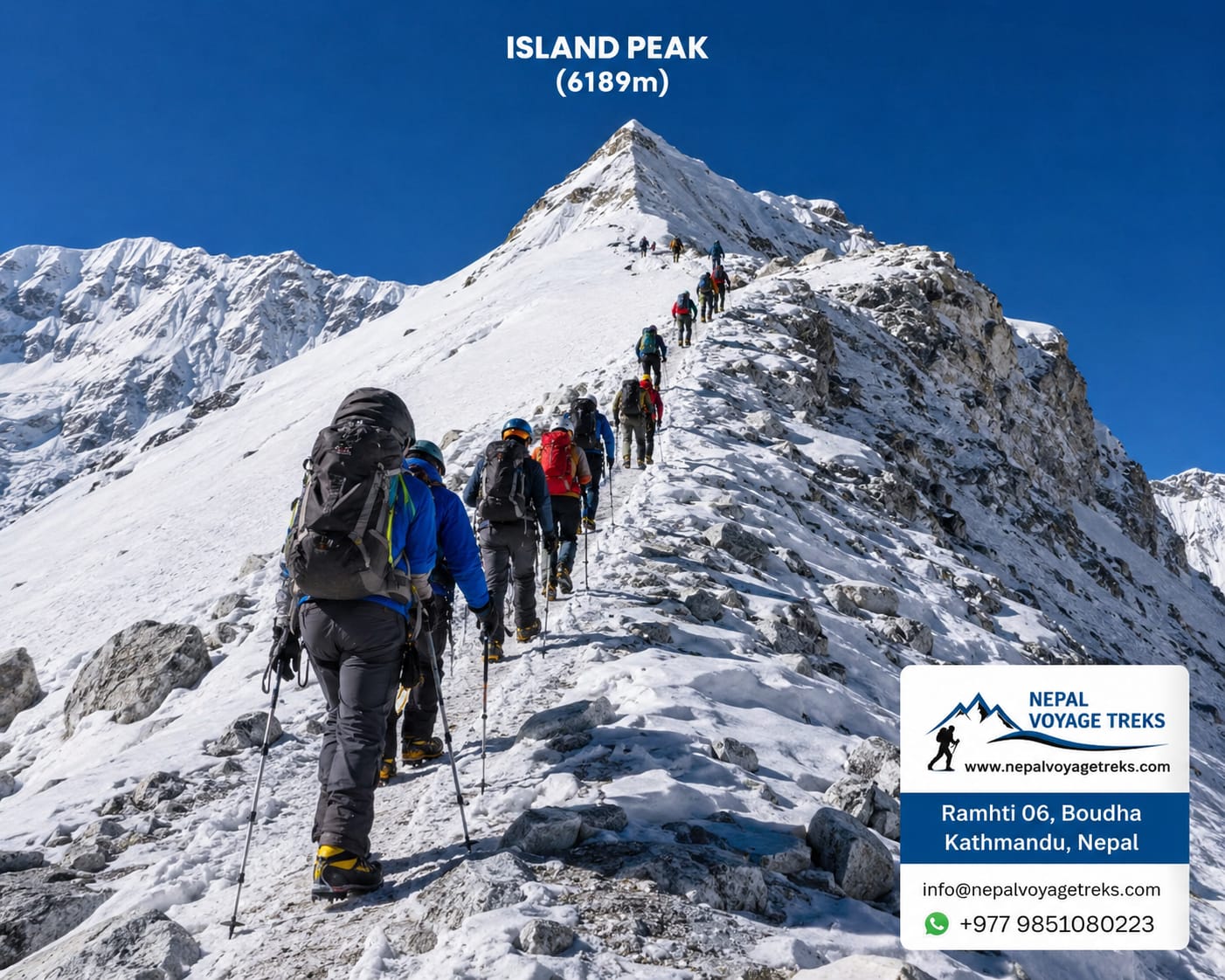
The climb itself combines rock, snow, and ice sections, providing an ideal introduction to high-altitude mountaineering under the guidance of experienced mountain guides and instructors. Climbers are trained in the use of crampons, ice axes, and ropes, ensuring safety and skill development. The summit push to Island Peak rewards adventurers with unforgettable 360-degree views of the surrounding Himalayan giants, making every early morning and challenging step worthwhile.

Following the descent, trekkers return through the Khumbu valley to Lukla, and then fly back to Kathmandu for celebrations and reflections on an incredible journey. This 17-day expedition is designed for fit and adventurous travelers, offering a perfect balance of trekking, cultural immersion, and the thrill of climbing one of Nepal’s most iconic peaks.

Highlights of the Island Peak Climbing – 17 Days Tour include:

  • Summit Island Peak (6,189m) with expert guidance.
  • Explore Everest Base Camp region and nearby Khumbu villages.
  • Witness the sunrise over Ama Dablam, Lhotse, and Everest.
  • Visit Tengboche Monastery and experience Sherpa culture.
  • Trek through glacial valleys, rhododendron forests, and high-altitude landscapes.
  • Gain hands-on experience in ice climbing and high-altitude mountaineering techniques.
  • Enjoy spectacular Himalayan views, photography opportunities, and unique cultural encounters.

This Island Peak Climbing expedition is ideal for those who want an adventurous Himalayan challenge, combining trekking, mountaineering, and rich cultural experiences in one unforgettable 17-day journey. Whether you are an aspiring mountaineer or an experienced trekker seeking a new challenge, this tour offers a once-in-a-lifetime experience in Nepal’s breathtaking Everest region.

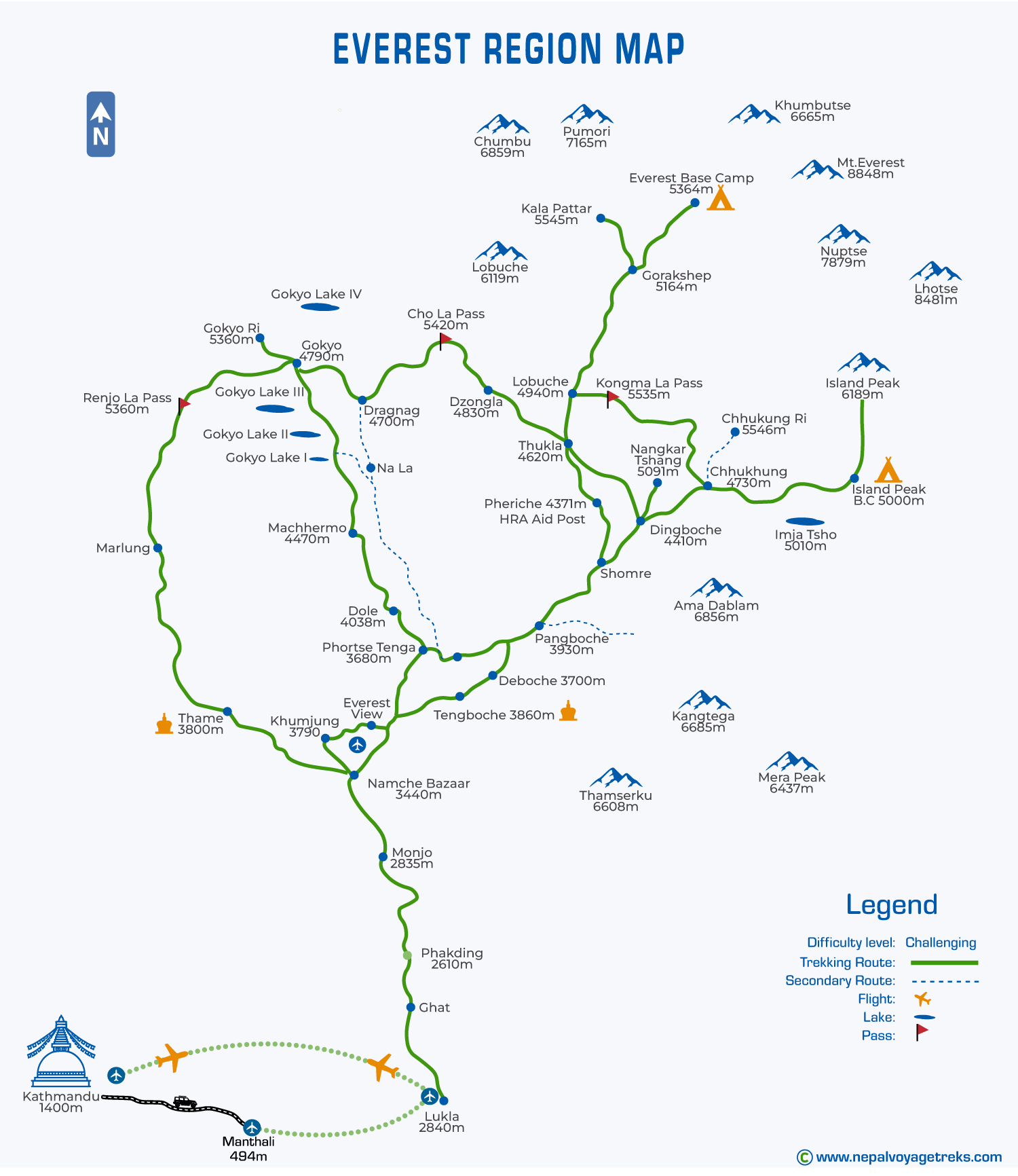
Trip Map
route map

Island Peak Climbing

Trekking & Hiking Adventure

Region Everest Region
Duration 17 Days
Grade Strenuous
Meal B/L/D
Group Size 1-30
Accomodation Hotel/Lodge
Best Season Autumn/Spring
Start/End Kathmandu
Max Altitude 6165m
Activity Trekking
Day 1 — Arrival in Kathmandu
Elevation 1350 m

Upon arrival at Tribhuvan International Airport in Kathmandu, travelers are warmly welcomed by their guide and driver. After clearing immigration and collecting luggage, you’ll be transferred to your hotel in the city, where you can rest, refresh, and recover from your international flight. Depending on your arrival time, you may have the opportunity to explore the vibrant streets of Thamel, the main tourist hub, or enjoy a traditional Nepali meal at a local restaurant.

Kathmandu, the capital of Nepal, is a fascinating city that blends ancient culture with modern life. You’ll notice the bustling markets, colorful temples, prayer flags fluttering in the wind, and historic architecture as you walk through its streets. This day is primarily for adjusting to the city’s rhythm, resting, and preparing for your upcoming trekking adventure or sightseeing tour. Your guide will also provide a briefing on the trek ahead, including tips on packing, acclimatization, and local customs. Overnight stay is at a comfortable hotel in Kathmandu, offering a convenient base to begin your Nepal journey.

Accomodation: Hotel
Meals: Welcome Dinner
Day 2 — Kathmandu Preparation & Briefing
Elevation 1350 m

After breakfast at your hotel, the day is dedicated to preparing for your upcoming trek and optional Kathmandu sightseeing. Your guide will assist you with checking trekking gear, reviewing your itinerary, discussing acclimatization tips, and answering any last-minute questions to ensure you’re fully prepared for the adventure ahead.

For sightseeing, Kathmandu offers a wealth of cultural and historical attractions, including Swayambhunath (Monkey Temple), Boudhanath Stupa, Pashupatinath Temple, and the vibrant streets of Thamel. These visits provide a glimpse into Nepal’s rich heritage, spirituality, and local life, allowing travelers to connect with the country before setting off on the trek.

Note: You can choose to enjoy Kathmandu sightseeing either before your trek or after it concludes. Please note that only one day of sightseeing is included in your package. If you wish to explore the city on both days, additional costs may apply. This allows you to experience the highlights while keeping your trek schedule comfortable and focused.

Overnight stay is at a comfortable hotel in Kathmandu, giving you a chance to rest, enjoy city views, and finalize preparations for the adventure ahead.

Accomodation: Hotel
Meals: Breakfast, Lunch, Dinner
Day 3 — Fly from Kathmandu to Lukla & Trek to Phakding
Ups ↑ 100 m
Down ↓ 230 m
Elevation 2840 m
Distance ⟺ 8 km

The day starts early in Kathmandu, as you head to the domestic terminal for the thrilling mountain flight to Lukla—the gateway to the Everest region. The flight itself is an adventure. As the plane climbs, the landscape quickly changes from hills to towering Himalayan peaks. Snow-capped giants begin to appear, and the excitement builds with every minute. After around 30–35 minutes, the aircraft lands at Tenzing–Hillary Airport (2,840m), one of the most iconic mountain airstrips in the world.

Once in Lukla, you meet the trekking and climbing crew, double-check gear, and begin the trek. The trail gently descends from Lukla, passing through stone-paved paths lined with mani walls, prayer flags, and chortens, setting a spiritual tone for the journey ahead. The walk is relaxed and perfect for warming up your legs after the flight.

Following the Dudh Koshi River, you cross several suspension bridges decorated with colorful prayer flags. Along the way, you pass small Sherpa villages like Chheplung, where you get your first close-up views of Kusum Kanguru and other Himalayan peaks. The trail continues through pine and rhododendron forests, with occasional teahouses offering a perfect spot for tea or lunch.

After a comfortable few hours of walking, you arrive at Phakding, a quiet riverside village surrounded by forested hills and mountain views. The rest of the afternoon is spent relaxing, hydrating, and letting your body adjust to the altitude. It’s a gentle and well-paced first trekking day, setting the foundation for both the Everest Base Camp route and the Island Peak climbing adventure ahead.

Accomodation: Lodge
Meals: Breakfast, Lunch, Dinner
Duration: 3-4 hours
Day 4 — Trek from Phakding to Namche Bazaar
Ups ↑ 830 m
Down ↓ 100 m
Elevation 3440 m
Distance ⟺ 10-11 km

The day begins in Phakding with the sound of the Dudh Koshi River flowing nearby and prayer flags fluttering in the cool morning air. After breakfast, you start trekking north, following the well-defined trail along the riverbank. The path is gentle at first, weaving through pine forests, stone-paved sections, and small Sherpa settlements such as Benkar and Monjo, where life moves at a calm mountain pace.

One of the highlights of the morning is crossing several iconic suspension bridges decorated with colorful prayer flags. Each bridge offers thrilling views of the rushing river far below. After passing through Monjo, you enter Sagarmatha National Park, where permits are checked before continuing deeper into the Everest region. From here, the trail gradually climbs, crossing the famous Hillary Suspension Bridge, the highest and most dramatic bridge on the route.

After crossing the Hillary Bridge, the real climb begins. The trail ascends steeply through dense forests of pine and rhododendron. This section demands patience and steady breathing, especially as the altitude begins to make itself felt. Along the climb, there are several natural viewpoints where you can stop, catch your breath, and enjoy your first glimpse of Mount Everest peeking out between Lhotse and Nuptse—a moment that makes all the effort worthwhile.

As you continue uphill, the forest slowly thins, and the trail opens up to reveal Namche Bazaar, sitting proudly on a natural amphitheater carved into the mountainside. Arriving in Namche feels energetic and rewarding. This bustling Sherpa town is the heart of the Khumbu region, filled with bakeries, gear shops, cafes, monasteries, and stunning mountain views. The rest of the afternoon is spent resting, hydrating, and exploring the town to help with acclimatization.

Accomodation: Lodge
Meals: Breakfast, Lunch, Dinner
Duration: 5-6 hours
Day 5 — Acclimatization Day in Namche Bazaar
Ups ↑ 440 m
Down ↓ 440 m
Elevation 3880 m
Distance ⟺ 5-6 km round trip

Today is all about helping your body adjust to the rising altitude while still staying active—“climb high, sleep low” is the golden rule. After breakfast in Namche Bazaar, you set out on a short but rewarding acclimatization hike above the town.

The trail climbs steadily toward the Everest View Hotel, following a scenic ridge path lined with prayer flags and stone walls. As you gain height, the views begin to open dramatically. Soon, you’re standing face-to-face with some of the most iconic peaks in the Himalayas—Mount Everest, Lhotse, Nuptse, Ama Dablam, and Thamserku all appear in one incredible panorama. This is often the first clear, proper view of Everest for many climbers, and it never fails to impress.

Continuing slightly higher, you reach the traditional Sherpa village of Khumjung, where you can visit the Khumjung Monastery, believed to house a Yeti scalp. Walking through the village gives a deeper look into Sherpa life—stone houses, yak pastures, prayer wheels, and children playing in open fields with towering mountains behind them.

After spending time at higher altitude, you descend back to Namche Bazaar for lunch. The afternoon is relaxed and flexible. You may explore the Sherpa Culture Museum, the Sagarmatha National Park Visitor Center, or simply enjoy a coffee at one of Namche’s bakeries while watching mountain life unfold. This balance of activity and rest helps your body adapt properly, preparing you for higher elevations and the technical challenges of Island Peak ahead.

Accomodation: Lodge
Meals: Breakfast, Lunch, Dinner
Duration: 3-4 hours
Day 6 — Trek from Namche Bazaar to Tengboche
Ups ↑ 650 m
Down ↓ 400 m
Elevation 3860 m
Distance ⟺ 9-10 km

Leaving Namche Bazaar after breakfast, the trail begins with a gentle, almost flat walk along a scenic ridge carved into the mountainside. This section is one of the most beautiful parts of the Everest region, offering continuous views of Ama Dablam, Thamserku, Kangtega, and Kongde Ri. The path is wide and comfortable, making it an enjoyable warm-up before the terrain changes.

After about an hour or two, you reach Kyangjuma, a small settlement where trekkers often stop for tea and photos. From here, the trail drops steeply down toward the Dudh Koshi River, passing through pine and rhododendron forests. You cross a suspension bridge near Phunki Tenga, where the sound of the river and spinning prayer wheels mark the halfway point of the day.

From Phunki Tenga, the real challenge begins. The trail climbs steadily uphill through dense forest, gaining altitude step by step. This section can feel demanding, especially as the air becomes thinner, but the peaceful forest environment and occasional glimpses of snow-capped peaks make the effort worthwhile. Prayer flags begin to appear more frequently, signaling your approach to one of the most spiritual places in the Khumbu.

As the trail emerges from the forest, Tengboche Monastery suddenly comes into view, sitting proudly on a ridge surrounded by Himalayan giants. On a clear day, the sight of Ama Dablam rising directly behind the monastery is nothing short of breathtaking. Reaching Tengboche feels deeply rewarding—not just physically, but spiritually. The afternoon is perfect for resting, exploring the monastery grounds, and, if timing allows, attending the monks’ evening prayer ceremony.

Accomodation: Lodge
Meals: Breakfast, Lunch, Dinner
Duration: 5-6 hours
Day 7 — Trek from Tengboche to Dingboche
Ups ↑ 750 m
Down ↓ 200 m
Elevation 4410 m
Distance ⟺ 11-12 km

The morning in Tengboche often begins with crisp air and the sound of prayer bells echoing from the monastery. After breakfast, the trail descends gently through rhododendron and juniper forests, offering repeated views back toward Ama Dablam, which seems to follow you throughout the walk. The descent is short and pleasant, leading you toward the river valley below.

Soon, you reach the village of Debuche, where you cross a small suspension bridge over the Imja Khola. From here, the trail gradually climbs through open terrain, leaving the dense forests behind. The landscape begins to feel more alpine and rugged, with wide valleys, stone-walled fields, and fewer trees. As you gain elevation, the air becomes noticeably thinner, and the mountains feel closer and more dramatic.

Passing through Pangboche, one of the oldest Sherpa villages in the region, you’ll notice traditional stone houses, prayer flags, and mani walls lining the trail. The village sits beneath the towering face of Ama Dablam, offering one of the best viewpoints of the peak. After Pangboche, the trail climbs steadily toward Dingboche, following the Imja Valley with wide open views of Lhotse, Island Peak, and surrounding glaciers.

The final stretch into Dingboche is a gentle ascent across open fields protected by stone walls, built to shield crops from cold winds. Dingboche feels spacious and quiet compared to Namche, with wide valley views and a true high-altitude atmosphere. The afternoon is spent resting, hydrating, and enjoying the mountain scenery—an important step as you prepare for even higher elevations on the Island Peak route.

Accomodation: Lodge
Meals: Breakfast, Lunch, Dinner
Duration: 5-6 hours
Day 8 — Acclimatization Day in Dingboche
Ups ↑ 600 m
Down ↓ 600 m
Elevation 5000 m
Distance ⟺ 4-5 km round trip

Today is all about preparing your body and mind for the higher altitudes and technical climbing days ahead. After breakfast in Dingboche, the plan is to take a short but effective acclimatization hike, following the golden rule of high-altitude trekking—climb high, sleep low.

The trail leads uphill toward the ridge above Dingboche, often in the direction of Nangkartshang Peak. The climb is gradual at first but becomes steeper as you gain height. With every step, the views open wider—Ama Dablam dominates the skyline behind you, while Lhotse, Makalu, Cholatse, and the vast Imja Valley stretch out in front. This hike is physically demanding but deeply rewarding, helping your body adjust to altitude while boosting confidence.

Reaching the viewpoint at around 4,900–5,000m, you take time to rest, hydrate, and absorb the massive Himalayan panorama. The wind is usually strong here, and the air feels noticeably thinner—an important sensation to experience before climbing Island Peak. After spending enough time at higher elevation, you descend carefully back to Dingboche.

The afternoon is relaxed. Some climbers explore the village, visit nearby bakeries, or simply rest and prepare gear. Guides often use this time to brief climbers about Island Peak, review equipment, and discuss safety procedures. Spending a second night at Dingboche significantly improves acclimatization and increases your chances of a safe and successful summit.

Accomodation: Lodge
Meals: Breakfast, Lunch, Dinner
Duration: 3-4 hours
Day 9 — Trek from Dingboche to Chhukung
Ups ↑ 320 m
Down ↓ 000 m
Elevation 4730 m
Distance ⟺ 4-5 km

Leaving Dingboche after breakfast, the trail heads east into the wide and open Imja Valley. Almost immediately, the scenery changes—trees disappear completely, and the landscape becomes raw, rocky, and alpine. The path is clearly visible but feels remote, with vast open space on both sides and towering peaks surrounding you.

The walk is relatively short but steady, following the Imja Khola upstream. As you move forward, Ama Dablam remains visible behind you, while ahead the focus shifts toward Island Peak (Imja Tse), Lhotse, and the massive wall of Lhotse South Face. Glacial moraines and scattered boulders dominate the terrain, reminding you that you’re entering a true climbing environment.

Although the trail doesn’t gain a huge amount of altitude, the thin air makes even gentle climbs feel more demanding. The silence of the valley, broken only by wind and the distant sound of ice cracking from the glaciers, creates a powerful sense of anticipation. This is where trekking starts to feel like mountaineering.

As you approach Chhukung, a small seasonal settlement tucked beneath towering peaks, the views become even more dramatic. Island Peak stands clearly at the head of the valley, and the surrounding glaciers and ice-covered slopes signal that serious climbing is now very close. The afternoon is usually spent resting, hydrating, and preparing equipment, while guides may conduct basic ice-axe and crampon practice nearby if conditions allow.

Accomodation: Lodge
Meals: Breakfast, Lunch, Dinner
Duration: 2-3 hours
Day 10 — Chhukung to Island Peak Base Camp
Ups ↑ 470 m
Down ↓ 000 m
Elevation 5200 m
Distance ⟺ 5-6 km

After an early breakfast in Chhukung, the atmosphere feels different—quieter, more focused. Today you leave the regular trekking trail and step into the world of high-altitude mountaineering. The route immediately heads east across the Imja Valley, following faint paths over rocky terrain and glacial debris.

The trail gradually climbs over lateral moraines of the Imja Glacier, where loose stones, boulders, and icy patches demand careful foot placement. There is no forest here—only ice, rock, and towering walls of snow and ice rising above you. Island Peak (Imja Tse) now dominates the skyline, and with every step, it feels closer and more serious.

As you gain altitude, the path becomes steeper and more rugged. The sound of wind and distant glacier movement replaces all other noise. The scale of the mountains is overwhelming—Lhotse, Nuptse, Baruntse, and Ama Dablam surround the valley like giants standing guard. Walking here feels slow but purposeful; every step matters in the thin air.

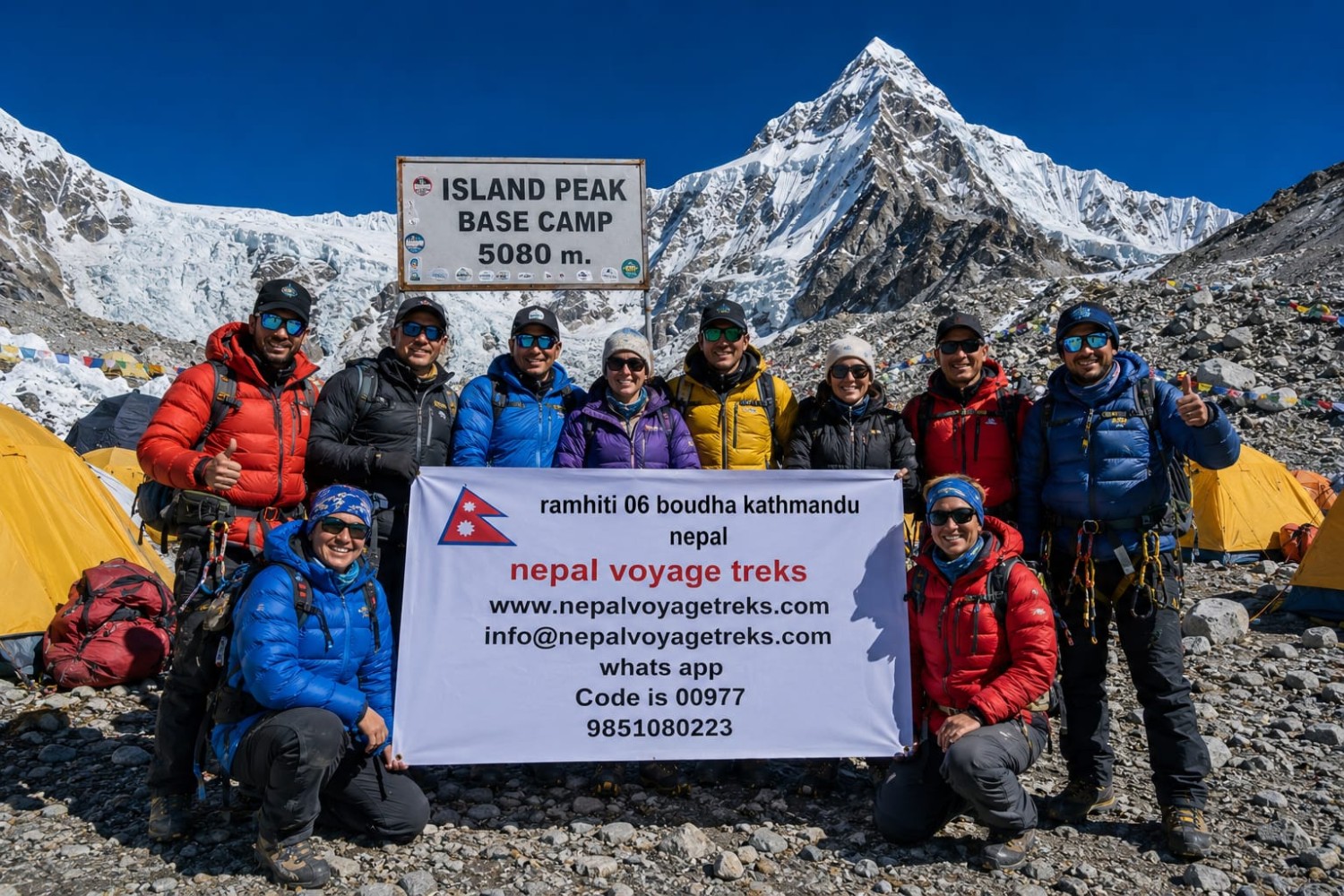
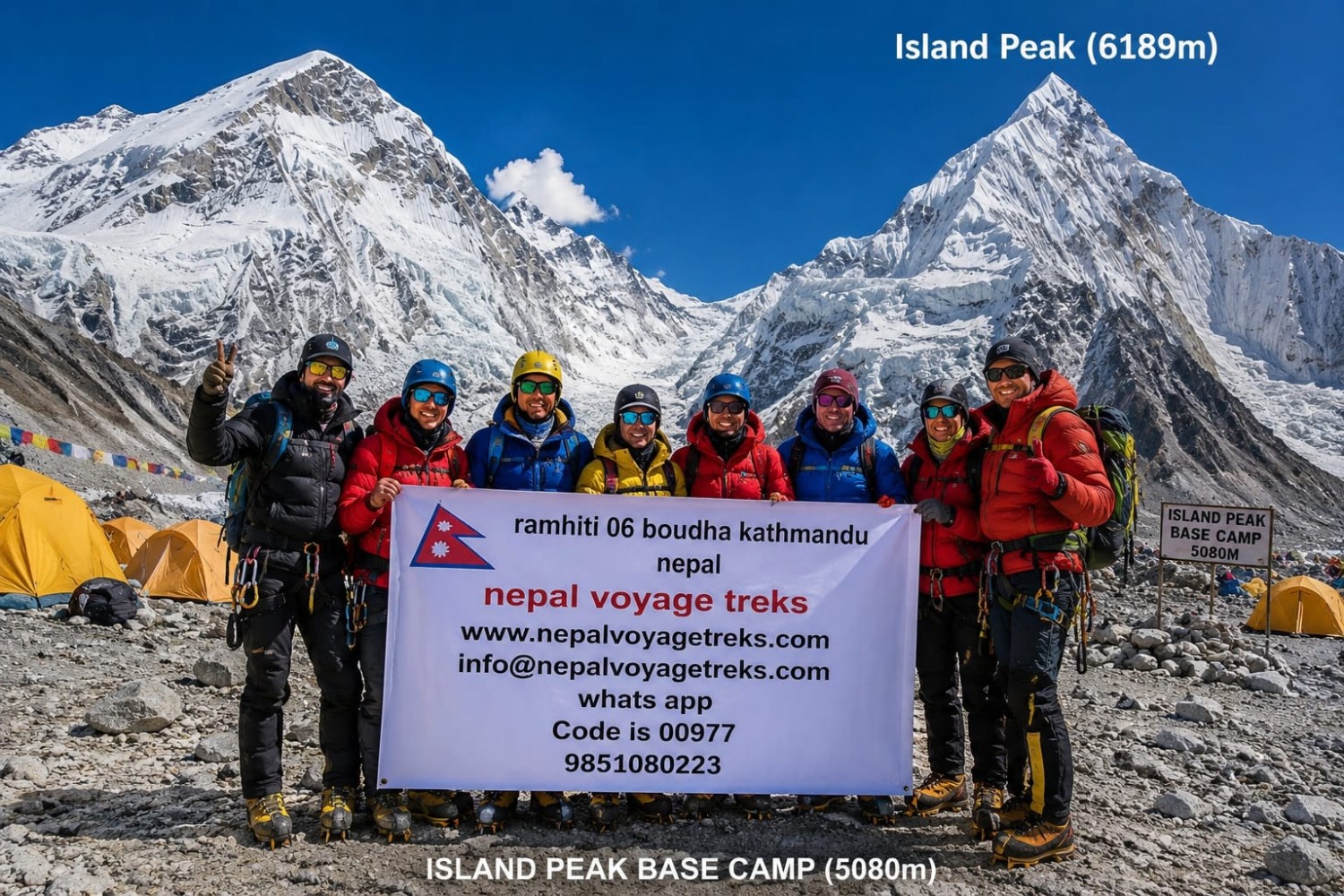
After several hours of steady ascent, you reach Island Peak Base Camp, a rocky and icy platform sitting directly beneath the peak. Colorful expedition tents dot the landscape, and prayer flags flutter in the cold wind. The views are massive and intimidating—glacier tongues, steep snow slopes, and ice walls stretching upward toward the summit.

The afternoon is spent resting, hydrating, and preparing for summit day. Your climbing guide conducts a detailed briefing, checking harnesses, crampons, helmets, ice axes, and ropes. You’ll practice basic rope techniques if needed and mentally prepare for the long night ahead. As the sun drops behind the mountains, temperatures fall quickly. Dinner is early, and sleep comes with anticipation—summit day awaits.

Accomodation: Camp
Meals: Breakfast, Lunch, Dinner
Duration: 4-5 hours
Day 11-12 — Island Peak Summit (6,189m) & Return to Chhukung
Ups ↑ 990 m
Down ↓ 1460 m
Elevation 6189 m
Distance ⟺ 10-12 km

Summit Night: From Base Camp to High Altitude

The summit push begins late at night, usually around 12:00–1:00 AM. After an early dinner at Island Peak Base Camp, you gear up—crampons, harness, helmet, headlamp, ice axe—everything checked one final time by the climbing guide. The cold is intense, the sky is full of stars, and silence surrounds the camp as you step onto the glacier.

The first section climbs gradually over rocky and icy terrain, following a narrow path marked by headlamps ahead. As you gain height, the slope steepens and the ground turns fully icy. Breathing becomes slow and controlled; every step is deliberate. After several hours, you reach the glacier section, where ropes are fixed and climbers move one by one, clipped in for safety.

The final part of the climb is the most technical and demanding—a steep snow and ice headwall (45–55°) leading to the summit ridge. Using jumars, fixed ropes, crampons, and ice axes, you climb steadily upward. The cold bites hard, but adrenaline and determination take over. As dawn approaches, the sky slowly turns deep blue, then orange.

Summit Moment: Island Peak (6,189m / 20,305ft)

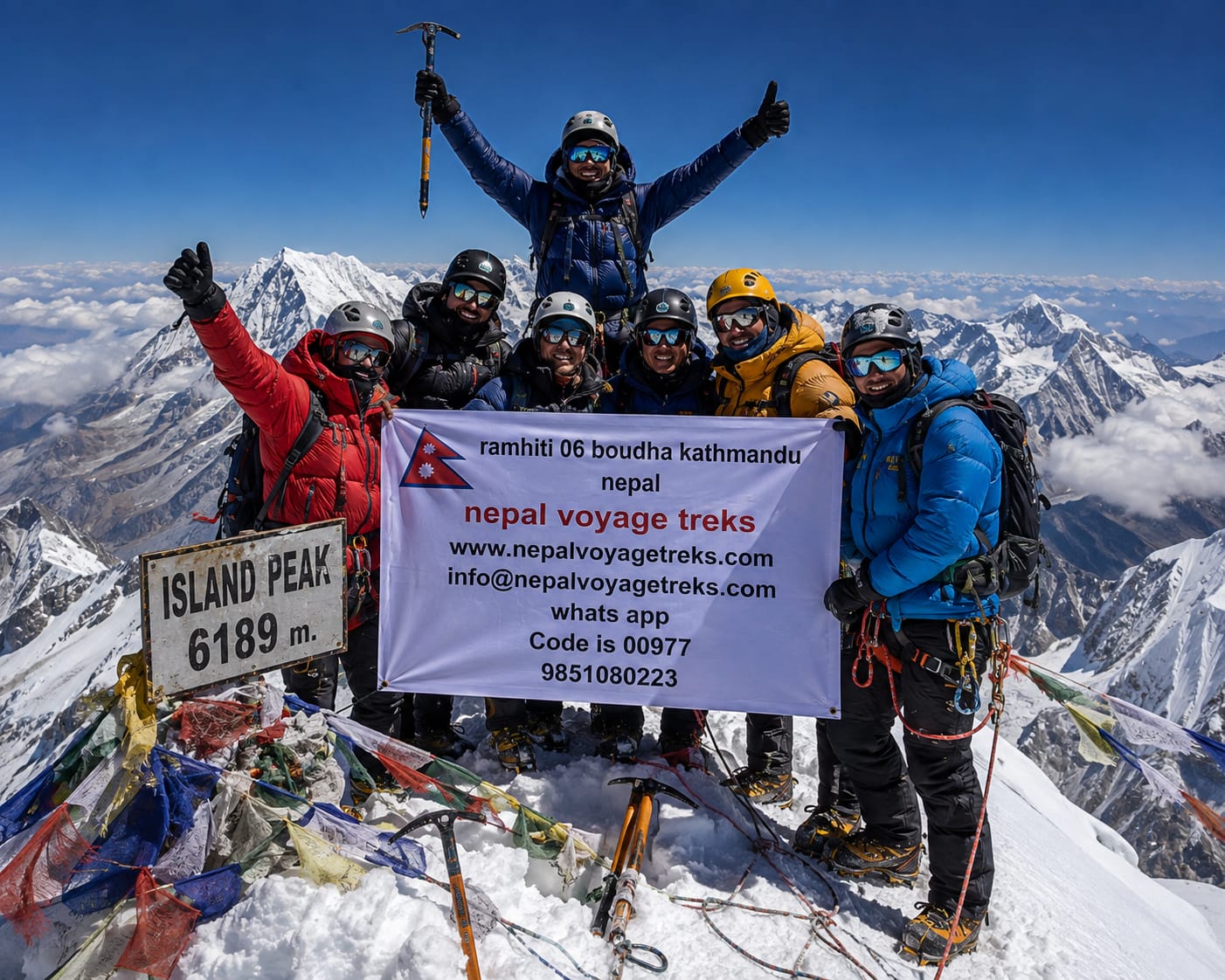
Reaching the summit of Island Peak is an emotional moment. Standing at 6,189 meters, you’re surrounded by giants—Lhotse, Makalu, Ama Dablam, Baruntse, and the vast Himalayan horizon stretching endlessly in every direction. Prayer flags flutter in the icy wind, and the feeling of achievement is overwhelming. This is a true Himalayan summit—earned step by step.

After photos, quiet reflection, and congratulations, the descent begins quickly. Weather can change fast, so time on the summit is kept short.

Descent: Back to Base Camp & Chhukung

Descending the same route requires focus and energy. You carefully down-climb the steep headwall using fixed ropes, then continue across the glacier as the sun rises fully. By late morning, you return safely to Island Peak Base Camp, where hot drinks and rest feel incredibly rewarding.

After a break and packing up, the journey continues downhill back to Chhukung. The walk feels long but lighter—oxygen is richer, and the hardest part is behind you. Arriving in Chhukung in the afternoon, exhaustion mixes with pure satisfaction. A warm meal, rest, and celebration mark the successful completion of the Island Peak Climb.

Accomodation: Camp
Meals: Breakfast, Lunch, Dinner
Duration: 10-14 hours
Day 13 — Trek from Chhukung to Tengboche
Ups ↑ 300 m
Down ↓ 1070 m
Elevation 4730 m
Distance ⟺ 14-15 km

After the intense summit push of Island Peak, waking up in Chhukung feels lighter—both physically and mentally. The hardest part of the expedition is behind you, and today’s trek is all about descending to safer altitude while enjoying the Himalayas with a relaxed pace.

Leaving Chhukung after breakfast, the trail follows the familiar route back down the Imja Valley. The wide, open alpine landscape that once felt intimidating now feels peaceful. You walk past glacial streams, rocky moraines, and scattered boulders, with Island Peak slowly disappearing behind you as Ama Dablam once again becomes the star of the valley.

After about 2–3 hours of steady downhill walking, you reach Dingboche, where the air already feels warmer and richer in oxygen. This is a perfect place for a short tea or lunch break. From here, the trail continues gently downhill toward Pangboche, passing stone-walled fields and traditional Sherpa homes. The views of Ama Dablam towering directly above Pangboche are some of the best in the entire Khumbu region.

Beyond Pangboche, the trail descends further toward Debuche, where you cross a suspension bridge over the Imja Khola. As you continue, vegetation slowly returns—juniper, shrubs, and eventually rhododendron forests. The trail becomes softer underfoot, and the temperature noticeably increases.

The final section climbs gently through forest toward Tengboche, and when the monastery appears on the ridge, it feels almost ceremonial. Arriving here after a summit feels special—quiet, reflective, and deeply rewarding. If timing allows, you may attend the evening prayer ceremony at Tengboche Monastery, a peaceful way to close a powerful chapter of your Island Peak journey.

Accomodation: Lodge
Meals: Breakfast, Lunch, Dinner
Duration: 6-7 hours
Day 14 — Tengboche to Namche Bazaar
Ups ↑ 200 m
Down ↓ 630 m
Elevation 3870 m
Distance ⟺ 12 km

The day starts in Tengboche, a serene village perched above the Dudh Koshi valley, famous for its historic Tengboche Monastery. After breakfast, you begin the gentle descent along the trail that winds through rhodedendron forests, alpine meadows, and small Sherpa settlements. The air is crisp and fresh, and the early morning light illuminates Ama Dablam, Lhotse, and Everest beautifully.

Along the trail, you cross a series of suspension bridges over the Dudh Koshi River, each offering breathtaking views of cascading waters below and towering peaks above. The trail passes through pangboche and other small hamlets, allowing glimpses of local life, mani walls, prayer flags, and stone stupas that reflect the region’s rich Buddhist culture.

As you approach Namche Bazaar, the atmosphere becomes livelier. Traders and trekkers bustle around the famous market town, with shops selling Sherpa handicrafts, trekking gear, and local food. The final stretch is slightly uphill, offering panoramic views of the Khumbu valley, and culminating at the main square of Namche. Here, you can enjoy a well-earned rest at a comfortable lodge, savor traditional Nepalese meals, and reflect on the remarkable journey from the high Himalayas to the heart of Sherpa culture.

Accomodation: Lodge
Meals: Breakfast, Lunch, Dinner
Duration: 5-6 hours
Day 15 — Trek from Namche Bazaar to Lukla
Ups ↑ 50 m
Down ↓ 580 m
Elevation 3440 m
Distance ⟺ 20 km

The day starts early in Namche Bazaar, the bustling heart of the Khumbu region. After a nourishing breakfast, you begin your trek descending along the Dudh Koshi River valley, passing through terraced hillsides, rhododendron forests, and small Sherpa villages like Phakding. The trail is well-trodden, offering a mix of stone paths and dirt tracks, with occasional suspension bridges that provide excellent photo opportunities and close-up views of rushing glacial rivers below.

Along the way, you’ll notice mani walls, prayer flags, and small monasteries, highlighting the spiritual and cultural richness of the region. The journey offers panoramic views of towering peaks including Thamserku, Ama Dablam, and Nuptse. By the afternoon, you reach Lukla, the airstrip town that marks the end of your trekking adventure. Here, you can relax at a local lodge or café, recounting the incredible journey across the Khumbu, including conquering Island Peak and experiencing Sherpa culture firsthand.

Accomodation: Lodge
Meals: Breakfast, Lunch, Dinner
Duration: 6-7 hours
Day 16 — Flight from Lukla to Kathmandu
Ups ↑ 000 m
Down ↓ 1460 m
Elevation 2840 m

Early morning, you board a scenic domestic flight from Lukla to Kathmandu. The flight lasts approximately 30 minutes but is packed with breathtaking views of the Himalayas, including Everest, Lhotse, Nuptse, and Ama Dablam. On a clear day, you can even spot the Khumbu Glacier and the trails you trekked. Landing in Kathmandu, you’re greeted by the hustle and bustle of the city—a stark but exciting contrast to the high mountains.

Accomodation: Hotel
Meals: Breakfast, Lunch, Dinner
Duration: 30 min
Day 17 — Farewell Departure

As your incredible Island Peak Climbing adventure concludes, a representative from Nepal Voyage Treks ensures a smooth transfer to Tribhuvan International Airport. You leave with memories of high-altitude trails, Sherpa culture, and conquering the mighty Island Peak. Every step—from Lukla to Phakding, Namche, Dingboche, Chhukung, and the summit—has contributed to an unforgettable Himalayan experience.

Nepal Voyage Treks wishes you a safe journey home and looks forward to welcoming you back for another Himalayan adventure!

Meals: Breakfast
Cost Includes
  • Accommodation: Standard hotels in Kathmandu and tea houses/lodges during the trek.
  • Meals: Breakfast in Kathmandu; full-board (breakfast, lunch, and dinner) during trekking.
  • Guides & Support: Experienced mountain guides, Sherpa assistants, and porters to carry your main gear.
  • Climbing Equipment: Ice axes, crampons, ropes, harnesses, and other technical gear for Island Peak climb.
  • Transportation: Airport transfers in Kathmandu; domestic flight to/from Lukla; all ground transportation as per itinerary.
  • Permits & Fees: TIMS card, Sagarmatha National Park entry permit, and Island Peak climbing permit.
  • Training & Briefing: High-altitude climbing techniques and safety briefing before the summit attempt.
  • Cultural Experiences: Visits to Sherpa villages, monasteries, and local markets along the trek.
  • Emergency Support: Oxygen and first-aid kits carried by guides for high-altitude safety.
Cost Excludes
  • International flights to/from Nepal.
  • Travel or trekking insurance covering high-altitude trekking and climbing.
  • Lunches and dinners in Kathmandu and Pokhara.
  • Personal climbing gear not listed in the inclusions (e.g., trekking poles, gloves, personal clothing).
  • Optional activities (Everest Mountain Flight, helicopter rescue insurance, spa, or shopping).
  • Tips for guides, porters, and staff.
  • Visa fees for Nepal (can be obtained on arrival).
All Information
Equipment Checklist for Island Peak Climbing

Equipment Checklist

FAQs

Island Peak (Imja Tse, 6,189m) is classified as a moderate to challenging trekking peak. While it is accessible to trekkers with some prior trekking experience, climbing at high altitude requires good physical fitness, stamina, and acclimatization. The trek involves long walking days, steep ascents, and the use of technical equipment such as crampons, ice axes, and ropes on the final summit push. Beginners can succeed if they follow proper guidance and pace themselves.

Prior mountaineering experience is not mandatory, but basic trekking experience at high altitudes is highly recommended. Our professional guides provide training sessions for ice climbing, rope handling, and high-altitude safety before the summit attempt. This ensures that even first-time climbers can safely tackle the peak under expert supervision.

The best climbing seasons are pre-monsoon (March to May) and post-monsoon (September to November). During these periods, the weather is relatively stable, skies are clear, and the Himalayan views are breathtaking. Winter months can be extremely cold, while the monsoon season (June–August) brings heavy snowfall, landslides, and slippery trails, making climbing risky.

A good level of fitness is crucial for success. Trekkers should be able to walk 5–7 hours per day on uneven and steep terrain, carry a daypack of 10–15 kg, and manage basic high-altitude challenges. Cardiovascular fitness, leg strength, and prior trekking experience will make the climb much easier. Training recommendations include long hikes, stair climbing, and cardio workouts before the expedition.

Yes, altitude sickness is a potential risk above 3,500m. Our itinerary is designed with gradual acclimatization, allowing trekkers to adapt to higher elevations safely. Guides carry oxygen and first-aid kits and monitor climbers for symptoms. Drinking plenty of water, following the pace set by the guide, and proper acclimatization days help reduce the risk.

We provide technical climbing equipment such as ropes, crampons, harnesses, and ice axes. Trekkers must bring personal gear, including:

  • Warm insulated jackets and trekking layers
  • Waterproof trekking pants and jackets
  • Thermal gloves and hats
  • Sunglasses and sunscreen
  • Trekking boots suitable for snow and rugged terrain
  • Sleeping bag rated for cold temperatures

During the trek, you will stay in tea houses and lodges along the route. These offer basic but comfortable facilities, including beds with blankets, shared or private bathrooms, and meals. In Kathmandu and Lukla, accommodation is in standard hotels with modern amenities.

Yes, most meals are provided during trekking (full board: breakfast, lunch, and dinner). Bottled or boiled water is available, but we recommend bringing a water purification system or water tablets for safety. Snacks, energy bars, and personal beverages are optional but helpful.

Yes, you need both the Sagarmatha National Park permit and the Island Peak climbing permit. These are arranged by our team before your trek, so you don’t need to worry about bureaucracy. A TIMS card is also required for trekkers in Nepal.

Safety is our top priority. If weather, fitness, or health conditions prevent a summit attempt, guides will advise turning back. However, the trek itself offers stunning Himalayan views, cultural encounters, and high-altitude adventure, ensuring a rewarding experience even if the summit is not reached.

ASSOCIATED WITH

Tourism Board
Nepal Government
Keep
NMA Nepal
TAAN

WE ACCEPT