






Day 1 — Itinerary – How Helicopter Rescue Works (Step-by-Step)
Helicopter Rescue in Nepal
1 Day •
Overview
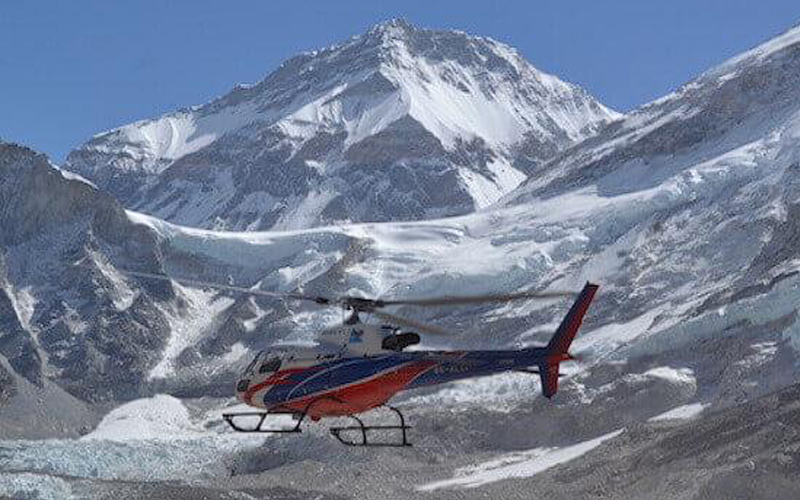
Helicopter Rescue in Nepal is one of the fastest and most reliable emergency services available for trekkers, climbers, and travelers exploring the Himalayas. Because many trekking routes lie in remote, high-altitude regions with no road access, helicopters are the only way to safely evacuate people during altitude sickness, injuries, or sudden health complications. With highly trained rescue pilots, experienced ground teams, and quick response times, this service ensures that travelers receive immediate help when needed—often reaching even the most challenging locations such as Everest Base Camp, Annapurna Sanctuary, Langtang Valley, Manaslu Region, and more.
These helicopter rescues operate throughout the year and can be arranged within minutes once a request is confirmed. Whether you are suffering from AMS (Acute Mountain Sickness), dehydration, frostbite, injuries, or simply stranded due to weather or trail conditions, rescue helicopters can land at small helipads, lodge areas, or open flat spaces to pick you up. The passengers are then flown directly to Kathmandu or the nearest medical facility like Lukla, Pokhara, or a specialized hospital depending on the urgency. For trekkers, climbers, and adventure travelers, having access to helicopter rescue gives you peace of mind, knowing that help is always available no matter where you are in the mountains.
Highlights of Helicopter Rescue in Nepal
- Quick evacuation from high-altitude trekking and climbing regions
- 24/7 emergency response support across Nepal
- Highly experienced rescue pilots skilled in mountain flying
- Evacuation from remote areas like Everest Base Camp, Annapurna Base Camp, Langtang, Manaslu, Mustang, Dolpo, and more
- Direct airlift to Kathmandu or nearest medical center
- Coordination with insurance companies for billing and documentation
- Safe and reliable helicopters built for high-altitude operations
- Available for altitude sickness, injuries, natural hazards, or weather-related emergencies
Where Helicopter Rescue Can Be Done in Nepal
all over the nepal ..... trekking, peak climbing , expeditions , tour and hikking . but you should have travel insurance ..... Helicopter rescue can be performed across almost all trekking and mountaineering regions of Nepal. Here are the main areas where rescue operations are commonly executed:
Everest Region (Khumbu)
- Everest Base Camp (EBC)
- Kalapatthar
- Gorak Shep
- Lobuche
- Dingboche
- Tengboche
- Namche Bazaar
- Gokyo Lakes
- Cho La Pass
- Renjo La Pass
- Kongma La Pass
Annapurna Region
- Annapurna Base Camp (ABC)
- Annapurna Circuit (Thorong La Pass)
- Manang
- Tilicho Lake
- Upper Mustang & Lo-Manthang
- Muktinath
- Jomsom
Langtang & Helambu Region
- Kyanjin Gompa
- Langtang Valley
- Gosaikunda Lake
- Laurebina Pass
- Helambu Region
Manaslu Region
- Manaslu Circuit
- Larkya La Pass
- Samagaun / Samdo
Other High-Altitude & Remote Areas
- Dolpo & Upper Dolpo
- Rara Lake (Mugu Region)
- Humla & Simikot
- Jumla
- Dhorpatan
- Makalu Region
- Kanchenjunga Region
Climbing Peaks Where Rescue Is Possible
- Island Peak
- Mera Peak
- Lobuche Peak
- Ama Dablam Camp areas
- Chulu East / West
- Pisang Peak
- Yala Peak
- Tent Peak
Rescue helicopters can land almost anywhere with a safe open space, including teahouse yards, flat areas near villages, and designated helipads.
How to Book a Helicopter Rescue From Nepal Voyage Treks
Booking a helicopter rescue with Nepal Voyage Treks is fast, simple, and designed to work smoothly even in emergency situations. If you or someone in your group needs immediate evacuation, you can contact our team directly through phone, WhatsApp, Viber, or email, and provide your exact location, symptoms, altitude, and insurance details. Once we receive your request, our team will instantly verify your travel insurance for helicopter evacuation coverage and communicate with the rescue helicopter company on your behalf. If your insurance requires confirmation, we handle all paperwork and approval procedures within minutes. After approval, we dispatch the nearest available helicopter from Kathmandu, Lukla, Pokhara, or another regional base, ensuring the fastest possible response time. If your insurance does not support immediate approval, you may choose the self-payment option, and our team will assist you with reimbursement documents later. Throughout the process, Nepal Voyage Treks stays in continuous contact with the pilot, the rescue team, your guide, and your family to make sure the evacuation is safe, quick, and well-coordinated. With our 24/7 support system, you can rely on Nepal Voyage Treks for immediate helicopter rescue assistance anywhere in the Himalayas.
1. Helicopter Rescue Policy for International Clients
International visitors should understand that helicopter rescue in Nepal is not automatically free of charge. Nepal Tourism Board advises travelers to have comprehensive travel insurance covering emergency medical treatment and helicopter rescue because mountain rescue can be expensive. Clients should therefore arrange suitable insurance before leaving their home country and confirm that it covers their particular trekking, peak-climbing or expedition activity and the maximum altitude of their trip.
What International Clients Should Do Before Trekking
Before starting a trek with Nepal Voyage Treks, clients should obtain comprehensive travel insurance, keep a copy of their insurance certificate and emergency telephone number, and confirm that their policy covers helicopter evacuation, emergency medical treatment and the activities they plan to undertake. Nepal Tourism Board recommends medical insurance that specifically covers activities such as trekking and other adventure activities.
Clients should also provide Nepal Voyage Treks with their passport information, insurance details and emergency contact information where required. Nepal Tourism Board recommends carrying certified copies of important documents, including passport and insurance papers, while keeping original documents secure.
Insurance for Peak Climbing and Mountaineering Expeditions
Peak-climbing and expedition clients need to check their insurance more carefully than ordinary trekkers. Before travelling to Nepal, clients should confirm in writing that their insurance covers high-altitude trekking, peak climbing or mountaineering, emergency helicopter evacuation and medical treatment at the maximum altitude of their planned journey. A normal travel policy should not automatically be assumed to cover a high-altitude expedition.
For mountaineering expeditions, Nepal has additional government permit and regulatory requirements. Mountaineering royalties and applicable permits must be arranged before the expedition according to the applicable government system.
How Helicopter Rescue Works in Nepal
When a serious emergency occurs, the guide normally informs Nepal Voyage Treks, and the company coordinates with the appropriate rescue and helicopter service. Information such as the client's location, altitude, medical condition, weather and landing possibilities is communicated to the rescue provider. The helicopter operation remains subject to aviation safety, weather, aircraft availability, landing conditions and other operational requirements.
Nepal Tourism Board specifically advises trekkers and mountaineers requiring helicopter evacuation to contact their local trekking agency.
What Nepal Voyage Treks Does During an Emergency
Nepal Voyage Treks assists clients by coordinating emergency communication, contacting appropriate rescue services, communicating the client's location and condition, assisting with hospital arrangements and helping with communication between the client, rescue provider and insurance company. Our guides are instructed to pay close attention to the health and safety of clients throughout the trek.
Nepal's official rescue guidelines place responsibilities on adventure-tourism agencies and guides, including providing safety information, reducing foreseeable risks, arranging first-aid resources and paying attention to the health and safety of tourists.
What Helicopter Rescue Includes
Depending on the emergency and the client's insurance arrangements, rescue coordination may include emergency communication, helicopter evacuation coordination, transportation to an appropriate medical facility, hospital coordination and assistance with insurance documentation.
However, helicopter rescue does not automatically mean that all medical, hospital, accommodation, international repatriation or personal expenses are covered. The client's individual insurance policy determines what expenses are covered.
What Is Normally Not Automatically Included
Clients should not assume that their trekking package automatically includes helicopter rescue, hospital treatment, surgery, medicines, ICU treatment, international medical repatriation, additional accommodation or other personal expenses. These costs depend on the client's insurance policy and the terms of the trekking or expedition contract.
Government Rescue System in Nepal
Nepal's rescue system involves cooperation between relevant tourism authorities, trekking and expedition agencies, guides, helicopter operators, medical facilities, insurance companies, Tourist Police and other concerned agencies. The Ministry of Culture, Tourism and Civil Aviation maintains the official tourist search-and-rescue framework. Tourist Police also states that it coordinates with relevant agencies during rescue procedures.
Rescue Throughout Nepal
Helicopter and emergency rescue coordination can be required in many trekking and mountaineering regions of Nepal, including Everest, Annapurna, Langtang, Manaslu, Mustang, Dolpo, Kanchenjunga, Makalu, Helambu, Rolwaling, Ganesh Himal, Dhaulagiri, Humla and other Himalayan and remote areas. The actual availability and timing of helicopter evacuation depends on location, weather, altitude, aircraft availability, medical urgency and aviation safety.
Nepal Tourism Board currently identifies numerous trekking regions where licensed guides and agency-issued TIMS are required, including Everest, Annapurna, Manaslu, Langtang, Helambu, Kanchenjunga, Makalu, Dolpo, Mustang and other regions.
TIMS, Permits and Rescue Safety
Clients should travel through an authorized trekking agency and obtain the permits and trekking documentation required for their particular route. TIMS helps maintain information about trekkers and contributes to the management and safety of trekking activities. Restricted-area treks require special permits, while mountaineering expeditions require applicable government mountaineering permits and royalties.
Medical and High-Altitude Safety
Altitude sickness is one of the major risks during high-altitude trekking and mountaineering. Nepal Tourism Board advises trekkers to understand Acute Mountain Sickness (AMS), acclimatize properly and descend when serious symptoms develop. Medical facilities such as Himalayan Rescue Association aid posts operate in important trekking areas, including Manang and the Khumbu region during relevant seasons.
If a client develops serious symptoms, the guide should be informed immediately. Continuing higher when seriously ill can increase the danger. Depending on the medical situation, descent, medical treatment or helicopter evacuation may be considered.
Important Insurance Checklist for International Clients
Before coming to Nepal, please confirm that your insurance covers:
- Nepal trekking
- High-altitude trekking
- Maximum altitude of your itinerary
- Helicopter evacuation
- Emergency medical treatment
- Hospitalization
- Accident and injury
- Acute mountain sickness where covered by the policy
- Peak climbing, if applicable
- Mountaineering/expedition activities, if applicable
- Medical evacuation or repatriation, if required
- Emergency assistance available 24 hours a day
Please obtain written confirmation from your insurance company before travelling.
Important Rescue Information
A helicopter cannot always fly immediately when requested. Weather, cloud, wind, visibility, altitude, aircraft availability, landing conditions and aviation safety can affect rescue operations. Nepal Voyage Treks will coordinate with the appropriate agencies and rescue providers, but no trekking company can guarantee a helicopter flight during unsafe flying conditions.
Nepal Voyage Treks – Your Trekking & Mountain Safety Partner
At Nepal Voyage Treks, we understand that safety is an essential part of trekking, peak climbing and Himalayan expeditions. We organize trips with experienced guides and appropriate trekking and expedition procedures and provide emergency coordination when required. Our objective is to help international clients enjoy Nepal's Himalayas with proper preparation, responsible trekking practices and suitable insurance.
Before your journey, please make sure you have the correct insurance, permits, emergency contacts and documentation for your particular trek, peak climb or expedition.
Contact Nepal Voyage Treks
Nepal Voyage Treks
Ramhiti-06, Boudha, Kathmandu, Nepal
Website: www.nepalvoyagetreks.com
Whats App / +977 9851080223
Trekking | Peak Climbing | Mountaineering Expedition | Helicopter Tour | Helicopter Rescue Coordination | Nepal Adventure Travel
Important: Rescue arrangements, aviation operations, government procedures, permits and insurance requirements may vary according to the route and circumstances. Insurance coverage is determined by the client's individual insurance policy. Clients should verify current requirements with Nepal Voyage Treks, their insurer and the relevant Nepal authorities before travel.
Helicopter Rescue in Nepal
Trekking & Hiking Adventure