
Travel Insurance, Emergency Rescue and Helicopter Evacuation in Nepal

Overview
Travel Insurance, Emergency Rescue and Helicopter Evacuation in Nepal
Nepal Voyage Treks – Travel Insurance & Emergency Rescue Information for International Travelers
Nepal is one of the world's most spectacular destinations for trekking, peak climbing, mountaineering expeditions, adventure tours, and Himalayan exploration. From the famous Everest Base Camp Trek and Annapurna Circuit to Langtang, Manaslu, Kanchenjunga, Upper Mustang, Island Peak, Mera Peak, Lobuche Peak, and high-altitude mountain expeditions, travelers can experience extraordinary landscapes and cultures. However, Himalayan travel also involves remote terrain, rapidly changing weather, altitude-related illness, difficult walking conditions, and limited access to hospitals and roads. For this reason, Nepal Voyage Treks strongly recommends that every international client arrange comprehensive travel insurance before travelling to Nepal, with coverage appropriate to the exact trek, peak, expedition, or adventure activity they have booked. The Nepal Tourism Board also advises travelers to have medical travel insurance and to make sure their policy covers activities such as trekking and other adventure activities.
Why Travel Insurance Is Important for Trekking in Nepal
Travel insurance is an important part of preparing for a Himalayan adventure. On many Nepal trekking routes, particularly above the road-access areas, medical facilities and conventional ambulance services may not be immediately available. If a trekker becomes seriously ill or injured, evacuation may need to be coordinated from a remote mountain location to a suitable medical facility, often in Kathmandu. The Nepal Tourism Board specifically notes that helicopter rescue services are available for illness or accidents during trekking but can be expensive, which is why comprehensive travel insurance covering emergency rescue and medical treatment is advised.
At Nepal Voyage Treks, we encourage our international clients to think about insurance before they arrive rather than waiting until they are in Kathmandu. Insurance should be selected according to the actual itinerary, maximum altitude, trekking or climbing activity, duration of the trip, and possible emergency requirements. A standard travel policy designed mainly for city holidays may not automatically cover high-altitude trekking, peak climbing, mountaineering, or helicopter evacuation. Your insurance provider should confirm in writing that your particular Nepal adventure is covered.
What Type of Insurance Should You Have Before Coming to Nepal?
Before travelling to Nepal, clients should obtain a travel insurance policy that is suitable for their planned activities. For a normal cultural tour or low-altitude sightseeing holiday, ordinary comprehensive travel insurance may be sufficient, depending on the policy. For trekking, however, the policy should specifically cover trekking at the maximum altitude of your itinerary. For peak climbing and mountaineering expeditions, you should have a policy that specifically covers the relevant climbing or mountaineering activity and the maximum altitude of the expedition.
The most important point is not simply whether a policy says "Nepal travel insurance." You should read the actual policy wording and confirm the maximum altitude covered, activity classification, emergency medical treatment, helicopter evacuation, search and rescue provisions, hospitalization, and medical repatriation. Recent specialist guidance similarly emphasizes that insurance should be matched to the actual route and altitude rather than relying only on a generic "adventure travel" description.
Helicopter Evacuation Insurance for Nepal Trekking
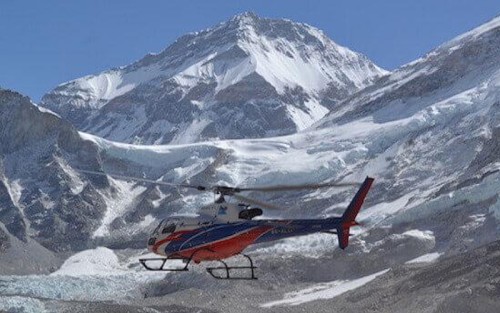
Helicopter evacuation is one of the most important areas for trekkers to understand before starting a high-altitude trek in Nepal. Some trekking destinations are located several hours or days from a road, and serious medical emergencies may require aerial evacuation. Therefore, clients should confirm that their insurance policy explicitly covers emergency helicopter evacuation in Nepal and that the coverage is sufficient for their planned itinerary.
Do not assume that "medical evacuation" automatically means that every helicopter rescue will be covered. Ask your insurer specifically whether helicopter rescue from remote mountain areas of Nepal is covered, what altitude is covered, whether search and rescue is included, whether pre-authorization is required, and whether the insurance company will provide a payment guarantee or coordinate directly with the rescue provider. The exact procedure differs between insurance companies, so clients should obtain written confirmation before departure.
Check the Maximum Altitude of Your Insurance
Altitude coverage is particularly important for Himalayan trekking. Your insurance policy should cover the highest altitude you expect to reach, including major viewpoints, passes, base camps, and optional side trips.
For example, different itineraries can have very different altitude requirements. A low-altitude cultural trek may stay below 3,000 metres, while Everest Base Camp reaches approximately 5,364 metres and Kala Patthar is approximately 5,545 metres. A trekking peak or mountaineering expedition can require substantially higher coverage. Therefore, clients should provide their insurer with the actual itinerary rather than simply saying, "I am going trekking in Nepal."
For peak climbing and expeditions, the policy must correspond to the maximum altitude of the specific mountain and the nature of the climbing activity. A policy that covers ordinary trekking at a lower altitude may not cover technical climbing or a higher-altitude expedition.
What Should International Clients Check Before Buying Insurance?
Before purchasing your insurance, Nepal Voyage Treks recommends that you carefully check the policy wording and ask the insurance company for written confirmation. You should confirm that the policy covers your complete travel period in Nepal, your exact trekking or climbing activity, the highest altitude of your itinerary, emergency medical treatment, hospitalization, helicopter evacuation, search and rescue where applicable, and medical repatriation.
You should also check the policy's exclusions. Important exclusions can relate to alcohol or drug use, undeclared pre-existing medical conditions, unauthorized activities, climbing activities, altitude limits, unsupported solo travel, failure to follow medical advice, or other conditions defined by the insurer. Every insurance company has its own terms and exclusions, so clients should not rely on another traveler's policy or assume that all insurance policies provide the same protection.
Pre-Existing Medical Conditions and Medication
If you have a pre-existing medical condition or regularly take medication, you should discuss this with your doctor and insurance provider before travelling. Do not assume that an existing condition will automatically be covered. Some insurers require medical declarations or additional underwriting, and the exact rules vary by policy.
Clients should carry sufficient personal medication for their journey and keep important medical information accessible. If your doctor has provided relevant medical documentation, carrying a copy can be useful during international travel. Nepal Tourism Board also recommends considering a medical check-up before departure and preparing physically for high-altitude trekking or mountaineering.
What Documents Should Clients Send to Nepal Voyage Treks?
Before starting your trek, peak climbing trip, or expedition, Nepal Voyage Treks recommends that international clients provide their insurance information to our team. Ideally, you should provide a copy of your insurance certificate or policy schedule showing your name, policy number, insurance dates, emergency assistance contact number, medical coverage, evacuation coverage, and relevant altitude or adventure-activity coverage.
Please also save the insurance company's 24-hour emergency assistance telephone number in your phone and keep a paper or digital copy of the policy. In a remote Himalayan environment, it is useful for your guide and expedition team to have the information available if an emergency occurs.
What Information Should Be Ready for an Emergency?
Before departure, clients should prepare a small emergency-information file containing their passport details, insurance policy information, emergency contact details, relevant medical information, medication information, and the contact information for their insurance company's emergency assistance service.
For a trekking group, Nepal Voyage Treks will normally coordinate with the guide, trekking staff, local contacts, medical facilities, helicopter operators, and other relevant parties when an emergency response is required. The Nepal Tourism Board advises trekkers to contact their local agency for helicopter evacuation during trekking or mountaineering emergencies.
How Emergency Rescue Normally Works in Nepal
If a client becomes seriously ill or injured during a trek, the first priority is to assess the situation and provide appropriate immediate assistance. The trekking guide or expedition team will communicate with the Nepal Voyage Treks office and relevant local contacts. Depending on the situation, the client may be assisted at a local health post, clinic, hospital, or other appropriate medical facility, or an evacuation may be considered.
When helicopter evacuation is medically and operationally appropriate, the necessary coordination may involve the trekking agency, insurance company's assistance team, helicopter operator, medical personnel, local authorities, and the receiving medical facility. The exact process depends on the location, medical condition, weather, aircraft availability, insurance requirements, and other circumstances.
Insurance Authorization and Payment Guarantee
International clients should understand that some insurers require pre-authorization or confirmation before arranging an expensive evacuation. In an emergency, the trekking agency and local rescue contacts may need to communicate with the insurer's assistance center to establish coverage and payment arrangements.
Clients should therefore provide accurate insurance information before starting their trek. An insurance policy is not simply a document; the insurer's emergency assistance process can be an important part of an actual rescue. The exact authorization and payment procedure varies according to the insurer and policy.
For this reason, Nepal Voyage Treks recommends that clients ask their insurance company before travelling: "If I require a helicopter evacuation from a remote trekking area in Nepal, how will you authorize and pay for the rescue?" Getting a clear answer before departure can help avoid confusion during an emergency.
Helicopter Rescue Depends on Weather and Safety
A helicopter evacuation cannot be guaranteed at a particular time or location. Himalayan weather can change rapidly, especially at higher elevations. Cloud, strong winds, poor visibility, snowfall, landing conditions, aircraft limitations, aviation regulations, and other operational factors can affect helicopter operations.
Even when an evacuation is medically necessary, the helicopter may have to wait until conditions are safe enough to operate. Rescue coordination therefore depends on both medical urgency and aviation safety. Helicopter rescue operators and the relevant authorities make operational decisions based on current conditions.
Helicopter Evacuation Is Not the Same as a Helicopter Tour
Clients should understand the difference between a commercial helicopter sightseeing flight and an emergency medical evacuation. A helicopter tour is a scheduled aviation service arranged for sightseeing or transportation, whereas an emergency evacuation is arranged because of illness, injury, or another serious emergency.
During an emergency evacuation, the aircraft, route, landing location, timing, passenger capacity, and operational arrangements can depend on the circumstances. Therefore, clients should never plan their trek on the assumption that a helicopter will always be immediately available.
Altitude Sickness and Emergency Evacuation
Altitude-related illness is one of the important risks associated with high-altitude trekking and mountaineering. Acute Mountain Sickness (AMS) can develop at altitude, and more serious altitude illnesses can become life-threatening. The Nepal Tourism Board advises mountaineers and high-altitude trekkers to learn about AMS and notes that it can develop above approximately 3,000 metres.
Clients should follow the advice of their qualified guide and medical professionals, allow appropriate time for acclimatization, stay hydrated according to medical guidance, avoid pushing themselves when unwell, and report concerning symptoms promptly. A client should never hide symptoms from the guide simply because they want to continue toward the destination.
For serious symptoms, the trekking team may recommend descent, medical assessment, or evacuation. The decision should be based on the individual's condition and professional assessment rather than the desire to complete the itinerary.
Insurance for Peak Climbing in Nepal
Peak climbing requires a different level of preparation from ordinary trekking. Climbers participating in activities such as Island Peak, Mera Peak, Lobuche Peak, Pisang Peak, Yala Peak, or other permitted climbing objectives should check that their insurance specifically covers the climbing activity and maximum altitude involved.
A normal trekking policy may not automatically cover mountaineering or technical climbing. Clients should therefore tell the insurer the exact peak they intend to climb and the highest altitude of the expedition. For example, if an expedition reaches an altitude beyond the policy's permitted limit, the policy may not provide the expected protection.
Insurance for Mountaineering Expeditions
For higher-altitude mountaineering expeditions, insurance preparation becomes even more important. Clients should confirm coverage for high-altitude mountaineering, emergency medical treatment, helicopter evacuation where operationally possible, search and rescue where included, hospitalization, medical repatriation, and trip cancellation or interruption, according to the terms of their policy.
For expedition activities, clients should also check whether the policy has special requirements concerning climbing permits, expedition leaders, guides, ropes, equipment, technical climbing, or maximum altitude. Insurance companies may classify different activities differently, so the exact wording should be checked before purchase.
Nepal's mountaineering regulations also contain insurance provisions concerning emergency rescue for expedition teams and high-altitude workers, making insurance an important component of expedition planning.
Travel Insurance for Nepal Tours and Cultural Holidays
Travel insurance is not only for trekkers and climbers. International clients joining Kathmandu tours, Pokhara tours, Chitwan safaris, cultural tours, mountain flights, helicopter tours, pilgrimage tours, or multi-destination Nepal holidays should also consider comprehensive travel insurance.
For lower-altitude sightseeing, the most important areas may include emergency medical treatment, hospitalization, trip cancellation or interruption, baggage loss or delay, travel delays, and personal liability, depending on the policy. If your itinerary also includes trekking, rafting, peak climbing, or another adventure activity, make sure those activities are specifically covered.
What Insurance Usually May Cover
Depending on the policy selected by the client, travel insurance may provide benefits for emergency medical treatment, hospitalization, emergency evacuation, helicopter evacuation, search and rescue, medical repatriation, trip cancellation, trip interruption, baggage loss or delay, and other travel-related emergencies.
However, coverage varies significantly between insurance providers and policies. Nepal Voyage Treks does not determine what an insurance company will accept or pay. Clients should read their policy documents carefully and confirm coverage directly with their insurer.
What Insurance May Not Cover
Travel insurance may exclude certain circumstances or expenses. These can include activities outside the policy's permitted classification, trekking above the stated altitude limit, climbing without the required coverage, undeclared medical conditions, certain pre-existing conditions, alcohol- or drug-related incidents, expenses incurred without required authorization, personal expenses, or other exclusions stated in the policy.
Clients should also understand that having insurance does not guarantee that every helicopter evacuation will automatically be paid. The insurer will assess the claim according to its policy terms, exclusions, authorization procedures, medical evidence, and other requirements.
Rescue Costs Not Covered by Insurance
If an insurance company refuses a claim or if an expense falls outside the policy terms, the traveler may remain responsible for that cost. Similarly, if the insurance limit is insufficient to cover an eligible expense, the client may be responsible for the balance.
This is why Nepal Voyage Treks strongly recommends that clients verify their coverage before departure, rather than discovering the limitations of their policy during an emergency.
What Nepal Voyage Treks Can Do During an Emergency
Nepal Voyage Treks takes reasonable steps to support clients during emergencies by coordinating with the trekking guide, expedition leader, local contacts, medical facilities, helicopter operators, insurance assistance teams, and other relevant parties as appropriate.
Our team can help communicate the situation, provide itinerary and location information, coordinate with local rescue contacts, assist with logistical arrangements, and communicate with family or emergency contacts where appropriate.
However, the final decision regarding medical treatment belongs to qualified medical professionals, while helicopter operations depend on aviation safety, weather, aircraft availability, regulations, and other operational considerations.
What Nepal Voyage Treks Cannot Guarantee
Although we make every reasonable effort to coordinate emergency assistance, no trekking company can guarantee that a helicopter will reach a particular location at a particular time. Mountain weather and aviation conditions can change quickly.
Nepal Voyage Treks also cannot guarantee that an insurance company will approve a claim. Insurance coverage is a contract between the traveler and the insurance provider, and the insurer's terms and conditions determine whether a particular expense is covered.
Clients remain responsible for purchasing appropriate insurance and understanding its terms before travelling.
Before Travelling to Nepal: International Client Checklist
Before leaving your home country, we recommend completing the following preparations:
First, purchase comprehensive travel insurance that matches your exact Nepal itinerary.
Second, check the maximum altitude covered by the policy and compare it with the highest point of your trek, peak, or expedition.
Third, confirm helicopter evacuation coverage specifically for remote mountain areas of Nepal.
Fourth, confirm that your activity is covered. Tell the insurer whether you are doing trekking, high-altitude trekking, peak climbing, mountaineering, expedition activities, rafting, or another adventure activity.
Fifth, check medical coverage, including emergency treatment and hospitalization.
Sixth, check medical repatriation and, where relevant, search-and-rescue provisions.
Seventh, declare relevant pre-existing medical conditions according to your insurer's requirements.
Eighth, save your insurer's 24-hour emergency assistance number in your phone.
Ninth, carry a digital and printed copy of your insurance certificate and policy schedule.
Tenth, send the relevant insurance details to Nepal Voyage Treks before your trek or expedition begins.
What to Do Before Starting Your Trek in Nepal
After arriving in Kathmandu, clients should review their insurance details again before departing for the mountains. Make sure the policy is valid for the entire trip and that the itinerary has not changed in a way that affects coverage.
If you add a peak climb, side trip, high-altitude pass, helicopter flight, rafting activity, or other adventure activity, check whether your insurance continues to cover the new activity.
Nepal Voyage Treks can also review the basic insurance information you provide and help you understand what information should be available to the trekking or expedition team. However, the traveler should always obtain final confirmation directly from the insurance provider.
Keep Your Emergency Contacts Available
Before leaving Kathmandu, make sure your guide and relevant members of the Nepal Voyage Treks team have the necessary emergency information. You should also have the company's contact details, your guide's contact information, your insurance assistance number, and your emergency contact at home.
For remote trekking, keeping important information in both digital and paper form is sensible because mobile connectivity and battery power can be limited in some areas.
Physical Preparation Before High-Altitude Trekking
Insurance is only one part of mountain safety. Clients should also prepare physically and mentally for their planned activity. Nepal Tourism Board recommends physical preparation for high-altitude trekking and mountaineering and recommends consulting a physician regarding health preparation before travel.
Your preparation should be appropriate to your itinerary. A short cultural tour requires different preparation from a two-week high-altitude trek or a technical climbing expedition.
Follow Your Guide's Safety Advice
During your trek or expedition, please listen carefully to your guide, climbing guide, expedition leader, and medical professionals. Do not leave the designated route without informing your team. Do not continue walking if you are experiencing serious symptoms without telling your guide.
The Nepal Tourism Board recommends using designated routes, trekking in groups rather than alone, and carrying basic items such as a torch, rain protection, and a first-aid kit.
Emergency Rescue for Nepal Voyage Treks Clients
At Nepal Voyage Treks, we believe that responsible adventure travel begins with proper preparation. Our goal is to provide international travelers with professionally organized trekking, peak climbing, expedition, and tour services while taking appropriate precautions for the realities of travelling in the Himalayas.
Emergency rescue is not something anyone expects to need, but responsible trekkers and climbers should prepare for it before their journey begins. Having appropriate travel insurance, providing your insurance information to our team, carrying emergency contact details, following your guide's instructions, acclimatizing appropriately, and reporting health problems early can all contribute to a safer Himalayan experience.
Important Advice for International Clients
Please do not purchase travel insurance simply because it has the words "Nepal," "adventure," or "trekking" in its title. Read the actual policy wording. Your insurance should correspond to your route, maximum altitude, activity, travel dates, and emergency requirements.
Before paying for a policy, ask your insurer:
"Does this policy cover my exact trekking or climbing activity in Nepal?"
"What is the maximum altitude covered?"
"Does it cover emergency helicopter evacuation from remote mountain areas in Nepal?"
"Does it cover altitude-related illness?"
"Does it cover search and rescue?"
"Does it cover hospitalization and emergency medical treatment?"
"Does it cover medical repatriation to my home country?"
"Do I need pre-authorization before helicopter evacuation?"
"What emergency assistance number should my trekking company use?"
Ask for important confirmations in writing whenever possible.
Nepal Voyage Treks – Responsible Himalayan Adventure
Nepal Voyage Treks welcomes travelers from around the world for trekking, peak climbing, mountaineering expeditions, cultural tours, adventure tours, helicopter tours, and Himalayan journeys throughout Nepal. We understand that international travelers need clear information before undertaking a remote mountain adventure.
Our trekking and expedition team can assist with practical trip coordination and emergency communication when required. At the same time, every client has an important responsibility to arrange suitable travel insurance, understand the policy conditions, disclose relevant information to the insurer, follow safety instructions, and prepare appropriately for the planned altitude and activity.
The mountains of Nepal are magnificent, but they should always be approached with respect, preparation, appropriate insurance, responsible decision-making, and professional guidance.
SEO Keywords for This Page
Nepal travel insurance, Nepal trekking insurance, trekking insurance Nepal, helicopter rescue Nepal, helicopter evacuation Nepal, emergency rescue Nepal, Nepal trekking helicopter evacuation, Everest Base Camp travel insurance, Everest trekking insurance, peak climbing insurance Nepal, mountaineering insurance Nepal, expedition insurance Nepal, high altitude trekking insurance, Nepal adventure travel insurance, emergency medical evacuation Nepal, Nepal helicopter rescue insurance, trekking safety Nepal, Nepal Voyage Treks, travel insurance for Everest Base Camp, travel insurance for peak climbing, Himalayan rescue Nepal.
Important Insurance Disclaimer
The information above is intended as general travel-planning information for Nepal Voyage Treks clients and should not be treated as an insurance contract or medical advice. Insurance coverage, exclusions, altitude limits, claim procedures, authorization requirements, and rescue benefits differ between insurers and policies. Clients should read their complete policy wording and confirm coverage directly with their insurance provider before travelling. Nepal Tourism Board also recommends comprehensive travel insurance for medical emergencies and activities such as trekking.
For Nepal Voyage Treks, the safest approach is simple: choose insurance based on your actual itinerary and maximum altitude, make sure emergency helicopter evacuation is explicitly covered where required, keep your policy and emergency contacts accessible, and provide the necessary information to your trekking or expedition team before departure.

Travel Insurance, Emergency Rescue and Helicopter Evacuation in Nepal
Trekking & Hiking Adventure