





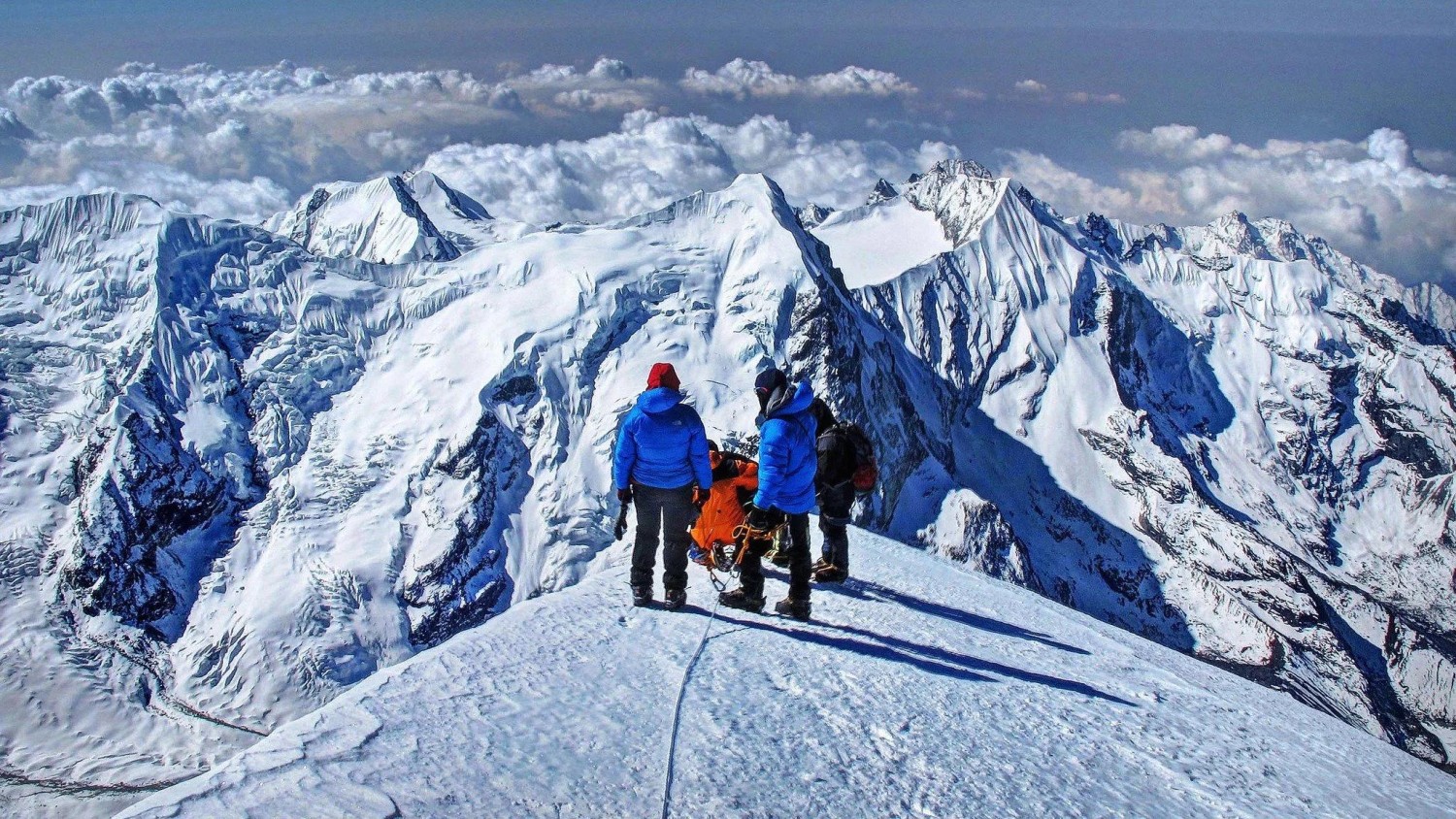
An honest guide for first-time Himalayan climbers
Mera Peak (6,476 m) is often called a “beginner’s peak”, and it is a fair label in one sense: you don’t need rock-climbing or advanced mountaineering skills to reach the top. But “beginner-friendly” is not the same as “easy”. You will sleep above 5,000 m, climb a glacier before dawn and spend 10 to 12 hours on your feet on summit day. First-timers who succeed are the ones who prepare properly and respect the mountain.
This guide is written for first-time climbers. It explains who Mera Peak really suits, how hard it is, a step-by-step training plan, the skills and gear you need and the mistakes to avoid. When you’re ready, see our full Mera Peak Climbing trip for dates, price and booking.
Is Mera Peak Really Suitable for Beginners?
Yes, if you are a fit, determined trekker with some multi-day trekking experience. Mera Peak is a non-technical trekking peak, which means the summit slopes are snow and glacier walking rather than rock or ice climbing. Guides fix the plan, lead the route and teach you the basics of crampons, ice axe and harness use.
No, if you have never walked more than a day at a time, or never been above 3,000 m. The challenge is mostly altitude, endurance and cold, and these can’t be learned in a few days.
| You Are Probably Ready If... | Think Twice If... |
|---|---|
| You exercise regularly and can walk 5 to 6 hours with a pack | You rarely exercise or have no hiking experience |
| You have done a multi-day trek (ideally above 3,500 m) | You’ve never trekked for more than a day |
| You handle cold, early starts and basic conditions calmly | You dislike discomfort, cold or basic lodging |
| You can commit 12 to 16 weeks of training | You can only start training a few weeks before departure |
| You’re open to learning gear skills and following guide instructions | You prefer to climb independently or ignore advice |
If you land in the “think twice” column, don’t give up on Mera. Build experience first with something like the Everest Base Camp Trek, then return for the peak.
How Hard Is Mera Peak for a First-Timer?
| Factor | What You Face | Beginner Reality Check |
|---|---|---|
| Altitude | Nights at 4,700 m, 5,000 m and 5,600 m | The biggest challenge, and fitness alone doesn’t prevent altitude sickness |
| Endurance | 5 to 9 hour trekking days, then a 10 to 12 hour summit day | Needs real stamina built over months |
| Technical skill | Crampons, ice axe, harness and rope on a glacier | Basic and taught on the trip, but easier if you practice beforehand |
| Cold | Summit start around 2:00 to 3:00 AM, well below freezing | Good layering and warm gear matter more than toughness |
| Remote setting | Days from a road, with basic lodges and a camp | Comfort is limited, and flexibility helps |
| Weather | Wind or snow can delay or stop the summit attempt | Success is never guaranteed, even for fit climbers |
The key point for beginners: most people who turn back on Mera do so because of altitude symptoms, fatigue or cold, not because of technical difficulty. That is why your training and acclimatization approach matter so much.
Beginner Readiness Checklist
Before you book, tick these off honestly:
- I can hike 5 to 6 hours with a 7 to 8 kg pack without being exhausted.
- I’ve trekked on multiple consecutive days at least once.
- I’m comfortable with long, cold, early starts.
- I’ve been above 3,000 m before, or I’m willing to do a warm-up trek.
- I have 12 to 16 weeks to train.
- I’ve had a medical check-up and told my doctor about the trip.
- I can arrange travel insurance covering peak climbing to 6,500 m with helicopter evacuation.
- I’m willing to turn back if my guide says it’s unsafe.
If most answers are yes, you’re in good shape to start planning.
16-Week Training Plan for First-Time Climbers
| Phase | Weeks | Goal | Weekly Plan |
|---|---|---|---|
| 1. Foundation | 1–4 | Build a habit and base fitness | 3 cardio sessions (30–45 min), 2 short strength sessions, 1 easy hike (1–2 hrs) |
| 2. Strength and endurance | 5–8 | Raise volume and leg strength | 3 cardio sessions (45–60 min), 2 strength sessions, 1 hike (2–4 hrs) |
| 3. Climb-specific | 9–12 | Simulate trek and altitude demands | 3–4 cardio sessions including hill or stair work, 2 strength sessions, 1 long loaded hike (4–6 hrs), plus an easy hike the next day |
| 4. Peak | 13–15 | Maximum effort, then taper | Back-to-back long hikes (5–7 hrs), keep strength work, reduce load in week 15 |
| 5. Final week | 16 | Rest and prepare | Short walks, gear check, sleep |
If you are starting from a low fitness level, extend the plan to 20 weeks or begin with an easy walking program.
Sample Training Week (Phase 3)
| Day | Session |
|---|---|
| Monday | Strength: squats, lunges, step-ups, core (45 min) |
| Tuesday | Cardio: steady run, bike or brisk walk (60 min) |
| Wednesday | Rest or gentle mobility |
| Thursday | Hill or stair intervals (45 min) |
| Friday | Strength and core (40 min) |
| Saturday | Long hike with loaded pack (5–6 hrs) |
| Sunday | Second hike or active recovery (2–3 hrs) |
Key Training Elements
Cardio endurance. Running, cycling, swimming or fast hill walking builds the engine for long days. Keep most sessions at a pace where you can speak in short sentences.
Leg and core strength. Squats, lunges, step-ups, calf raises, planks and glute bridges protect your knees on long descents like the one from Thuli Kharka to Lukla.
Loaded hiking. Carry 7 to 8 kg in your daypack on hills, using the boots and poles you’ll take to Nepal.
Back-to-back days. Your trek has many consecutive long days, so train for accumulated fatigue.
Stairs and hills. Stair climbing with a weighted pack is one of the best flat-city substitutes for mountain training.
Cold-weather outings. If possible, train in cold, windy conditions to test your layers and gloves.
Recovery. Sleep, stretching and rest days are part of training, and overtraining causes injuries.
Skills Beginners Should Know
You will be taught on the mountain, but arriving familiar saves energy and builds confidence.
| Skill | What It Involves | How to Practice |
|---|---|---|
| Walking in crampons | Wide, careful steps on snow and ice without tripping | Try them on snow or a gym session if available, or practice putting them on and adjusting straps at home |
| Ice axe use | Holding it correctly and using it for balance | Learn grip and basic self-arrest in a short course or guided session |
| Harness and rope | Putting on a harness, clipping in and moving roped | Practice with your guide at camp before summit day |
| Layering | Adding and removing clothing without overheating or chilling | Test layers on cold training hikes |
| Pacing | A slow, steady rhythm at altitude | Practice breathing and short rest steps on uphill hikes |
Your guides review this gear before the climb, and group climbing equipment is provided under our package.
Altitude Tips for First-Timers
The itinerary gives you the best chance, but your habits matter too.
- Go slower than feels necessary. A pace that seems too slow is usually right.
- Drink 3 to 4 liters daily, more on long days.
- Eat even if your appetite fades. Carbohydrates fuel your body at altitude.
- Use the acclimatization day properly. Rest at Thangnak, hydrate and keep outings light.
- Report symptoms early. Headache, nausea, dizziness or poor sleep are signals, not weaknesses.
- Avoid alcohol and sleeping pills at altitude.
- Talk to your doctor about preventive medication before you travel.
- Accept turning back. The summit is optional, and getting home safely is not.
Mental Preparation
Many first-timers find the mental side harder than expected.
- Expect discomfort. Cold mornings, basic lodges, shared rooms and limited washing are part of the journey.
- Break it into pieces. On summit day, focus on the next 30 minutes, not the whole climb.
- Stay positive in bad weather. Delays and early starts are normal.
- Trust your guide. Their experience is your best safety tool.
- Celebrate small wins. Crossing Zatrwa La, reaching Khare and sleeping at High Camp are all achievements.
What the Mera Peak Journey Looks Like
Our trip runs 18 days, from Kathmandu back to Kathmandu, via the Hinku Valley.
| Stage | Days | What Happens |
|---|---|---|
| Kathmandu | 1–2 | Arrival, briefing, gear check |
| Fly to Lukla and approach | 3–7 | Drive to Ramechhap and fly to Lukla, then trek via Chutanga, Zatrwa La Pass, Thuli Kharka and Kothe to Thangnak |
| Acclimatization | 8 | Rest day at Thangnak (4,700 m) |
| Up to the base | 9–10 | Khare (5,000 m) and Mera High Camp (5,600 m) |
| Summit | 11–12 | Summit push at 6,476 m, with a reserve day for weather |
| Return | 13–16 | Back via Kothe, Thuli Kharka and Zatrwa La to Lukla, then fly to Kathmandu |
| Finish | 17–18 | Rest day and departure |
See the day-by-day details on the Mera Peak Climbing page.
Gear for First-Timers: Rent or Buy?
You don’t need to buy everything. Rent expensive technical items in Kathmandu if you are unsure you’ll climb again.
| Item | Suggested Approach |
|---|---|
| Mountaineering boots | Rent if fit is good, or buy if you plan more peaks. Break them in either way |
| Crampons, ice axe, harness, rope | Group equipment is provided in our package |
| Down jacket (-20°C rated) | Rent or buy |
| 4-season sleeping bag | Rent or buy |
| Base layers, socks, gloves, hats | Bring your own, and test them before the trip |
| Sunglasses with side protection | Bring your own (glare at altitude is intense) |
| Trekking poles and headlamp | Bring your own |
Our peak climbing equipment guide has the full checklist.
Budgeting for Your First Peak
Our Mera Peak Climbing package starts from €2,050 per person, and the final price depends on season, group size and customization. For context, independent 2026 guides put typical guided Mera Peak expeditions at roughly USD 2,300 to 3,500. Beyond the package, first-timers should budget for:
- International flights and Nepal visa
- Travel insurance
- Rented or purchased personal gear
- Tips for the crew
- Drinks, snacks and extras in Kathmandu
Permits: the package covers them. The NMA climbing permit costs USD 350 in spring and USD 175 in other seasons, plus national park and local fees. The standard route enters Makalu Barun National Park around Khare and the upper Hinku Valley. Fees change, so confirm current rates with us.
Best Season for Beginners
For a first climb, autumn (September to November) often works best: clear skies, stable weather and a cheaper climbing permit. Spring (March to May) is a good alternative, with milder temperatures and blooming rhododendrons, though permits cost more. Avoid winter and the monsoon.
Insurance and Safety
Insurance is mandatory and must cover peak climbing up to at least 6,500 m and emergency helicopter evacuation. Read our guides to travel insurance for trekking and peak climbing and helicopter rescue in Nepal, and review our first aid information.
10 Common Beginner Mistakes
- Starting training too late. Last-minute cramming raises injury risk.
- Skipping strength work. Strong legs protect knees on long descents.
- Walking too fast early on. It drains energy and increases altitude risk.
- Using new boots. Break them in for weeks to avoid blisters.
- Packing cotton clothing. It stays wet and cold.
- Underestimating the cold. Pack proper insulation for summit day.
- Not drinking enough. Dehydration worsens altitude symptoms.
- Hiding symptoms. Tell your guide early, always.
- Ignoring the weather reserve day. Don’t book tight flights home.
- Treating the summit as the only success. The journey is the point.
Other First-Peak Options
If you want to compare, here are other beginner-friendly choices:
- Yala Peak Climbing: lower and gentler, in Langtang
- Tharpu Chuli (Tent Peak) Climbing: a shorter climb in the Annapurna Sanctuary
- Island Peak Climbing: more technical near the top
- Lobuche Peak Climbing: a steeper option near Everest Base Camp
- Pisang Peak Climbing and Chulu East Peak Climbing: peaks on the Annapurna Circuit
Browse the full list on our peak climbing in Nepal page.
Top 15 Mera Peak Beginner FAQs
1. Can a complete beginner climb Mera Peak?
If “complete beginner” means no mountaineering experience, yes. If it means no hiking or trekking experience at all, it’s not advisable. You should be fit, able to walk long days with a pack and ideally have trekked for several consecutive days. Technical skills like crampon use are taught on the trip.
2. Do I need previous mountaineering experience?
No. Mera Peak is a non-technical trekking peak, and your guides teach and supervise the basics of crampons, ice axe and harness work. Previous high-altitude trekking is far more useful than climbing experience, because altitude is the main challenge.
3. How fit do I need to be?
You should be able to hike 5 to 6 hours with a 7 to 8 kg pack and recover well for the next day. On the trip you will have trekking days of 4 to 9 hours and a summit day of 10 to 12 hours. Aim to train consistently for 12 to 16 weeks.
4. How long should I train for Mera Peak?
We recommend 12 to 16 weeks, with 3 to 4 sessions a week combining cardio, leg strength and one long loaded hike. If you are starting from low fitness, extend your preparation to 20 weeks.
5. Should I practice with crampons and an ice axe before I go?
It helps. Walking in crampons feels awkward at first, and familiarity reduces fatigue and the risk of tripping. A short guided session on snow or ice before you travel is useful, but not mandatory, because your guides review the techniques before the summit push.
6. What is the minimum trekking experience you recommend?
At least one multi-day trek, ideally reaching 3,500 to 4,000 m or higher. Treks such as the Everest Base Camp Trek are a good test of how your body responds to altitude and consecutive walking days.
7. Is there an age limit for Mera Peak?
There is no fixed age limit in our trip description, but fitness and health matter more than age. Anyone planning the climb should get a medical check-up and discuss altitude and strenuous exertion with their doctor. Tell us your age and health background so we can advise honestly.
8. What if I get altitude sickness and can’t summit?
Your guide monitors you daily and will recommend resting, descending or stopping if symptoms worsen. Turning back is a safe, sensible decision, not a failure. Reaching Khare or High Camp and trekking in the Hinku Valley is still a major achievement, and many climbers return to try again.
9. How likely is a first-timer to reach the summit?
No honest operator can promise a summit, because weather, health and conditions all play a part. Your chances improve with good fitness, slow pacing, careful acclimatization and a flexible schedule. Our itinerary includes a rest day at Thangnak and a reserve day around the summit to improve your chances.
10. How difficult is summit day for a beginner?
It is long and cold. You start around 2:00 to 3:00 AM by headlamp, climb snow slopes and a glacier roped to your guide, and reach the top after roughly 3 to 4 hours. The full round trip back to camp can take 10 to 12 hours, so pacing, warmth and food are crucial.
11. Is Mera Peak scary or exposed?
The route is not a steep, exposed technical climb, and most of the summit approach is a steady snow slope. Even so, you will be on a glacier with drops and crevasses in the area, so you move roped and follow your guide’s footsteps. Most first-timers find the cold and fatigue harder than the terrain itself.
12. What gear can I rent, and what should I own?
Technical items like crampons, ice axe, harness and rope are provided as group equipment on our package. Many climbers rent a down jacket, sleeping bag and boots in Kathmandu, while owning base layers, socks, gloves, sunglasses, a headlamp and trekking poles. Always test boots on long hikes before you fly.
13. How much does a first-time Mera Peak trip cost?
Our package starts from €2,050 per person, and typical independent estimates run higher or lower depending on services. Add international flights, visa, insurance, personal gear, tips and extras. Contact us for a written quote that fits your dates and group size.
14. Can I join a group if I’m traveling alone?
Yes. Solo travelers are welcome, and group trips help share costs. Tell us your preferred dates and we’ll advise on departures. Our team also offers private departures if you want a personalized pace, and you can see options on our Contact Us page.
15. What should I do right now to start preparing?
Book a medical check-up, start a regular training routine, and plan an altitude warm-up trek if you haven’t trekked above 3,500 m. Then arrange insurance, review our equipment checklist, and contact us with your dates. Early planning gives you time to train, rent gear and secure flights.
Start Your First Himalayan Summit
Mera Peak is a rewarding first Himalayan peak for climbers who prepare well. With 12 to 16 weeks of training, a sensible acclimatization plan, proper gear and a licensed team, a first-timer can stand at 6,476 m and look across to Everest, Lhotse, Makalu, Cho Oyu and Kanchenjunga.
- View the full trip: Mera Peak Climbing
- Book now: Book Your Climb
- Ask a question: Make Inquiry or email info@nepalvoyagetreks.com
- WhatsApp: +977 9851080223
Learn more about Nepal Voyage Treks and read more guides on our blog.
Come as a guest and go as a friend. Namaste from the Nepal Voyage Treks team.






Leave a Comment