




Everything you need to know before you attempt Nepal’s highest trekking peak
At 6,476 m, Mera Peak is the highest of Nepal’s official trekking peaks, and the summit view is hard to beat: five of the world’s 8,000 m giants, Everest, Lhotse, Makalu, Cho Oyu and Kanchenjunga, stand in one sweeping panorama. It attracts first-time Himalayan climbers because the route is non-technical and the approach through the quiet Hinku Valley is beautiful. But “non-technical” does not mean “easy”. Altitude, cold, a glaciated summit and a long final day make it a serious undertaking.
This guide covers how hard Mera Peak really is, what it costs, which permits you need, the 18-day itinerary and how to prepare. You can view full trip details and book on our Mera Peak Climbing page.
Mera Peak Climbing at a Glance
| Detail | Information |
|---|---|
| Summit altitude | 6,476 m (21,247 ft) |
| Region | Everest region (Hinku Valley), Nepal |
| Duration | 18 days, Kathmandu to Kathmandu |
| Grade | Strenuous |
| Style | Lodges on the approach, camp at Mera High Camp |
| Best seasons | March to May and September to November |
| Group size | 1 to 30 on our trip page |
| Price | From €2,050 per person |
| Start / end | Kathmandu |
Why Climb Mera Peak?
- A real summit without technical climbing. You use crampons, a harness and an ice axe, but you don’t need rock-climbing or advanced alpine skills.
- Views few peaks can match. From the top you see Everest, Lhotse, Makalu, Cho Oyu and Kanchenjunga together.
- A quiet, remote approach. The Hinku Valley and Zatrwa La Pass are far less crowded than the main Everest Base Camp trail.
- Culture on the way. You walk through Sherpa villages, past mani walls, prayer flags and yak pastures.
- A stepping stone. Many climbers use Mera to build experience before tackling Island Peak or a full expedition.
How Difficult Is Mera Peak Climbing?
Mera Peak is best described as a demanding high-altitude trek with a glaciated summit push. Most of the difficulty comes from altitude, endurance and cold, not from technical moves.
| Challenge | Why It Matters |
|---|---|
| Altitude | You sleep at 5,000 m (Khare) and 5,600 m (High Camp), where oxygen is far lower than at sea level |
| Long approach | Several remote days through the Hinku Valley and over Zatrwa La Pass (about 4,600 m) before the climb even starts |
| Cold and wind | Summit day starts around 2:00 to 3:00 AM, with temperatures well below freezing |
| Summit day length | Typically 10 to 12 hours round trip from High Camp |
| Glaciated terrain | Crampons, ice axe, harness and rope work are needed, guided by experienced Sherpas |
| Weather | Wind, snow or poor visibility can delay or stop a summit attempt |
What makes it manageable: a gradual itinerary with acclimatization days, guides who know the mountain, a clear route and a non-technical summit slope. With good fitness, preparation and respect for altitude, many trekkers with no mountaineering background succeed.
Who it suits: fit trekkers with previous multi-day trekking experience, ideally above 4,000 m, who are comfortable with long days and cold. If you have never trekked at altitude, consider an easier route first.
18-Day Mera Peak Climbing Itinerary
| Day | Route | Altitude | Highlights |
|---|---|---|---|
| 1 | Arrive in Kathmandu | 1,350 m | Welcome, trek briefing |
| 2 | Preparation day | 1,350 m | Gear check, shopping, optional sightseeing |
| 3 | Drive to Ramechhap, fly to Lukla | 2,860 m | 4 to 5 hr drive, short mountain flight, rest in Lukla |
| 4 | Lukla to Chutanga | 3,050 m | Sherpa villages, first Himalayan views |
| 5 | Chutanga to Thuli Kharka via Zatrwa La | 4,600 m pass | First high pass, Ama Dablam and Kwangde views |
| 6 | Thuli Kharka to Kothe | 4,200 m | Descent into the Hinku Valley |
| 7 | Kothe to Thangnak | 4,700 m | Glacial scenery, Mera Central and Baruntse |
| 8 | Acclimatization day at Thangnak | 4,700 m | Rest, short hike, adaptation |
| 9 | Thangnak to Khare | 5,000 m | Base of Mera Peak |
| 10 | Khare to Mera High Camp | 5,600 m | Gear review and summit preparation |
| 11–12 | Summit Mera Peak (6,476 m), return to Khare | 6,476 m | Summit day, with a reserve day for weather |
| 13 | Khare to Kothe | 4,200 m | Descent |
| 14 | Kothe to Thuli Kharka | 4,000–4,200 m | Return through the valley |
| 15 | Thuli Kharka to Lukla via Zatrwa La | 2,860 m | Long day, 8 to 9 hours |
| 16 | Fly Lukla to Kathmandu | 1,350 m | Aerial Everest views |
| 17 | Leisure day in Kathmandu | 1,350 m | Rest and sightseeing |
| 18 | Departure | n/a | Airport transfer |
Key Days Explained
Day 3, the gateway flight. In peak season, fixed-wing flights to Lukla often operate from Ramechhap, a 4 to 5 hour drive from Kathmandu. Leave early and keep a flexible mindset.
Day 5, Zatrwa La. This is your first big test, with a climb over a pass of about 4,600 m before descending to Thuli Kharka.
Day 8, rest at Thangnak. Your acclimatization day is the most important rest day on the trip, so use it properly.
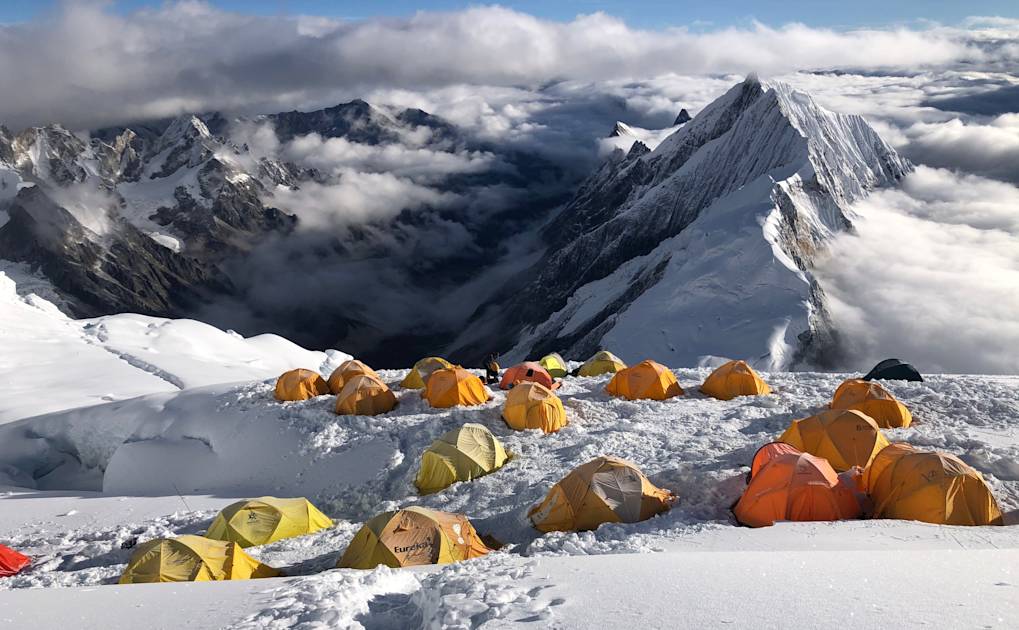
Day 10, Mera High Camp (5,600 m). You camp here before the summit push. Your guides check ropes, crampons and harnesses, and everyone rests as much as possible.
Days 11–12, summit. You start in the early hours and climb steep snow slopes and a glacier to the top. After the summit, you descend to High Camp and continue to Khare. A reserve day helps if weather forces a delay.
For the full day-by-day description, see the Mera Peak Climbing itinerary on our trip page.
Mera Peak Climbing Cost
On our trip page, the Mera Peak Climbing package starts from €2,050 per person. For context, independent 2026 guides put a typical guided Mera Peak expedition at around USD 2,300 to 3,500, with the final price depending on group size, season, guide support and services.
What Affects the Price?
| Cost Factor | Why It Changes the Price |
|---|---|
| Group size | Larger groups share guide, logistics and camp costs |
| Season | Spring permits cost more, and flights and lodges are busier |
| Climbing support | Number of climbing Sherpas and staff |
| Flights and transfers | Kathmandu to Ramechhap by road and Ramechhap to Lukla by air, plus return flight |
| Hotels and meals | Standard of Kathmandu hotels and trail food |
| Equipment | Group climbing gear provided versus personal gear you rent or bring |
| Customization | Extra days, private departure, Kathmandu add-ons |
What Is Included
- Airport transfers in Kathmandu
- Domestic flights (Lukla sector) and related transfers
- 3 to 4 star hotels in Kathmandu with breakfast
- Lodge accommodation on the trek and camp at High Camp
- All meals during the trek
- Professional climbing guides and Sherpa support team
- Mera Peak climbing permits and national park entry fees
- Group climbing equipment: ropes, ice axes, harnesses, crampons (personal gear not included)
- Porters for luggage and support
- Government and local taxes
- Pre-trip briefing and emergency evacuation arrangements
What Is Not Included
- International flights and Nepal visa
- Travel insurance (mandatory)
- Personal climbing gear: boots, jacket, gloves, sleeping bag
- Tips for guides, porters and drivers
- Drinks, snacks, bottled water, laundry and personal expenses
- Optional activities outside the itinerary
Mera Peak Permits and Fees
Mera Peak needs a climbing permit plus park and local entry fees. We arrange all of them for you.
| Permit | Approx. Cost | Notes |
|---|---|---|
| NMA climbing permit | USD 350 in spring and USD 175 in other seasons | Mandatory, issued through the Nepal Mountaineering Association |
| Makalu Barun National Park entry | NPR 3,000 (about USD 22) | The standard route crosses into Makalu Barun National Park around Khare and the upper Hinku Valley |
| Local rural municipality fee | NPR 2,000 (about USD 15) | Khumbu Pasang Lhamu Rural Municipality |
| Sagarmatha National Park entry | NPR 3,000 (about USD 22) | Check whether your route requires it Trekking and Climbing Permits in Nepal +4 |
Fees change, so confirm current rates with our team before you pay.
Best Time for Mera Peak Climbing
| Season | Months | What to Expect |
|---|---|---|
| Spring | March to May | Milder temperatures, blooming rhododendrons, stable weather, higher permit fee |
| Autumn | September to November | Crisp, dry air, the clearest views, lower permit fee |
| Winter | December to February | Very cold, strong wind and heavy snow |
| Monsoon | June to August | Rain, clouds and poor visibility |
For most climbers, mid-October to mid-November and late April to mid-May are the best windows.
How to Prepare for Mera Peak
1. Build Fitness (12 to 16 Weeks Ahead)
| Focus | What to Do |
|---|---|
| Cardio | 3 sessions a week: running, cycling, swimming or fast hill walking, building to 60 to 75 minutes |
| Strength | 2 sessions a week: squats, lunges, step-ups, core and back work |
| Hiking | One long weekly hike with a loaded pack, building to 5 to 6 hours |
| Back-to-back days | Walk long on two consecutive days to simulate trek fatigue |
| Cold practice | Train outdoors in cold, windy conditions when possible |
2. Practice Basic Skills
Learn to walk in crampons, hold an ice axe and use a harness before you travel. Your guides review techniques before the climb, but arriving familiar with your gear builds confidence and saves energy.
3. Respect Altitude
Follow the itinerary’s acclimatization days, drink 3 to 4 liters of water daily and eat even when your appetite drops. Report headache, nausea or dizziness to your guide immediately. Discuss altitude medication with your doctor before travel.
4. Get the Right Gear
You need warm layers, a down jacket, insulated gloves, a 4-season sleeping bag, double mountaineering boots, sunglasses with side protection and a headlamp. Our peak climbing equipment guide explains what to bring, and many technical items can be rented in Kathmandu.
5. Arrange Insurance
Your policy must cover peak climbing up to at least 6,500 m and emergency helicopter evacuation. Read our guides to travel insurance for trekking, peak climbing and expeditions and helicopter rescue in Nepal, and see our first aid information.
Safety on Mera Peak
- Climb with licensed guides and experienced Sherpas.
- Follow the acclimatization schedule and never rush.
- Start summit day early so you finish before afternoon weather turns.
- Layer up for extreme cold and sudden weather changes.
- Know the signs of altitude sickness and descend if symptoms worsen.
- Accept your guide’s decision to turn back. Safety always comes before the summit.
Similar Peaks to Consider
If Mera Peak feels like too much or too little, explore other Nepal climbing options:
- Island Peak Climbing: an iconic peak that is more technical near the summit
- Lobuche Peak Climbing: pairs well with the Everest Base Camp trek
- Yala Peak Climbing: a gentler introduction in Langtang
- Pisang Peak Climbing and Chulu East Peak Climbing: peaks along the Annapurna Circuit
- Pachermo Peak Climbing: a quieter option in Rolwaling
- Tharpu Chuli (Tent Peak) Climbing: a shorter climb in the Annapurna Sanctuary
Browse all options on our peak climbing in Nepal page. If you want more Everest region trekking before or after your climb, see our Everest Base Camp Trek and other Everest region treks.
Top 15 Mera Peak Climbing FAQs
1. How difficult is Mera Peak climbing?
It is graded strenuous. The summit slope is non-technical, but you will sleep at 5,000 m and 5,600 m, climb on a glacier with crampons and ice axe, and face a summit day of around 10 to 12 hours in cold, thin air. Fitness, acclimatization and a good guide team matter more than climbing skill.
2. Can a beginner climb Mera Peak?
Yes, if “beginner” means a fit trekker with some multi-day trekking experience. You do not need previous mountaineering, but you should be comfortable walking long days at altitude, and ready to learn basic crampon and rope skills. If you have never trekked above 4,000 m, consider a lower trek first, or talk to us about how to build up.
3. How much does Mera Peak climbing cost?
Our package starts from €2,050 per person, with the final price depending on season, group size and customization. Independent 2026 guides place typical guided expeditions between about USD 2,300 and 3,500. Contact us for a written quote for your dates.
4. What permits do I need for Mera Peak?
You need an NMA climbing permit, a Makalu Barun National Park permit and a local rural municipality fee, and your route may also need Sagarmatha National Park entry. The climbing permit costs USD 350 in spring and USD 175 in other seasons. We arrange everything, so you only provide your passport copy and photos.
5. What is the best time to climb Mera Peak?
Spring (March to May) and autumn (September to November) offer the most stable weather. Autumn has the clearest views and a cheaper permit, while spring has milder temperatures and flowers on the lower trail. Winter is very cold and the monsoon brings rain and cloud, so we avoid both.
6. How long does the Mera Peak climbing trip take?
Our itinerary is 18 days from arrival to departure in Kathmandu. That includes a preparation day, a drive and flight to Lukla, an acclimatization day at Thangnak, summit days with a weather reserve, the return trek and two final days in Kathmandu.
7. How high is Mera Peak?
Our itinerary uses 6,476 m (21,247 ft). Some sources list slightly different figures, such as 6,461 m or 6,470 m, because surveys vary. All agree that it is the highest trekking peak in Nepal.
8. How do I get to Lukla, and why Ramechhap?
You fly to Lukla, the gateway to the Everest and Hinku regions. In busy seasons, flights are often moved to Ramechhap to ease air traffic at Kathmandu, which means a 4 to 5 hour drive before a short flight. Weather can delay flights, so keep buffer days at the end of your trip.
9. Where do I sleep during the climb?
In Kathmandu you stay in a hotel. On the trek you stay in simple mountain lodges, and at Mera High Camp (5,600 m) you sleep in tents or a basic camp before the summit push. Facilities are basic at altitude, so a warm sleeping bag is essential.
10. What climbing gear do I need, and what is provided?
Group equipment such as ropes, ice axes, harnesses and crampons is provided under the package on our trip page, while personal items like mountaineering boots, down jacket, gloves, sleeping bag and sunglasses are yours to bring or rent. Check our peak climbing equipment guide for the full checklist, and break in your boots before you travel.
11. How do I prevent altitude sickness on Mera Peak?
Climb slowly, follow the acclimatization days, drink 3 to 4 liters of water a day, eat regularly and avoid alcohol. Report any headache, nausea, dizziness or unusual tiredness to your guide at once, and descend if symptoms worsen. Ask your doctor about preventive medication before you leave.
12. How should I train for Mera Peak?
Start 12 to 16 weeks before departure. Combine cardio three times a week, leg and core strength twice a week and one long weekly hike with a loaded pack, building to 5 to 6 hours. Add back-to-back hiking days and practice with your boots, crampons and gear if you can.
13. What is summit day like?
You leave Mera High Camp around 2:00 to 3:00 AM by headlamp and climb steep snow and a glacier roped to your guide. The summit is usually reached after about 3 to 4 hours, and the full round trip back to camp can take 10 to 12 hours. The weather decides everything, so your guide may delay or turn back for safety.
14. Do I need travel insurance?
Yes, it is mandatory. Your policy must cover peak climbing up to at least 6,500 m and emergency helicopter evacuation, since Mera Peak is remote and rescue may be the only fast way out. Send us a copy of your policy and emergency number before departure, and carry a printed copy.
15. How much should I tip the crew?
Tipping is customary but optional. Our trip page suggests a guide of roughly USD 100 to 200, a climbing Sherpa USD 150 to 300, porters USD 50 to 100 and kitchen staff USD 40 to 80 per climber, based on service and group size. Groups usually pool tips and hand them over at the end, with a sincere “Dhanyabad”.
Ready to Stand on Top of Mera Peak?
Mera Peak rewards preparation. With the right fitness, a sensible acclimatization plan, proper gear and a licensed team beside you, reaching 6,476 m is realistic for many committed trekkers, and the view stays with you for life.
- View the full trip: Mera Peak Climbing
- Book now: Book Your Climb
- Ask a question: Make Inquiry or visit our Contact Us page
- Email or WhatsApp: info@nepalvoyagetreks.com, +977 9851080223
Learn more about Nepal Voyage Treks, or read more on our blog.
Come as a guest and go as a friend. Namaste from the Nepal Voyage Treks team.




Leave a Comment