


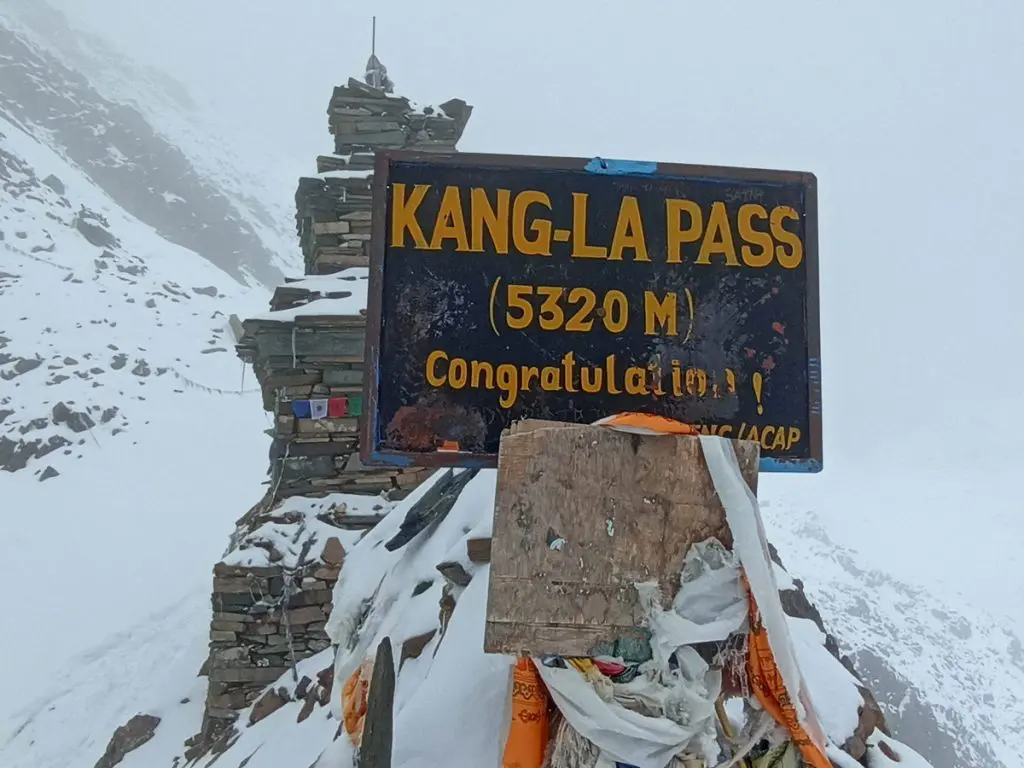
If you are planning the Nar Phu Valley Trek, one question matters more than any other: how hard is the Kang La Pass crossing?
Short answer: It is a hard, long, high-altitude day, but it is not technical. You don’t need ropes or climbing skills. The challenge comes from the combination of altitude (about 5,320 m), distance (17 to 18 km), a very long day (8 to 10 hours) and a steep descent (1,600 m or more). Fit trekkers who acclimatize properly can do it. Under-prepared trekkers often struggle.
This guide breaks down the difficulty with real numbers from the 12-Day Nar Phu Valley Trek & Kang La Pass by Nepal Voyage Treks, so you know what you are signing up for.
The Numbers: Kang La Crossing Day
| Detail | Figure |
|---|---|
| Start | Nar Village, about 4,110 m |
| Highest point | Kang La Pass, about 5,320 m |
| End | Ngawal, about 3,660 m |
| Distance | About 17 to 18 km |
| Walking time | About 8 to 10 hours |
| Ascent | About 1,150 to 1,250 m |
| Descent | About 1,600 to 1,700 m |
| Technical grade | Non-technical, but steep, rocky and possibly snowy |
Put simply: you climb more than a kilometre uphill, then drop more than 1.6 km, all in a single day, with the highest point near 5,300 m.
My Difficulty Scorecard
This is a general guide based on the route details, not an official rating.
| Factor | Difficulty | Why |
|---|---|---|
| Altitude | Very high | Nearly 5,320 m, where oxygen is about half of sea-level |
| Distance and duration | High | 8 to 10 hours on the trail in one push |
| Climbing | High | More than 1,100 m of ascent, ending at the pass |
| Descent | High | Over 1,600 m down, which is hard on knees |
| Terrain | Moderate to high | Rocky, loose scree, exposed sections |
| Technical skill | Low | No climbing gear or technique needed |
| Weather risk | High | Wind, cold, snow and ice can change the day |
| Remoteness | High | Limited help and slower evacuation |
Overall: challenging. The trip page header calls the trek “easy,” but its own FAQ describes the trek as moderate to challenging and the Kang La day as very demanding. Treat the pass as the hard part of the trek.
An Hour-by-Hour Picture of the Crossing
The times below are a typical rhythm for a day like this, not an official schedule. Your guide will set the actual pace.
Before sunrise (around 4:00 to 5:00 am): Start from Nar. You leave in the dark, with a headlamp, warm layers and hot tea in your system. It is cold, so expect your first hour to be slow and quiet.
Early morning: The climb to Kang La Phedi. The trail climbs steadily through open, almost treeless terrain. The landscape is rock, scree and sparse alpine growth. Nothing here is technical, but every step is higher than your last.
Mid-morning: The steep final ascent. This is the hardest section. The altitude makes even strong trekkers walk slowly, and your guide will build in frequent water and rest breaks. Breathing is heavy, so take short steps and keep a steady rhythm.
Midday: The pass. At about 5,320 m, you reach the top. On a clear day, you see Annapurna II, III and IV, Gangapurna, Pisang Peak and the Chulu range. Most people stay only a short time, because it is cold and windy, but the view is the reward.
Afternoon: The long descent to Ngawal. You lose more than 1,600 m, and the trail eventually reconnects with the Annapurna region. The air gets thicker and easier to breathe, but the descent is steep and punishing on knees and toes. This part often feels longer than expected.
Late afternoon or evening: Arrive at Ngawal. You will be tired, but the lodge has a warm meal and a proper rest. The next day to Manang is short.
Why Kang La Is Harder Than It Looks
1. It Comes After Several High Nights
By the time you reach the pass, you have spent consecutive nights at about 3,560 m, 4,080 m, 4,080 m, 3,490 m and 4,110 m. This gradual exposure helps, but the itinerary is compact. Only one rest day (in Phu) is built in, which is why acclimatization deserves serious attention.
2. The Day Is Both Up and Down
Many passes are hard in one direction. Kang La is hard in both. You climb steeply, then descend steeply, so your lungs and your legs are both tested.
3. Weather Can Change Everything
Snow, ice, wind or poor visibility can make the pass much harder. The operator states that the guide makes the final call on crossing, based on weather, snow and group fitness, and that reaching the pass cannot be guaranteed.
4. It Is Remote
Nar Phu is far from roads and hospitals. If something goes wrong on the pass, help takes longer to arrive than it would on busier routes.
5. Fatigue Builds
You will already have done several long days on the approach: for example, a 9 to 10 hour drive to Koto, then 6 to 8 hour days to Meta and Phu. Kang La lands when you are tired.
What Makes It Easier
- No technical climbing. The route is a trek, not a mountaineering ascent.
- A professional guide who monitors you and sets the pace.
- Porters who carry your main luggage, so you have only a daypack.
- A gradual approach through Meta, Phu and Nar, rather than a rapid ascent.
- Good weather and the right season. Clear, dry conditions make a big difference.
- Good preparation. Fitness and acclimatization make the pass much more manageable.
How It Compares to Other Famous Passes
| Pass | Approx. altitude | Typical character |
|---|---|---|
| Kang La (Nar Phu) | About 5,320 m | Remote, quiet, long day, steep descent |
| Thorong La (Annapurna Circuit) | About 5,416 m | Busy, well-supported, long day |
| Larkya La (Manaslu) | About 5,160 m | Remote, long day, restricted area |
Kang La is similar in altitude to the better-known Thorong La, but it has far fewer trekkers and less infrastructure. Many people find the Nar Phu side more remote and culturally distinctive, so the challenge is partly logistical.
Who Should Attempt Kang La?
You are a good candidate if you:
- Are in good cardiovascular health
- Have done multi-day trekking, ideally with some time above 3,500 m
- Can walk 7 to 9 hours and still enjoy it
- Are comfortable with basic teahouse conditions
- Are willing to listen to your guide and turn back if needed
You should think twice if you:
- Have heart, lung or circulation conditions and haven’t spoken to a doctor
- Have never trekked at altitude
- Have knee or ankle problems that make long descents difficult
- Are on a tight schedule with no spare days
The operator says the trek is not an ideal first high-altitude experience. If you are new to trekking, start with a gentler route.
How to Prepare Physically
Start 2 to 3 months before departure.
- Cardio, 3 to 4 times a week: Running, cycling, swimming or brisk hiking for 45 to 60 minutes.
- Weekend long hikes: Build up to 6 to 8 hours on hilly terrain with a 5 to 8 kg pack.
- Stairs and hills: Practise sustained climbing and descending.
- Leg and core strength: Squats, lunges, step-ups and planks, with a focus on controlled downhill movement.
- Back-to-back days: Do long walks on consecutive days to train for fatigue.
- Break in your boots well before you travel.
How to Prepare for Altitude
- Ask about an extra acclimatization day. If your schedule has room, adding a night in Nar or Phu can reduce risk.
- Climb slowly and drink steadily. Many trekkers aim for about 3 to 4 litres of fluids a day, but don’t overdrink.
- Avoid alcohol at altitude.
- Know the symptoms: headache, nausea, dizziness, fatigue, poor sleep, shortness of breath.
- Report symptoms early. If they worsen, descend.
- Speak to a doctor about Diamox. The operator notes it is not suitable for everyone.
- Read the operator’s high-altitude travel and altitude illness guide.
What to Carry on Crossing Day
- Warm layers: base layer, fleece and down jacket
- Waterproof and windproof shell
- Warm hat, buff and insulated gloves
- UV sunglasses and sunscreen
- Two water bottles or a hydration pack
- High-energy snacks
- Headlamp and spare batteries
- Trekking poles
- Microspikes or crampons and gaiters, if snow is expected
- Personal first-aid kit and medication
For a full list, see the operator’s trekking equipment list for Nepal.
Safety, Permits and Insurance
- Permits: You need a Nar Phu Restricted Area Permit and an Annapurna Conservation Area Permit (ACAP). Both are included in the package.
- Guide: Required in this restricted area, and arranged through a registered agency.
- Insurance: Make sure your policy covers trekking above 5,000 m and emergency helicopter evacuation. The operator suggests at least USD 100,000 in cover. See its guide to trekking insurance in Nepal.
- Buffer days: Leave spare days at the end of your trip in case weather causes delays.
Best Season for an Easier Crossing
- Spring (March to May) and autumn (September to November) offer the most stable conditions and clearest views.
- Early winter (December) can be clear but very cold, with a higher chance of snow.
- Winter can bring heavy snow that makes the pass unsafe.
- Monsoon (June to August): Nar Phu sits in a rain-shadow area, but you should check conditions carefully.
Common Mistakes That Make Kang La Harder
- Starting too late
- Going too fast on the climb
- Not drinking or eating enough
- Ignoring early altitude symptoms
- Wearing cotton or thin layers
- Underestimating the descent
- Booking a schedule with no spare days
Frequently Asked Questions
Is Kang La Pass hard?
Yes. It is a long, high-altitude day with a steep climb and a steep descent, though it requires no technical skills.
How long does the crossing take?
About 8 to 10 hours from Nar to Ngawal, covering roughly 17 to 18 km.
How high is Kang La Pass?
About 5,320 m (17,450 ft), depending on the measurement used.
Can a beginner cross Kang La?
Fit beginners with good preparation may manage, but it is not an ideal first high-altitude trek.
Is Kang La harder than Thorong La?
They are similar in altitude. Kang La is more remote and less developed, which can make it feel more demanding.
What if the weather is bad?
Your guide may delay, change the plan or turn back. Safety comes first.
Do I need crampons?
Possibly, depending on snow and ice conditions. Ask your guide before you go.
Is it dangerous?
It carries real risks such as altitude sickness, cold and falls, but with preparation, a good guide and proper acclimatization, the crossing can be done safely.
Ready to Take on Kang La?
Crossing Kang La Pass is a serious challenge and an unforgettable one. With the right fitness, patience and support team, it becomes the highlight of a remote, culturally rich Himalayan journey.
👉 See the full itinerary, inclusions and price: 12-Day Nar Phu Valley Trek & Kang La Pass
You can book directly, send an enquiry, join a group, or message the team on WhatsApp.
More Treks and Guides from Nepal Voyage Treks
- Annapurna Circuit Trek
- Annapurna Circuit with Tilicho Lake
- Manaslu Circuit Trek
- Mardi Himal Trek: a gentler first trek
- First aid and high-altitude safety advice
- Nepal Voyage Treks blog
Final Verdict
Kang La Pass is hard, but it is hard in a predictable way: altitude, distance and weather. Prepare your body, respect acclimatization, start early and trust your guide. If conditions are right, you will earn one of the best views in the Annapurna region.
Have questions about whether Kang La is right for you? Ask the team here.





Leave a Comment