


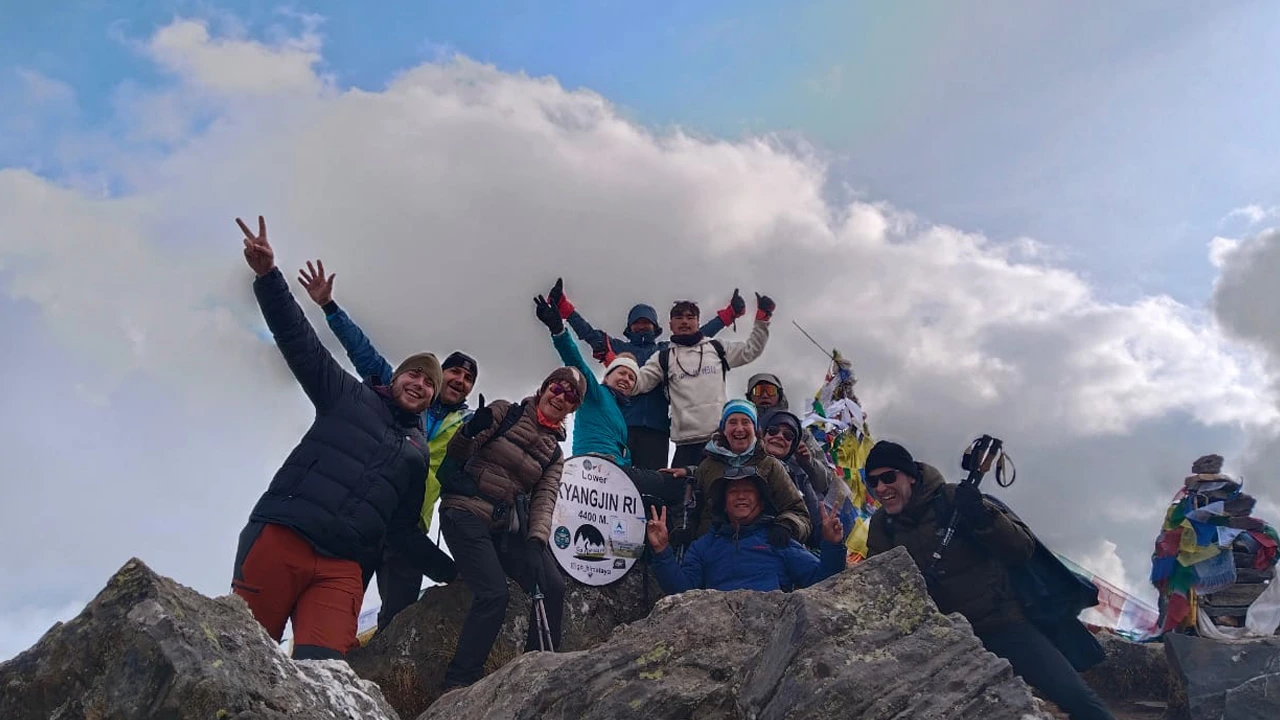
Some Himalayan treks begin with a nervous flight to a mountain airstrip. The Langtang Valley Trek begins with a road trip. A day’s drive north of Kathmandu, you are at the trailhead. Within a few days you are walking through rhododendron forest and yak pastures beneath Langtang Lirung (7,227 m), and then you can climb Kyanjin Ri (4,773 m) for a 360° Himalayan panorama.
It is one of Nepal’s most accessible big-mountain treks, and it needs no restricted-area permit and no flight. This guide covers the 12-day itinerary, difficulty, permits, cost, best season and the questions trekkers ask most.
Langtang Valley Trek at a Glance
| Detail | Information |
|---|---|
| Duration | 12 days (including Kathmandu days) |
| Trek | Syabrubesi to Kyanjin Gompa and back (about 9 days including drives) |
| Difficulty | Moderate |
| Highest village | Kyanjin Gompa, 3,870 m |
| Optional viewpoints | Kyanjin Ri (4,773 m) or Tsergo Ri (4,984 m) |
| Getting there | Private jeep or bus, about 122 km, 7–8 hours from Kathmandu |
| Accommodation | Teahouses and lodges |
| Permits | Langtang National Park permit and TIMS card |
| Best seasons | March–May and September–November |
| Price | From €900 per person with Nepal Voyage Treks |
Why Trek the Langtang Valley?
1. It is close to Kathmandu. The trailhead at Syabrubesi is a one-day road journey away. That means no flight delays and more of your time on the trail.
2. You walk beneath a 7,000 m giant. Langtang Lirung (7,227 m) rises above the valley, with Dorje Lakpa, Yala Peak and Langshisa Ri standing around it.
3. The scenery changes every day. You pass from subtropical forest to oak and rhododendron, then to alpine meadows and glacier views.
4. Tamang culture is part of daily life. Expect Tibetan-influenced villages with mani walls, chortens, prayer flags and a monastery at Kyanjin Gompa.
5. It is a trek you can fit into a normal holiday. At moderate difficulty, it suits fit first-time trekkers as well as experienced hikers.
6. It supports a recovering community. Langtang Village was devastated by the 2015 earthquake and avalanche. It has since been rebuilt, and your stay in local lodges supports that recovery.
Langtang Valley Trek Itinerary: Day by Day
Day 1: Arrive in Kathmandu (1,300 m). Your guide and driver meet you at the airport and take you to your hotel. In the evening you can explore Thamel.
Day 2: Trek preparation and optional sightseeing. Your guide checks your gear and briefs you on the route and altitude. You can visit Swayambhunath, Boudhanath or Pashupatinath. One sightseeing day is included, either now or after the trek.
Day 3: Drive to Syabrubesi (about 1,550 m), 7–8 hours. The road takes you through Trishuli Bazaar and Dhunche to the gateway town on the Bhote Koshi River. The route has views of Ganesh Himal and Manaslu in clear weather.
Day 4: Trek to Lama Hotel (2,470 m), 6–7 hours. You cross a suspension bridge and follow the Langtang Khola upstream through oak, bamboo and rhododendron forest. With luck you may see langurs or even red pandas.
Day 5: Trek to Langtang Village (3,430 m), 6–7 hours. The forest opens into yak pastures. Langtang Lirung appears, and you pass Ghora Tabela and small villages with mani walls on the way to Langtang Village.
Day 6: Trek to Kyanjin Gompa (3,870 m), 3–4 hours. A short, gentle day through meadows and traditional stone villages. In the afternoon you can visit the monastery and the local cheese factory.
Day 7: Acclimatization and exploration day. Choose between Kyanjin Ri (about 2–3 hours, the easier option) and Tsergo Ri (a full day, with the highest views). Either one gives you wide views of Langtang Lirung, Langshisa Ri, Dorje Lakpa, Yala Peak and the Langtang Glacier.
Day 8: Descend to Lama Hotel (2,470 m), 5–6 hours. You retrace your route down the valley, losing altitude quickly and feeling the air thicken.
Day 9: Trek to Syabrubesi, 5–6 hours. You follow the river back to the roadhead and celebrate with a hot meal.
Day 10: Drive to Kathmandu, 7–8 hours. A private vehicle takes you back along the highway.
Day 11: Kathmandu heritage sightseeing. Explore UNESCO World Heritage Sites such as Bhaktapur, Patan, Kathmandu Durbar Square, Swayambhunath, Pashupatinath and Boudhanath.
Day 12: Departure. After breakfast, a private transfer takes you to the airport.
How Difficult Is the Langtang Valley Trek?
The trek is rated moderate. Walking days run 3–7 hours, and the altitude gain is gradual. The highest point where you sleep is Kyanjin Gompa at 3,870 m, which is lower than the high passes and base camps on other classic treks.
Three things make it more challenging than it looks:
- Steady climbs. Days 4 and 5 each gain about 950 m.
- Altitude. Even at 3,870 m, altitude sickness can affect fit trekkers who ascend too fast.
- Optional side hikes. Tsergo Ri, at 4,984 m, is a long and tiring climb.
You will enjoy it most if you have 4–6 weeks of hill walking, stair climbing or loaded day hikes before you arrive. Read our guide on high-altitude travel and altitude illness before you go.
Best Time to Trek the Langtang Valley
Spring (March–May) has warm days, blooming rhododendron forests and good visibility. Autumn (September–November) has the crispest, clearest mountain views.
Winter is cold, with snow at higher altitudes, though experienced trekkers still go. The monsoon (June–August) brings rain, slippery trails, leeches and landslide risk on the access road, and views are often hidden by clouds.
Permits and Documents
Because Langtang is not a restricted area, the paperwork is simple. You need:
- Langtang National Park entry permit: about NPR 3,390 (including taxes) for foreign nationals
- TIMS card: about NPR 1,000 when booked through a registered agency
Together they cost roughly US$35, although fees can change. Nepal Voyage Treks arranges both permits for you, and they are included in the package. You also need a valid passport, a Nepal visa (available on arrival) and travel insurance that covers high-altitude trekking and emergency helicopter evacuation. See our travel insurance guide.
Langtang Valley Trek Cost
With Nepal Voyage Treks, the 12-day Langtang Valley Trek starts from €900 per person.
What is included:
- Experienced trekking guide and support staff
- Teahouse and lodge accommodation during the trek
- Breakfast, lunch and dinner on the trek
- Langtang National Park permit and TIMS card
- Airport transfers and transport to and from the trailhead
- Optional porter service
- First aid kit and emergency support
- Pre-trek briefing in Kathmandu
What is not included:
- International flights
- Nepal visa fee
- Travel insurance (mandatory)
- Personal expenses such as snacks, drinks and hot showers
- Personal trekking gear
- Tips for guides and porters
For group size, season or private-trek options, request a quote.
What to Pack
- Layers: moisture-wicking base layers, fleece, down jacket, waterproof shell
- Footwear: broken-in waterproof boots, camp shoes, warm socks
- Sleep: sleeping bag rated to about 0°C to –5°C (or rent one in Kathmandu)
- Gear: daypack, trekking poles, headlamp, sunglasses, 2 L of water capacity
- Health: sunscreen SPF 50+, lip balm, personal medication, water purification tablets
- Documents and cash: passport, insurance, permits (your guide holds them) and Nepali rupees
Our trekking equipment checklist has the full list.
Tips From Local Guides
- Never skip the acclimatization day. Use Day 7 to climb high, then sleep low.
- Choose your viewpoint wisely. Kyanjin Ri is the better choice for most trekkers, and Tsergo Ri is for strong, well-acclimatized walkers.
- Start side hikes early. Mornings are clear, and clouds often roll in by afternoon.
- Drink 3–4 litres of water a day and avoid alcohol at altitude.
- Carry cash. Villages higher up have no ATMs, and card payments are rare.
- Charge devices when you can. Electricity and hot showers may be limited, so bring a power bank.
- Respect local culture. Walk clockwise around mani walls and ask before photographing people.
Extend Your Trip
Want more time in the mountains? Combine Langtang with the Tamang Heritage Trail, continue on the Langtang Gosainkunda Trek (16 days), or try the shorter Helambu Circuit Trek (8 days). You can browse all options on our Langtang region page.
Why Trek With Nepal Voyage Treks?
Nepal Voyage Treks is a Kathmandu-based company founded by Tilak Magar, who has more than 15 years of experience in trekking and tourism and grew up in Solukhumbu. We are affiliated with the Nepal Tourism Board, TAAN, KEEP and NMA. We offer tailor-made and small-group trips, licensed guides, careful safety planning and responsible travel practices that support local lodges and communities. You get personal advice before you travel and 24/7 support on the ground.
Ready to Walk Beneath Langtang Lirung?
Twelve days, no flights, and a skyline of Himalayan giants a day’s drive from the capital.
👉 See the full Langtang Valley Trek itinerary and book
👉 Request a custom quote or join a group
👉 WhatsApp or call: +977 9851080223 | Email: info@nepalvoyagetreks.com
Top 10 FAQs: Langtang Valley Trek
1. How many days does the Langtang Valley Trek take?
Our package runs 12 days, including two days in Kathmandu for arrival and preparation, one day of sightseeing and a departure day. The actual trek from Syabrubesi to Kyanjin Gompa and back takes about 7 days on foot, plus the two drive days. Independent trekkers sometimes do it in 7–8 days, but a full day for acclimatization at Kyanjin Gompa is strongly recommended.
2. How difficult is the Langtang Valley Trek?
Moderate. Walking days are 3–7 hours, and most of the gain comes in the first two days. You do not need technical skills, but you do need good general fitness. Fit beginners can complete it, especially with a guide, a steady pace and good acclimatization. The most demanding part is the optional Tsergo Ri climb on Day 7.
3. What is the highest point on the Langtang Valley Trek?
The highest place you sleep is Kyanjin Gompa at 3,870 m. The highest point you reach is Tsergo Ri at 4,984 m if you choose that optional hike, or Kyanjin Ri at 4,773 m for the shorter option. Most trekkers choose one or the other, not both.
4. When is the best time to do the Langtang Valley Trek?
March to May and September to November. Spring brings rhododendron blossoms and warm weather, and autumn brings the clearest mountain views. Winter is cold and snowy, though the trek is still possible with experienced guides and proper gear. The monsoon (June–August) is generally not recommended because of rain, leeches, cloudy views and landslides on the road to Syabrubesi.
5. What permits do I need?
You need a Langtang National Park entry permit (about NPR 3,390 for foreigners) and a TIMS card (about NPR 1,000 when arranged through a registered agency). Langtang is not a restricted area, so you do not need a special permit or a minimum group size. Nepal Voyage Treks arranges both permits, and they are included in the package. Fees can change, so confirm them at booking.
6. How much does the Langtang Valley Trek cost?
With Nepal Voyage Treks, our 12-day trek starts from €900 per person. The package covers a guide, trek accommodation, all meals on the trail, permits, airport transfers, and transport to and from Syabrubesi. Not included are international flights, visa, travel insurance, personal expenses and tips. Budget a little extra for snacks, hot showers, charging and Wi-Fi, and for tips for your guide and porter.
7. Can I do the Langtang Valley Trek without a guide?
Yes, it is allowed. Langtang does not require a guide the way restricted areas do. Still, we recommend one. A guide handles permits and logistics, helps you manage altitude, supports you in an emergency, and explains local culture. If you carry a heavy pack, a porter makes the trek far more enjoyable. Solo travelers can also join one of our group departures.
8. What are the accommodation and food like?
You stay in teahouses and lodges with simple twin rooms, shared bathrooms and a warm dining room. Rooms are unheated, so a good sleeping bag matters. Menus usually include dal bhat (rice and lentils, with free refills), noodle soup, pasta, momos, eggs and pancakes. At Kyanjin Gompa you can taste local yak cheese. Electricity, hot showers and Wi-Fi may cost extra and get less reliable at higher altitudes.
9. How do I get from Kathmandu to Syabrubesi?
The drive is about 122 km and takes 7–8 hours by private jeep or tourist bus, following the Pasang Lhamu Highway through Trishuli Bazaar and Dhunche. The last part of the road is steep, winding and sometimes rough, especially after rain. Our package includes a private vehicle for the outbound and return journeys. The scenery is part of the experience, with terraced hills, waterfalls and river valleys on the way.
10. Do I need travel insurance, and what should it cover?
Yes, travel insurance is mandatory with us. Your policy should cover trekking up to at least 5,000 m (to include optional hikes such as Tsergo Ri), emergency helicopter evacuation, medical treatment and trip interruption. Helicopter rescue in remote areas can be expensive, so check the policy wording carefully, and carry a copy with your emergency contact number. Read more in our insurance guide.




Leave a Comment