


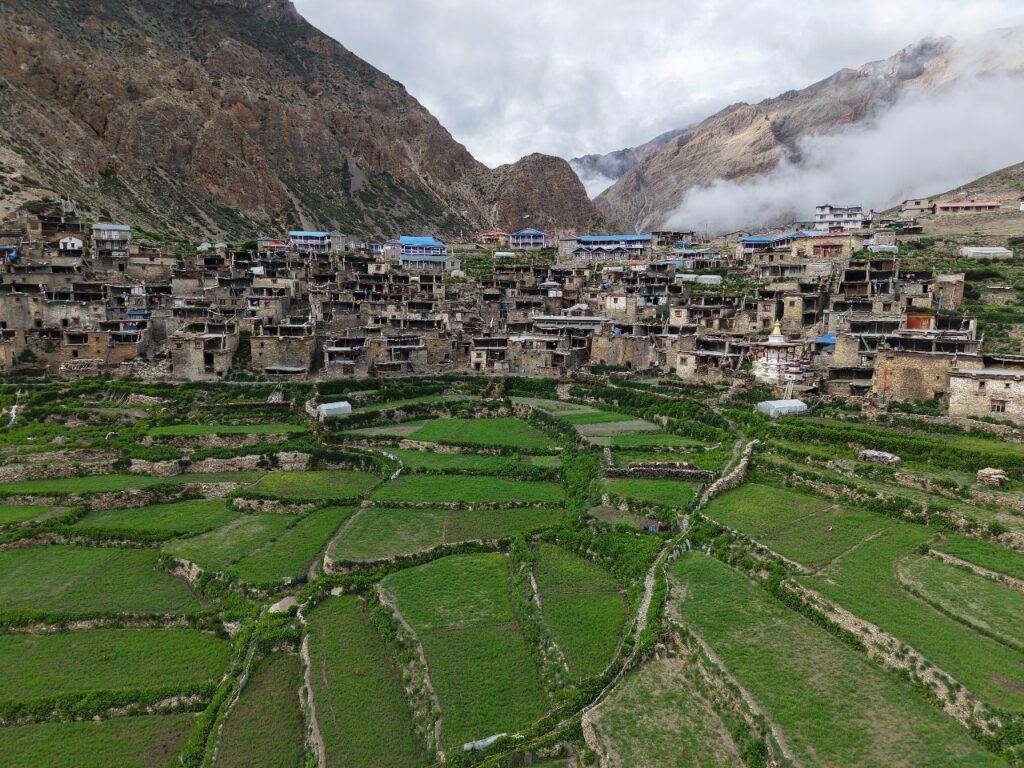
On the Annapurna Circuit, trekkers pass the village of Koto and keep walking. A few turn north instead, into a narrow gorge that leads to a world of stone villages, ancient monasteries and empty high pastures. That is the Nar Phu Valley Trek: a restricted-area route in the Manang district, close to the Tibetan border, where there are no roads and goods still arrive by mule, yak or porter.
Over 12 days you walk through canyons and forests to the medieval villages of Phu and Nar, then cross the Kang La Pass (about 5,320 m) to rejoin the Annapurna Circuit at Ngawal. This guide covers the itinerary, difficulty, permits, best season and the questions trekkers ask most.
Nar Phu Valley Trek at a Glance
| Detail | Information |
|---|---|
| Duration | 12 days |
| Region | Manang district, north of the Annapurna Circuit |
| Highest point | Kang La Pass, about 5,320 m |
| Difficulty | Challenging |
| Starting point | Dharapani, then Koto (by road from Kathmandu) |
| Ending point | Ngawal, then by road to Kathmandu |
| Accommodation | Simple teahouses and village lodges |
| Permits | Nar Phu Restricted Area Permit, ACAP (and TIMS where required) |
| Guide | Licensed guide required by law |
| Best seasons | Late March–May and September–November |
Why Trek the Nar Phu Valley?
1. It is a genuinely off-the-beaten-path trek. The area opened to foreign trekkers only in the early 2000s, and the special permit keeps numbers low. Many trekkers report seeing only a handful of other groups on the Nar Phu section.
2. The villages feel frozen in time. Phu is a stone-walled settlement perched on a rock spur, overlooked by a monastery. Nar is the largest settlement in the valley. Houses, mani walls, prayer flags and yak herding follow Tibetan traditions that have lasted for centuries.
3. Kang La Pass. You climb to about 5,320 m for a 360° panorama of the Annapurna range, including Annapurna II and Gangapurna, with Tilicho Peak and Pisang Peak in view.
4. The landscape changes every day. You trek from pine and rhododendron forest into a deep, narrow canyon with caves and towering rock walls, then onto open, barren high-altitude terrain close to Tibet.
5. Monasteries and local life. You visit gompas along the trail, including the monastery area near Nar Phedi, and can meet local families in their homes.
6. It combines with the Annapurna Circuit. Because the trail rejoins the circuit at Ngawal, it can be extended over Thorong La Pass for a longer adventure.
Nar Phu Valley Trek Itinerary: 12 Days
Day 1: Arrive in Kathmandu (1,300 m). Meet your guide, transfer to your hotel and get your briefing on the restricted-area rules and the Kang La crossing.
Day 2: Drive to Dharapani (about 1,860 m), 9–10 hours. A long but scenic drive along the Marsyangdi valley. We handle permits in Kathmandu before departure.
Day 3: Trek to Koto (2,600 m), 5–6 hours. You follow the Annapurna Circuit trail to Koto, the gateway to Nar Phu, and register your restricted-area permit at the checkpoint.
Day 4: Trek to Meta (3,560 m), 7–8 hours. The trail enters the Phu Khola gorge, with steep walls, narrow paths and waterfalls. Settlements become rare.
Day 5: Trek to Phu (4,080 m), 7–8 hours. You pass caves, old stone chortens and abandoned villages before reaching Phu.
Day 6: Acclimatization day in Phu. Explore the village and monastery, walk to the Phu viewpoint, or hike toward Himlung Base Camp if you feel strong.
Day 7: Trek to Nar Phedi (about 3,490 m), 6–7 hours. You retrace part of the valley and reach the monastery at Nar Phedi.
Day 8: Trek to Nar Village (4,110 m), 3–5 hours. A climb takes you to Nar, the valley’s largest village. Use the afternoon to rest and prepare for tomorrow.
Day 9: Cross Kang La Pass (about 5,320 m) to Ngawal (3,660 m), 8–10 hours. The hardest day. You start before dawn, climb about 1,200 m to the pass, then descend more than 1,600 m to Ngawal.
Day 10: Ngawal to Besisahar. A short walk and a long jeep ride down the Marsyangdi valley.
Day 11: Drive to Kathmandu, 6–7 hours.
Day 12: Departure. A private transfer takes you to the airport.
Some itineraries add a night at Kang La Phedi (about 4,530 m) to break up the pass day. If you want a gentler schedule, ask us about this option.
How Difficult Is the Nar Phu Valley Trek?
Challenging. The trek is only 12 days, but it is demanding in specific ways:
- High, remote sleeping altitudes. You sleep at 4,080 m in Phu and 4,110 m in Nar.
- A very long pass day. Crossing Kang La takes 8–10 hours or more, with a steep climb and an equally steep, knee-heavy descent.
- Basic facilities. Teahouses are simple and the nights are cold.
- Limited rescue options. The region is remote, so medical help is far away.
This trek is not recommended for first-time trekkers. You should have good fitness, multi-day trekking experience and some previous time above 3,500 m. Prepare with 8 weeks of cardio, hill walking and loaded day hikes. Read our high-altitude travel and altitude illness guide before you go.
Best Time to Trek the Nar Phu Valley
Autumn (September–November) is the most reliable season, with clear skies and the least snow on Kang La. Spring (late March–May) is also good, though the pass can still hold snow and ice early in the season.
Winter (December–February) is very cold, and heavy snow can close Kang La. The monsoon is possible in the rain-shadow region, but the road and lower trails can be affected by landslides, and clouds often hide the views.
Permits and Rules
Nar Phu is a restricted area, so independent trekking is not allowed. You need:
- Nar Phu Restricted Area Permit (RAP). Around US$100 for the first 7 days in September–November, or US$75 in December–August, plus a daily fee for additional days.
- Annapurna Conservation Area Permit (ACAP).
- TIMS card, where required.
- A government-licensed guide.
Nepal Voyage Treks arranges all permits in Kathmandu. Fees and group-size requirements change, so we confirm the current rules when you book.
What Is Included, and What Is Not?
A typical package includes:
- Licensed guide (and porter support)
- Restricted-area and conservation permits
- Teahouse accommodation and meals on the trek
- Airport transfers and ground transport
- Kathmandu hotel nights and pre-trek briefing
- First aid kit and emergency support
Usually not included: international flights, Nepal visa, travel insurance, drinks, personal gear and tips.
For an exact price for your dates, group size and preferences, request a quote.
What to Pack
- Clothing: base layers, fleece, down jacket, waterproof shell, warm hat, gloves, buff
- Footwear: broken-in waterproof boots, warm socks, camp shoes
- Sleep: sleeping bag rated to about –10°C or lower
- Gear: daypack, trekking poles, headlamp, sunglasses, water purification, gaiters (and microspikes in snowy conditions; ask your guide)
- Health: sunscreen SPF 50+, lip balm, personal medication, blister care
- Money and documents: passport, insurance, permit photos, and enough Nepali rupees for the whole trek (there are no ATMs on the trail)
See our trekking equipment checklist.
Tips From Local Guides
- Take the rest days seriously. Phu and Nar are both built in for acclimatization.
- Start Kang La day early. Leave in the dark, keep a steady pace and turn back if weather or health gets worse.
- Pack extra snacks and water. There are no teahouses on the pass.
- Hydrate and eat well. Aim for 3–4 litres of water a day, and avoid alcohol.
- Carry cash and a power bank. There are no ATMs, and charging is limited.
- Respect the villages. Ask before taking photos of people or entering monasteries, and walk clockwise around mani walls.
- Be flexible. Weather, snow and trail conditions can change your plan.
Extend or Combine Your Trek
- Add Thorong La Pass. Continue from Ngawal over Thorong La on our Annapurna Circuit Trek for a long trek with two high passes.
- Try another restricted area. Compare with the Manaslu Circuit Trek.
- Want something gentler? Look at the Langtang Valley Trek or Mardi Himal Trek.
- Browse all options on our Annapurna region page.
Why Trek With Nepal Voyage Treks?
Nepal Voyage Treks is a Kathmandu-based company founded by Tilak Magar, who grew up in Solukhumbu and has more than 15 years of experience in trekking and tourism. We are affiliated with the Nepal Tourism Board, TAAN, KEEP and NMA. We offer tailor-made and small-group departures, licensed guides, careful safety planning, and fair treatment of guides and porters. You get personal advice before you travel and 24/7 support on the ground.
Ready for Nepal’s Hidden Valley?
Twelve days, two ancient villages and one unforgettable pass, far from the crowds.
👉 View the 12-Day Nar Phu Valley Trek and Kang La Pass itinerary
👉 Request a quote or join a group
👉 WhatsApp or call: +977 9851080223 | Email: info@nepalvoyagetreks.com
Top 10 FAQs: Nar Phu Valley Trek
1. How many days does the Nar Phu Valley Trek take?
Our itinerary takes 12 days, including arrival and departure days in Kathmandu and two long drives. The walking itself takes about 7–8 days. You can extend it by adding a night at Kang La Phedi or by continuing over Thorong La on the Annapurna Circuit. Shorter versions exist, but they leave less time to acclimatize and increase altitude risk.
2. How difficult is the Nar Phu Valley Trek?
Challenging. The main difficulty is altitude and the Kang La crossing, which takes 8–10 hours or more above 5,000 m. Nights at Phu and Nar are above 4,000 m, and the trail is remote. It is a good choice for fit, experienced trekkers, but it is not recommended for beginners or anyone with no previous high-altitude experience.
3. What is the height of Kang La Pass?
About 5,320 m, though sources quote anything from about 5,240 m to 5,330 m because of different surveys. All describe the same pass. You cross it from Nar (4,110 m) down to Ngawal (3,660 m), with views of Annapurna II, Gangapurna and Tilicho Peak.
4. Do I need a special permit for Nar Phu?
Yes. Nar Phu is a restricted area, so you need a Restricted Area Permit (around US$100 for the first 7 days in September–November, or US$75 in December–August, plus a fee per extra day) and an Annapurna Conservation Area Permit. A TIMS card may also be required. Permits are issued only through registered agencies, and Nepal Voyage Treks arranges them. Fees and rules can change, so we confirm them when you book.
5. Can I trek Nar Phu without a guide?
No. A licensed guide is required in the restricted area, and permits cannot be issued to independent trekkers. Group-size rules for restricted-area permits have changed over time, so we confirm the current requirements for solo travelers and pairs when you book. You can also join one of our group departures.
6. When is the best time to do the Nar Phu Valley Trek?
September to November and late March to May. Autumn is the most reliable season for crossing Kang La, with the clearest skies and the least snow. Spring is also good, but the pass can still have snow early in the season. Winter is very cold and the pass can close, so it is not recommended unless you have excellent experience and flexible plans.
7. How much does the Nar Phu Valley Trek cost?
The price depends on group size, season, transport and the services you choose. The largest fixed costs are the restricted-area permit, the guide and porter, and transport on the long road journeys. Not included in packages are international flights, visa, insurance, drinks, personal gear and tips. Contact us for an exact quote for your dates and group size.
8. What are the accommodation and food like on the trek?
Accommodation is in simple teahouses and village lodges, with basic twin rooms, shared bathrooms and unheated bedrooms. Facilities are more basic than on the main Annapurna Circuit. Meals usually include dal bhat, noodle soup, pasta, momos, eggs and porridge, and menus are shorter in Phu and Nar. Charging is limited and often costs extra, so carry a power bank and cash.
9. How do I prevent altitude sickness on the Nar Phu Valley Trek?
Ascend gradually and use both rest days properly. Walk slowly, drink 3–4 litres of water a day, eat well and avoid alcohol. Learn the early signs: headache, nausea, dizziness and poor sleep. If symptoms worsen, you must descend. Our guides check your health daily. Some trekkers take Diamox, but speak with your doctor first. Because the region is remote, taking symptoms seriously early is essential.
10. Do I need travel insurance, and what should it cover?
Yes. Your policy should cover trekking to at least 5,500 m, emergency helicopter evacuation, medical treatment and trip interruption. Rescue in this remote area is by helicopter, so check that your policy covers it and carry a copy and the emergency number with you. See our insurance guide.





Leave a Comment