



Every year, when the full moon of the Nepali month of Shrawan rises, Nepal turns into one big pilgrimage. Priests tie sacred threads on wrists, families share kwati soup, and thousands of devotees climb to alpine lakes in the high Himalayas. This is Janai Purnima. It is one of the most spiritually rich festivals in Nepal, and a rare chance to combine culture, faith and trekking in a single journey.
If you are a pilgrimage lover, a culture-focused traveller, or a trekker looking for something more meaningful than a summit photo, this guide is for you. It covers what Janai Purnima means, how Nepal celebrates it, and why Panch Pokhari, the "Five Sacred Lakes", is one of the most powerful places to experience it.
What Is Janai Purnima?
Janai Purnima is also known as Rishi Tarpani. The festival is celebrated across the country and is observed primarily by the majority of Hindus. The name has two parts: onlinekhabar
- Janai is the sacred thread worn by many Hindu men, usually the Brahmin and Chhetri communities.
- Purnima means full moon.
On this day, those who wear the sacred thread (the tagadharis) change it after bathing. The thread symbolises purity, discipline and a commitment to spiritual duty. People also honour the ancient sages (rishis) through offerings of water and prayer. radionepalonline
Raksha Bandhan and the Sacred Yellow Thread
Janai Purnima often falls on the same day as Raksha Bandhan. In Nepal this is a separate custom with its own flavour. Priests tie a protective yellow or multicoloured cord (raksha) around the wrists of devotees, giving blessings for health, protection and prosperity. Many people wear the cord for months, until Tihar. You can read more about that festival in our guide to Tihar festival in Nepal.
Janai Purnima Traditions You Will See in Nepal
- Ritual bathing and thread changing: Rivers, ponds and holy lakes fill with devotees at dawn.
- Kwati soup: Families eat kwati, a nutritious soup of nine sprouted beans, which is seen as both a seasonal tradition and a healing food for the monsoon.
- Temple fairs and melas: Religious fairs are organised at Pashupati and Manichud in Kathmandu, Gosainkunda in Rasuwa, Kumbheshwar in Lalitpur, and Panchpokhari in Sindhupalchok, among other places. onlinekhabar
- Newar and Tamang traditions: In the Kathmandu Valley, Kumbheshwar in Patan draws large crowds. In the hills, Tamang and Sherpa communities add their own Buddhist and shamanic practices to the celebration.
If you enjoy festival travel, also see our pages on Dashain and Maha Shivaratri in Nepal. You can browse them all in our festivals in Nepal collection.
Why Do Pilgrims Climb to High Himalayan Lakes?
In Hindu belief, Lord Shiva created sacred lakes in the mountains, and bathing in them on Janai Purnima washes away sins and brings spiritual merit. Two lakes are the heart of this tradition: Gosainkunda and Panch Pokhari.
Gosainkunda is regarded as the home of Shiva and Gauri, and its waters have special significance during Gangadashahara and Janai Purnima. It is a lake of legend. At dawn on Janai Purnima, pilgrims begin bathing from around 2:00 AM. Devotees come from many districts of Nepal, and the sound of chanting rises over the cold water. nepalhikingteamnepalnews
Panch Pokhari offers the same devotion, but with fewer crowds and a quieter, more intimate atmosphere.
Panch Pokhari: The Five Sacred Lakes
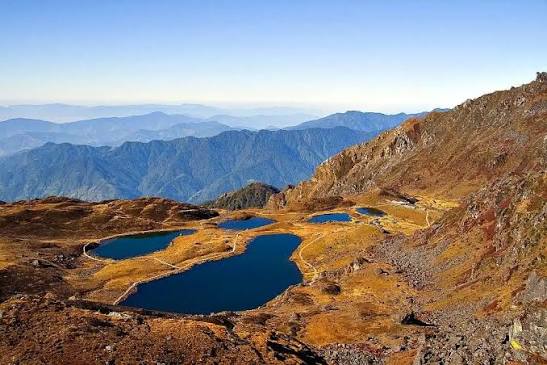
Panch Pokhari is a group of five holy lakes in Sindhupalchok District, and it is a popular destination for Hindu and Buddhist pilgrims during Janai Purnima. It lies at roughly 4,100 metres beneath the Jugal Himal, including the peaks Dorje Lakpa (6,966 m) and Phurbi Chhyachu. It is also described as the ninth highest-altitude wetland in the world. wikiwandnepalhikingteam
The word Panch means five and Pokhari means pond. The lakes are set among prayer flags, a small Shiva shrine and high alpine meadows. Pilgrims believe a visit here brings blessings, purification and a good harvest.
The journey itself is part of the offering. The trail passes through Tamang and Sherpa villages, rhododendron and juniper forests, and traditional grazing meadows (kharka), with Himalayan views opening up as you climb.
Why Choose Panch Pokhari Over a Crowded Trail?
- Peaceful and authentic: The region is remote and unfrequented, even though it is close to Kathmandu.
- Cultural depth: You walk through living Tamang and Sherpa communities.
- Spiritual significance for both Hindus and Buddhists.
- Moderate difficulty: There is no technical climbing, and the ascent is gradual enough for good acclimatisation.
Plan Your Janai Purnima Pilgrimage: The Panch Pokhari Trek
Our Panch Pokhari Trek (10 days) is designed for travellers who want to reach the sacred lakes safely and comfortably. The route follows the traditional pilgrim path:
| Stage | Route | Altitude |
|---|---|---|
| Drive | Kathmandu → Chautara → Bhotang | 1,800 m |
| Trek | Bhotang → Kami Kharka | 2,845 m |
| Trek | Kami Kharka → Nasimpati | 3,700 m |
| Pilgrimage day | Nasimpati → Panch Pokhari lakes | 4,100 m |
| Return | Descent via Nasimpati and Kami Kharka, then drive to Kathmandu | 1,400 m |
The trek is graded easy to moderate, and you finish with a day of Kathmandu sightseeing and a farewell dinner. A licensed English-speaking guide and porter support come with the package. Our team also takes care of transport, permits, meals and accommodation, so you can focus on the experience.
Is It Better to Trek During Janai Purnima?
It depends on what you want:
- Join the festival: You will see crowds in devotional dress, offerings and a joyful, devotional atmosphere. This is also the monsoon, so trails are green but can be wet and slippery, and facilities are very basic. Book early.
- Go in a quieter season: The best months for views are March–May and October–December, when skies are clear and the lakes are calm. You can still visit as a pilgrim, just without the festival crowds.
Combine Pilgrimage Routes: Panch Pokhari and Gosainkunda
Many travellers ask about doing both. The two lakes lie in the same wider Langtang region and share the same sacred tradition. If you want a longer pilgrimage, our Langtang Gosainkunda Trek takes you through Langtang National Park to Gosainkunda Lake, with Himalayan views and Tamang culture along the way. Together, the two treks give you a complete Shiva pilgrimage circuit.
If you want a gentler, shorter introduction to the region, consider the Langtang Valley Trek or the Tamang Heritage Trail. For more options, browse our Langtang region treks.
Altitude Safety for Pilgrims
High-altitude pilgrimage is beautiful, but it needs respect. At Gosainkunda in the past, the Himalayan Rescue Association reported pilgrims needing evacuation to better-equipped hospitals because of altitude sickness. Many festival pilgrims climb fast, without acclimatisation or proper gear. Our itinerary is deliberately paced to avoid that. khabarhub
Tips for every pilgrim:
- Walk slowly and drink 3–4 litres of water a day.
- Avoid alcohol, and tell your guide immediately about headache, nausea, dizziness or breathing difficulty.
- Never ignore early symptoms. Read our guide on high-altitude travel and altitude illness.
- Pack warm layers, because nights at the lakes can fall below freezing. Use our trekking equipment list for Nepal.
- Carry travel insurance that covers high-altitude trekking and helicopter evacuation.
Pilgrim Etiquette at Sacred Lakes
- Dress modestly, and respect the quiet of the shrine area.
- Ask before photographing devotees or rituals.
- Do not litter, and carry your waste back down.
- Do not use soap or shampoo in the lake water.
- Remove shoes where locals do, and walk clockwise around Buddhist prayer flags and mani stones.
Frequently Asked Questions
When is Janai Purnima?
It falls on the full moon of the Nepali month of Shrawan, usually in August. The exact date changes every year, so check the Nepali calendar before booking.
What does Janai Purnima mean?
It is the "sacred thread full moon". Devotees change their sacred thread, and priests tie protective cords on wrists. It is also called Rishi Tarpani.
Where is Panch Pokhari?
It is in Sindhupalchok District, northeast of Kathmandu, at about 4,100 m. The trek starts from Bhotang.
Is the Panch Pokhari trek difficult?
No. It is graded easy to moderate, with no technical climbing. The final day to the lakes is steeper and colder, so fitness and acclimatisation matter.
Can non-Hindus join the pilgrimage?
Yes. Travellers of all backgrounds are welcome as long as they respect local customs, and the lakes are sacred to both Hindus and Buddhists.
What is the best time to visit Panch Pokhari?
March–May and October–December for views and stable weather. August for the festival, with rain and crowds.
Final Thoughts
Janai Purnima shows Nepal at its most devout: ancient rituals, bright ceremonies and a mountain landscape that feels like a temple. Walking to the sacred lakes of Panch Pokhari gives you more than a trek. It gives you a window into the faith that shapes this country.
Ready to plan your journey? Check the full itinerary and cost on our Panch Pokhari Trek page, or contact Nepal Voyage Treks to design a private pilgrimage for your group.






Leave a Comment