


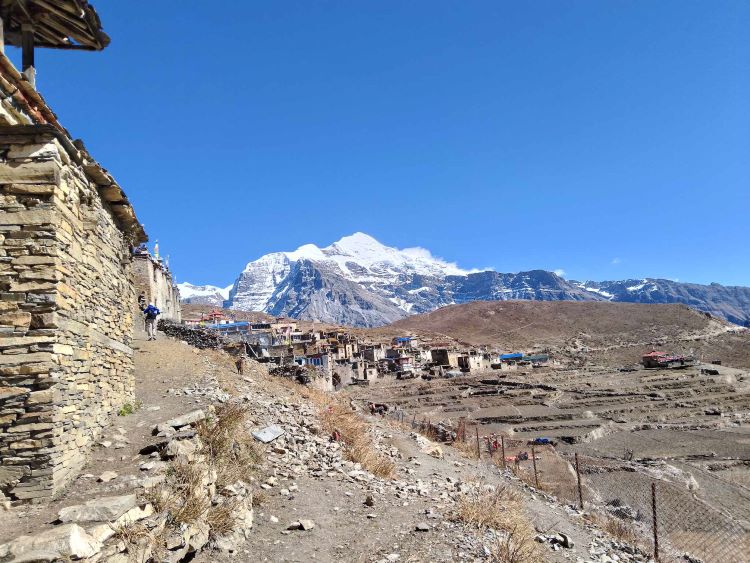
Kang La Pass is the high point of the Nar Phu Valley Trek. At about 5,320 m, it is the doorway between the remote, Tibetan-influenced villages of Nar and Phu and the busy Manang Valley on the Annapurna Circuit. It is a long, demanding day, and it is also one of the most rewarding in the Annapurna region.
This guide covers everything you should know before you go: where the pass is, how hard it is, how to prepare, and how to handle the crossing safely. The route details come from the 12-Day Nar Phu Valley Trek & Kang La Pass by Nepal Voyage Treks.
Kang La Pass at a Glance
| Detail | Information |
|---|---|
| Altitude | About 5,320 m (17,450 ft), depending on the measurement used |
| Location | Between Nar Village and Ngawal, linking Nar Phu Valley with Manang |
| Crossing day | Nar (4,110 m) → Kang La → Ngawal (about 3,660 m) |
| Distance | About 17 to 18 km |
| Walking time | About 8 to 10 hours |
| Ascent | About 1,150 to 1,250 m |
| Descent | About 1,600 m or more |
| Best seasons | March to May and September to November |
| Permits | Nar Phu restricted-area permit and ACAP |
| Guide | Required |
Where Is Kang La Pass, and Why Does It Matter?
Kang La sits at the head of the Nar Valley, in the Manang District of the Annapurna Conservation Area. For generations, passes like this connected isolated mountain communities and formed part of trade and seasonal routes across the Himalaya. Today, Kang La is the dramatic finale of the Nar Phu loop. It takes you from the quiet, dry, Tibetan-style valley of Nar into the Manang side of the Annapurna Circuit, with views of Annapurna II, III and IV, Gangapurna, Pisang Peak and the Chulu range when the weather is clear.
The Nar Phu Valley itself was opened to foreign trekkers only in 2002, which is one reason it has kept its traditional character.
The Nar Phu Route Before the Pass
Understanding the days leading up to Kang La helps you see why acclimatization matters so much.
| Day | Route | Altitude | Notes |
|---|---|---|---|
| 3 | Kathmandu → Koto (drive) | 2,600 m | 9 to 10 hour drive via Besisahar and Chame |
| 4 | Koto → Meta | 3,560 m | About 6 to 7 hours, about 900 m gain |
| 5 | Meta → Phu Village | About 4,080 m | About 7 to 8 hours |
| 6 | Phu rest and acclimatization | About 4,080 m | Short cultural walk |
| 7 | Phu → Nar Phedi | About 3,490 m | About 5 to 7 hours |
| 8 | Nar Phedi → Nar Village | 4,110 m | About 4 to 5 hours, about 600 m gain |
| 9 | Nar → Kang La → Ngawal | 5,320 m | 8 to 10 hours |
| 10 | Ngawal → Manang | About 3,540 m | About 3 to 4 hours |
| 11 | Manang → Kathmandu by jeep | Long drive, often 12 to 16 hours |
The numbers show a steady rise: you sleep at 3,560 m, 4,080 m (twice) and 4,110 m before the pass. That gives your body time to adjust, but the schedule is still compact. See the acclimatization tips below.
How Hard Is Crossing Kang La Pass?
It is the hardest day of the trek. The operator describes it as very challenging, with a steep, rocky, exposed trail that may be snowy. You can expect:
- A very early start, usually before sunrise
- A long uphill climb from Nar to Kang La Phedi and then to the pass
- High-altitude walking, where every step is slower
- Rocky, loose terrain and scree
- Possible snow, ice and strong wind
- A long, steep descent that is hard on knees
- 8 to 10 hours of total walking
There is no technical climbing, so you don’t need mountaineering skills. The difficulty comes from altitude, distance and weather.
A note on the grade: the trip page header lists the trek as “easy,” but the same page’s FAQ calls it moderate to challenging, and the Kang La day is described as very demanding. Treat it as a challenging trek and prepare accordingly.
Tips for Crossing Kang La Pass
1. Respect Acclimatization
This is the most important tip. The itinerary includes one rest day in Phu at about 4,080 m, which helps, but it is a tight schedule. To reduce your risk:
- Consider adding an extra day before the pass, for example an additional night in Nar or Phu. Ask your operator about extending the itinerary.
- Walk slowly. In the Himalayas the rule is “slowly, slowly.”
- Sleep low when you can. Take rest days seriously and use them for short, gentle walks.
- Tell your guide immediately if you feel unwell. Don’t hide symptoms.
2. Know the Signs of Altitude Sickness
Watch for headache, nausea, dizziness, unusual tiredness, loss of appetite, poor sleep and shortness of breath. If symptoms get worse, do not go up. Rest, drink fluids and, if needed, descend. Never push on just because you have a fixed itinerary. Nepal Voyage Treks has a high-altitude travel and altitude illness guide worth reading before you go.
3. Start Early
Leave Nar before sunrise. An early start gives you daylight for a 8 to 10 hour day, and mountain weather tends to become less predictable later in the day. Wind often picks up in the afternoon.
4. Pack Smart for the Pass
Carry in your daypack, not your porter’s bag, since you will be walking apart from your main luggage:
- Warm layers: fleece and a down jacket
- Waterproof and windproof shell
- Warm hat, buff and insulated gloves
- Sunglasses with UV protection, and sunscreen
- Two water bottles or a hydration system
- Snacks such as nuts, chocolate and energy bars
- Headlamp with spare batteries
- Sunscreen and lip balm
- Personal first-aid kit and any medication
In colder months or after snow, consider microspikes or crampons and gaiters. Ask your guide what is needed for current conditions.
5. Use Trekking Poles
Poles help on the steep climb, on loose scree and on the long, knee-jarring descent toward Ngawal.
6. Eat and Drink Well
Hydration matters at altitude, and many trekkers aim for about 3 to 4 litres of fluids per day, but don’t force excessive water. Eat a solid breakfast even if you aren’t hungry, and snack through the day.
7. Pace Yourself
Let your guide set a steady pace. Take regular breaks for water and rest. Rushing the climb is the most common mistake, and it will leave you exhausted for the long descent.
8. Prepare for the Descent
The descent from Kang La to Ngawal is long, with more than 1,600 m of altitude loss. It can be harder than the climb on your knees and thighs. Keep your poles, shorten your stride and take your time on loose sections.
9. Accept That the Guide Decides
The operator says the guide makes the final decision about crossing, based on weather, snow conditions and the group’s physical condition. Reaching the pass cannot be guaranteed. If snow, wind, visibility or health make the crossing unsafe, a good guide will turn back or change plans, and you should respect that decision.
Best Time to Cross Kang La Pass
- Spring (March to May): Stable weather, good visibility, and rhododendron blooms at lower elevations.
- Autumn (September to November): The most popular and usually the clearest season for mountain views.
- Early winter (December): Can be beautiful but cold, with a higher chance of snow on the pass.
- Monsoon (June to August): Nar Phu is in a rain-shadow area and can be drier than other parts of Nepal, but the lower approaches can be wet and conditions need careful checking.
- Winter: Heavy snow can make the pass difficult or unsafe, and some local services may be limited as residents move to lower elevations.
The trip page lists the best season as March to June and September to December.
Permits and Rules
Nar Phu is a restricted area, so you need:
- A Restricted Area Permit (RAP) for the Nar Phu Valley
- An Annapurna Conservation Area Permit (ACAP)
- A licensed guide, arranged through a registered trekking agency
Nepal Voyage Treks includes both permits and a licensed English-speaking guide in the package. Permit rules and fees change, so ask your agency to confirm the current requirements and group-size rules.
Accommodation and Food Along the Way
Expect basic teahouse lodges, mostly twin-sharing rooms, with simple facilities in remote villages. Meals are three a day, with tea or coffee, and typically include dal bhat, noodles, soups, potatoes, Tibetan bread, porridge and momos. Vegetarian food is widely available. Hot showers, charging and Wi-Fi are limited and may cost extra, and mobile coverage is unreliable. Carry a power bank.
Insurance and Emergency Planning
Because Nar Phu is remote, evacuation can take longer than on busier routes. You should have:
- Travel insurance covering trekking up to at least 5,500 m, medical treatment and emergency helicopter evacuation. Nepal Voyage Treks suggests a policy with at least USD 100,000 in medical and evacuation cover.
- A guide and agency that can organize rescue quickly.
- Time buffers for delays and weather.
Read the operator’s guides to trekking insurance in Nepal and helicopter rescue before booking.
How to Train for Kang La
Start at least 2 to 3 months before departure:
- Cardio: Run, cycle, swim or hike 3 to 4 times a week.
- Long hikes: Build up to 6 to 8 hour days with a light pack, especially on hills.
- Stairs and hills: Train for sustained climbing and descending.
- Strength: Do squats, lunges and core work, since downhill muscles matter.
- Break in your boots well before you leave.
You need a good level of cardiovascular fitness and the ability to walk for many hours on consecutive days.
Is This Trek Right for You?
The Nar Phu Valley Trek with Kang La Pass suits:
- Fit trekkers with some hiking experience
- Trekkers who want solitude and Tibetan Buddhist culture
- Those who have already done a lower-altitude trek and want a bigger challenge
It is not an ideal first high-altitude trek. If you are new to altitude, consider a gentler route first, such as Annapurna Base Camp or Mardi Himal.
Tips for Culture and Respect
- Walk clockwise around chortens, mani walls and prayer wheels.
- Ask permission before photographing people, monks and ceremonies.
- Dress modestly at monasteries and don’t disturb ceremonies.
- Take your rubbish with you.
- Support local communities by buying locally where possible.
Common Mistakes to Avoid
- Underestimating the day. Kang La is a 8 to 10 hour effort, not a quick pass.
- Skipping acclimatization. Don’t treat rest days as optional.
- Wearing the wrong clothes. Pack for cold, wind and possible snow even in good seasons.
- Starting late. Weather and daylight both favor an early start.
- Ignoring symptoms. Tell your guide early.
- Choosing the cheapest operator without checking safety standards, guide experience and insurance support.
- Having no buffer days. Weather can force changes, so leave extra time before your flight home.
Cost, Tips and Extras
The package is listed from €1,500 per person. It includes a licensed guide, permits, teahouse accommodation, three meals a day, porter service, and ground transport as specified. It excludes international flights, visa, personal insurance, Kathmandu hotel and meals unless listed, drinks, showers and charging, personal gear and tips. Check the trip page to confirm the current price and what is included.
For tips, the operator suggests roughly USD 2 per day for a porter and USD 10 to 15 per day for the main guide, which is typical for the industry.
Frequently Asked Questions
How high is Kang La Pass?
About 5,320 m (17,450 ft), depending on the measurement used.
How long does it take to cross?
Usually 8 to 10 hours from Nar to Ngawal.
Is Kang La Pass dangerous?
It is a high, remote crossing, so risks include altitude sickness, snow, wind and falls. With acclimatization, good weather and an experienced guide it can be done safely.
Do I need crampons?
It depends on snow and ice conditions, usually more likely in colder seasons. Ask your guide.
Which direction is best, Nar to Ngawal or the reverse?
This itinerary goes from Nar to Ngawal, which follows the gradual altitude gain through Phu and Nar before the pass.
Can I do the trek independently?
No. Nar Phu is a restricted area, so you need a registered agency, permits and a guide.
What if the pass is closed?
Your guide may suggest an alternative plan or a return along a safer route. Build flexibility into your schedule.
Can I combine Nar Phu with the Annapurna Circuit?
Yes. This is a popular combination, and Tilicho Lake can be added on a longer itinerary. See the Annapurna Circuit Trek and Annapurna Circuit with Tilicho Lake options.
Plan Your Kang La Pass Crossing
A remote high-pass trek goes best with a well-organized team that handles permits, logistics and safety. Nepal Voyage Treks offers the Nar Phu Valley Trek with Kang La Pass as a 12-day trip with experienced guides and porters.
👉 See the full itinerary, inclusions and price: 12-Day Nar Phu Valley Trek & Kang La Pass
You can book directly, send an enquiry, join a group, or message the team on WhatsApp.
Helpful Resources from Nepal Voyage Treks
- Trekking equipment list for Nepal
- First aid, medical kit and high-altitude safety advice
- Manaslu Circuit Trek: another remote high-pass route
- Upper Mustang Trek: a restricted-area cultural trek
- Nepal Voyage Treks blog
Final Thoughts
Kang La Pass is a big day, and it is also the reason many people choose the Nar Phu Valley Trek. Respect the altitude, build in buffer time, pack for cold and trust your guide. If you do, you will stand at 5,320 m with the Annapurna range spread in front of you, after days of walking through one of Nepal’s quietest valleys.
Ready to plan your crossing? Start your enquiry here.





Leave a Comment