


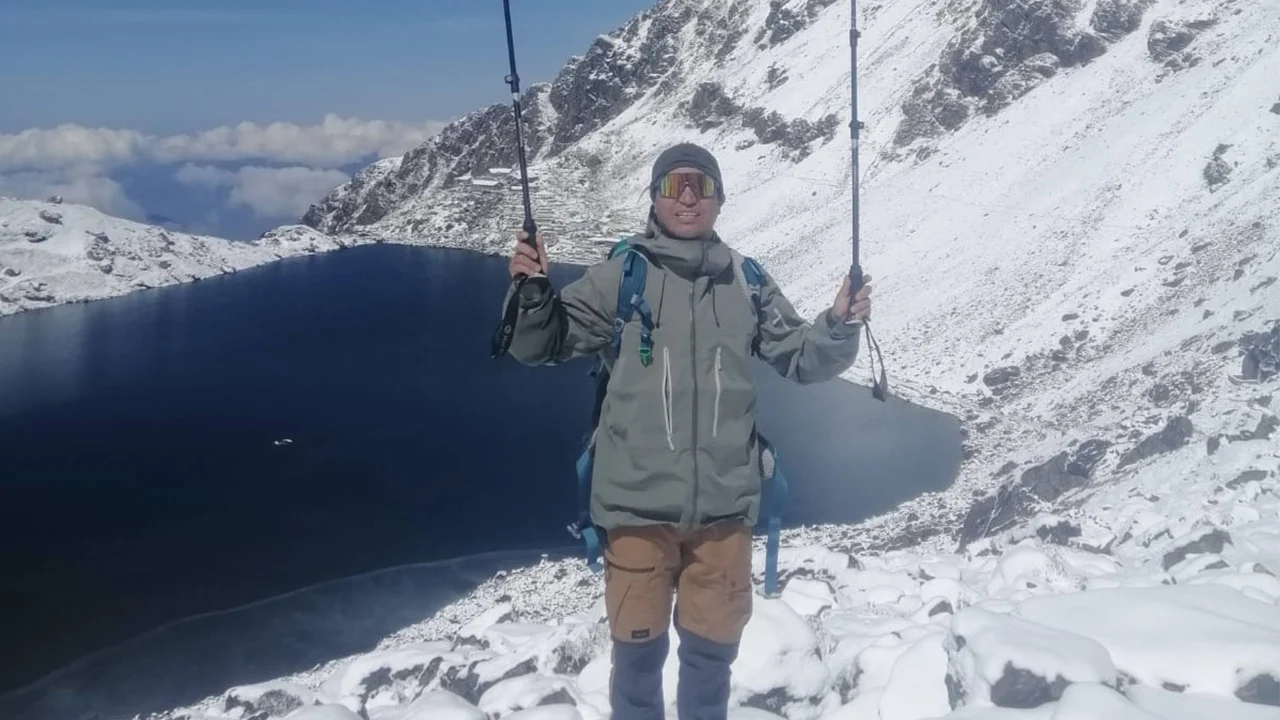
Sacred alpine lakes, a high pass and a glacier valley, all within reach of Kathmandu. But is this classic really a good first Himalayan trek?
The Langtang Gosainkunda Trek is one of the most scenic routes in Nepal. In a single journey you walk through rhododendron forests, visit the Langtang Valley, sleep beside the sacred Gosainkunda Lake and cross the Laurebina La Pass at 4,610 m. It is no surprise that first-time trekkers ask whether they can take it on.
So, is the Langtang Gosainkunda Trek suitable for beginners?
The honest answer: yes, fit first-timers can do it, especially with a guide and a well-paced itinerary. But it is not the easiest Himalayan trek. It is longer, higher and more demanding than a short, low-altitude trek, so you should be comfortable with several days of walking and ready to prepare in advance.
Below, we explain the real difficulty, stage by stage, so you can decide with confidence. You can also view the full Langtang Gosainkunda Trek – 16 Days itinerary, cost and inclusions.
Quick Answer: Beginner Suitability at a Glance
| Question | Short Answer |
|---|---|
| Can a first-time trekker do it? | Yes, if reasonably fit and well prepared |
| Is it the easiest option? | No, it is a moderate trek with high sections |
| Highest point on the main route | Laurebina La Pass, 4,610 m |
| Sacred lake altitude | Gosainkunda, about 4,380 m |
| Trekking days | About 12 days on the trail |
| Typical daily walking | 3 to 8 hours |
| Technical climbing needed? | No |
| Guide recommended? | Strongly, yes |
| Best seasons | March to May and September to November |
| Trip price | From €1,250 per person |
Our trip page rates this as a moderate trek. For beginners, the points that matter are the altitude, the number of consecutive walking days and the steep climb to Gosainkunda.
Why Beginners Love This Trek
1. No technical skills needed.
Trails are well-defined walking paths with no ropes, crampons or climbing. If you can walk uphill for hours, you can do the route.
2. A gradual build-up through the Langtang Valley.
You start in Syabrubesi (1,550 m) and climb slowly through forest and villages, so your body has time to adapt.
3. Comfortable teahouses.
Lodges provide beds, hot meals and a warm common room, so there is no camping and no heavy gear to carry.
4. Built-in acclimatization.
The itinerary includes a rest day at Kyanjin Gompa with optional hikes to Kyanjin Ri or Tsergo Ri, which is a smart way to prepare for the higher sections.
5. Rich culture and sacred scenery.
You pass Tamang villages, monasteries, mani walls and prayer flags, which makes the trek more than just a mountain walk.
6. Close to Kathmandu.
A scenic drive takes you to the trailhead, with no domestic flights and no flight delay stress.
Where Beginners Find It Challenging
An honest picture helps you plan better.
Altitude
You sleep at Kyanjin Gompa (3,870 m) and again at Gosainkunda (4,380 m), and you cross Laurebina La (4,610 m). These are real heights, where headaches, poor sleep and loss of appetite are common. Read our guide to high-altitude travel and altitude illness before you go.
The Steep Day to Gosainkunda
On the day from Chandanbari to Gosainkunda, you climb roughly 1,100 m over 6 to 7 hours. It is the toughest ascent of the trek, so it is worth taking slowly and drinking plenty of water.
The Pass Crossing
The day over Laurebina La is long, about 7 to 8 hours, and it climbs through rocky moraine before descending to Ghopte. Weather, cold and tired legs are the main factors.
Consecutive Walking Days
With around 12 days of trekking, fatigue builds up. Beginners who have only done day hikes may find the repetition harder than the terrain.
Cold Nights
Temperatures drop sharply near Gosainkunda, so you need a warm sleeping bag and good layers.
A Day-by-Day Look, Through a Beginner’s Eyes
| Day | Route | Altitude | Beginner Notes |
|---|---|---|---|
| 1 | Arrive in Kathmandu | 1,400 m | Rest and trek briefing |
| 2 | Drive to Syabrubesi | 1,550 m | Long scenic drive, 7 to 8 hours |
| 3 | Trek to Lama Hotel | about 2,470 m | Steady forest climb, 6 to 7 hours |
| 4 | Trek to Langtang Village | about 3,430 m | Valley opens up, altitude begins |
| 5 | Trek to Kyanjin Gompa | about 3,870 m | Short, easy-paced day |
| 6 | Acclimatization at Kyanjin | optional hikes up to 4,984 m | Choose Kyanjin Ri if you are cautious |
| 7 | Back to Lama Hotel | about 2,470 m | Long descent |
| 8 | Trek to Thulo Syabru | about 2,300 m | Gentle forest day |
| 9 | Trek to Chandanbari (Singh Gompa) | about 3,250 m | Steady ascent, about 950 m |
| 10 | Trek to Gosainkunda Lake | about 4,380 m | Hardest ascent, take it slowly |
| 11 | Cross Laurebina La to Ghopte | 4,610 m pass | Long day, early start |
| 12 | Trek to Kutumsang | about 2,600 m | Descent through forest |
| 13 | Trek to Chisapani | about 2,200 m | Rolling ridge trails |
| 14 | Trek to Sundarijal, drive to Kathmandu | about 1,400 m | Finish the trek |
| 15 | Kathmandu sightseeing | – | Optional rest and culture day |
| 16 | Departure | – | Transfer to the airport |
Beginner tip: the sequence is smart because you go up the valley first, spend a rest day at Kyanjin and then descend to Thulo Syabru before climbing to Gosainkunda. This gives you a head start on acclimatization.
How Fit Do You Need to Be?
You don’t need to be an athlete, but a solid base helps. Aim to build:
- Cardio: 3 to 4 sessions weekly of walking uphill, running, cycling or swimming for 8 to 12 weeks
- Hiking with a pack: weekend hikes of 5 to 7 hours with a loaded daypack
- Leg strength: squats, lunges and step-ups
- Stamina for consecutive days: try two or three long walks in a row
- Practice with your boots: break them in thoroughly to avoid blisters
If you have never trekked before, build confidence on a gentler route first, such as the Helambu Circuit Trek – 8 Days or the Langtang Valley Trek. If you have any health concerns, talk to your doctor before booking.
Beginner-Friendly Tips for Altitude
- Walk slowly. Beginners often start too fast. A steady pace keeps your heart rate and breathing under control.
- Drink plenty of water. Aim for 3 or more litres a day.
- Don’t skip the rest day. The Kyanjin Gompa day is there for a reason.
- Sleep low when you can. Ask your guide about day-hikes that keep sleeping altitude gentle.
- Tell your guide about symptoms early. A worsening headache, nausea or dizziness is not something to hide.
- Avoid alcohol and sleeping pills at altitude.
- Know the descent rule. If symptoms get worse, going down is the cure.
For more detail, see our guide on first aid, medical kit and high-altitude safety advice.
Best Season for First-Time Trekkers
- Spring (March to May): Mild temperatures, blooming rhododendrons and good visibility.
- Autumn (September to November): Clear skies, stable weather and the best mountain views.
- Avoid monsoon (June to August): Heavy rain, slippery trails and leeches in the lower forest.
- Winter (December to February): Cold nights and snow near Gosainkunda and the pass, which makes it harder for beginners.
Gosainkunda also hosts a big pilgrimage during the full-moon festival of Janai Purnima in August, so expect a very different, busy atmosphere then.
What Does It Cost?
Our Langtang Gosainkunda Trek – 16 Days starts from €1,250 per person. The price includes:
- Airport transfers and transport to and from the trailhead
- Teahouse and lodge accommodation throughout the trek
- Breakfast, lunch and dinner during the trek
- Langtang National Park permit and TIMS card
- A professional trekking guide and support staff
- Optional porters, arranged if you need them
- First-aid kit and a pre-trek briefing in Kathmandu
Not included: international flights, Nepal visa, travel insurance, personal gear, tips and personal expenses.
Insurance matters. Make sure your policy covers trekking to at least 5,000 m, including helicopter evacuation. Read our guide to trekking, peak climbing & expedition insurance in Nepal.
What to Pack
Layered clothing, waterproof boots that are well broken in, a warm sleeping bag (around -10°C comfort rating is a safe choice), trekking poles, a headlamp, sunglasses, sunscreen, water purification tablets and a basic first-aid kit. Our trekking equipment list for Nepal covers everything in detail.
Common Beginner Mistakes
- Starting too fast on the first few days
- Skipping the acclimatization day
- Wearing new boots that haven’t been tested
- Carrying too much weight in your daypack
- Underestimating the cold at Gosainkunda
- Buying weak insurance that excludes high altitude
- Ignoring early signs of altitude illness
- Trying to save money by skipping a guide
Not Sure It’s the Right Fit? Compare These Options
If Langtang Gosainkunda feels like a stretch for a first trek, here are some alternatives:
- Langtang Valley Trek: same valley, no high pass
- Tamang Heritage Trail and Langtang Valley Trekking: culture-rich and gentle
- Helambu Circuit Trek – 8 Days: shorter and lower
- Mardi Himal Trek – 8 Days: a popular first high-altitude trek
- Everest Panorama Trek – 8 Days: a lower-altitude introduction
- Short and Easy Trekking: browse more gentle options
- All Langtang Region Treks
Top 15 FAQs: Langtang Gosainkunda Trek for Beginners
1. Can a complete beginner do the Langtang Gosainkunda Trek?
A fit beginner can, especially with a guide and a gradual itinerary. It is not the easiest trek, so some hiking experience and preparation help a lot.
2. How difficult is the trek overall?
It is rated moderate. There is no technical climbing, but the altitude, the steep ascent to Gosainkunda and the long pass day make it more demanding than a short lowland trek.
3. How high does the trek go?
Gosainkunda Lake sits at about 4,380 m, and the main route crosses Laurebina La at 4,610 m. Optional hikes from Kyanjin Gompa reach up to about 4,984 m (Tsergo Ri), but you can choose a lower viewpoint.
4. How many days of trekking are there?
Around 12 days on the trail, within a 16-day trip that includes arrival, sightseeing and departure.
5. How many hours do I walk each day?
Most days are 3 to 8 hours. The longest days are the climb to Gosainkunda (6 to 7 hours) and the crossing of Laurebina La (7 to 8 hours).
6. Do I need previous trekking experience?
It is strongly recommended, though not strictly required. Doing a shorter trek first or training with long hikes gives you confidence.
7. How should I train for it?
Spend 8 to 12 weeks building cardio, leg strength and stamina, with weekend hikes carrying a daypack. Try to walk long days back to back.
8. Is altitude sickness a concern for beginners?
It can affect anyone, regardless of fitness. The itinerary includes a rest day at Kyanjin Gompa, and guides monitor how you feel. Tell your guide early about any symptoms.
9. Do I need a guide?
We strongly recommend it. A guide handles navigation, permits, pacing and altitude decisions, especially on the pass and in changing weather.
10. Can I use a porter?
Yes, optional porters are available so you can carry just a daypack. This helps beginners save energy for the climbs.
11. What is the best time of year?
March to May and September to November offer the most stable weather and best views.
12. What permits do I need?
You need the Langtang National Park entry permit and a TIMS card. Both are included in our package, and we arrange them for you.
13. What type of accommodation is there?
Simple teahouses and lodges, usually with twin rooms, shared bathrooms and hot meals. Hot showers and charging may cost extra.
14. How cold does it get?
Nights at Gosainkunda and Kyanjin can fall well below freezing, especially in autumn and winter. Bring a warm sleeping bag, a down jacket and layers.
15. How much does the trek cost?
Our 16-day package starts from €1,250 per person, including permits, guide, lodges, meals and transport. Flights, visa, insurance and tips are extra.
Final Thoughts: Is Langtang Gosainkunda Right for Your First Trek?
If you are fit, willing to train and happy to go at a steady pace, the Langtang Gosainkunda Trek can be a wonderful first Himalayan adventure. You get glacier views, a sacred lake, a high pass and genuine mountain culture, without the need for technical skills. Respect the altitude, prepare well and trek with a team that puts safety first.
Nepal Voyage Treks offers the full Langtang Gosainkunda Trek – 16 Days with an experienced guide, permits, teahouse stays and flexible support for first-timers. Our team can also help you adjust the plan to match your experience.
Ready to Plan Your Langtang Gosainkunda Trek?
📞 Call / WhatsApp: +977 9851080223
✉️ Email: info@nepalvoyagetreks.com
🌐 Enquire: Make an Enquiry · Book Now · Join a Group · Contact Us





Leave a Comment