


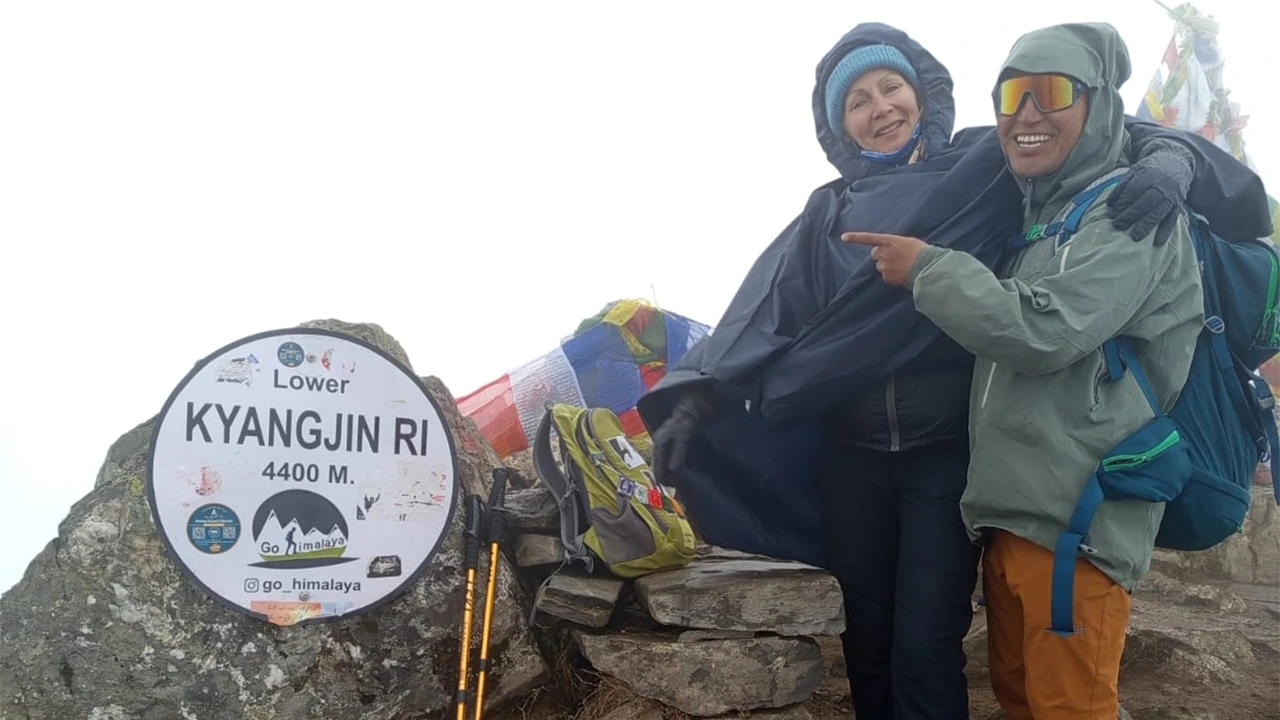
One trail that takes you past Himalayan glaciers, a sacred alpine lake at 4,380 m, Tibetan-style villages and a high mountain pass, all within reach of Kathmandu: that is the Langtang Gosainkunda Trek. It combines the famous Langtang Valley with the holy lakes of Gosainkunda in one 16-day journey, then loops back to the Kathmandu Valley through the Helambu ridge.
So what are the main highlights? Here is the short answer, followed by a full guide to each one, the route, difficulty, best season and cost.
Quick Answer: The Top Highlights
- Gosainkunda Lake (4,380 m): a sacred glacial lake surrounded by snow peaks.
- Laurabina La Pass (4,610 m): a high pass with sweeping views of Langtang and Ganesh Himal.
- Kyanjin Gompa (3,870 m): a Himalayan monastery village with a famous yak cheese factory.
- Tsergo Ri (4,984 m) and Kyanjin Ri (4,773 m): optional viewpoints with huge panoramas.
- Langtang Lirung, Dorje Lakpa and Langshisa Ri: the big mountain views of the valley.
- Langtang National Park: rhododendron forest, waterfalls, birds and wildlife.
- Tamang culture: mani walls, chortens, prayer flags and warm village hospitality.
- A true circuit: you finish at Sundarijal, near Kathmandu, without retracing your steps.
Langtang Gosainkunda Trek at a Glance
|
Detail |
Information |
|---|---|
|
Duration |
16 days |
|
Region |
Langtang, Nepal |
|
Grade |
Moderate |
|
Maximum altitude |
4,984 m (Tsergo Ri, optional side hike) |
|
Highest overnight stay |
Gosainkunda, about 4,380 m |
|
Start and end point |
Kathmandu |
|
Accommodation |
Hotels and mountain lodges (teahouses) |
|
Group size |
1 to 30 trekkers |
|
Best season |
Spring and autumn |
|
Price |
From €1,250 per person |
12 Main Highlights of the Langtang Gosainkunda Trek
1. Sacred Gosainkunda Lake
The emotional high point of the trek is Gosainkunda, a cluster of alpine lakes at about 4,380 m. Hindus believe Lord Shiva created the main lake by striking the mountain with his trident, and thousands of pilgrims visit each year, especially during the Janai Purnima festival in August. For trekkers, the setting is unforgettable: clear, cold water, rocky slopes, prayer flags and snow peaks reflected on a calm morning. Sunset and sunrise here are pure magic.
2. Laurabina La Pass (4,610 m)
After Gosainkunda, the trail climbs to Laurabina La Pass, the trek's highest crossing. The ascent over rocky moraine is demanding, but the reward is a broad panorama of the Langtang range, Ganesh Himal and a string of small lakes below. Prayer flags snap in the wind at the top, a perfect spot for photos before the long descent toward Ghopte.
3. Kyanjin Gompa and Himalayan Yak Cheese
At the head of the Langtang Valley, Kyanjin Gompa (3,870 m) is a small settlement of lodges, yak pastures and an old monastery beneath towering peaks. Visit the local cheese factory to taste fresh yak cheese, wander among mani walls and watch the sunset light up the glaciers. It is also a great base for acclimatization day hikes.
4. Tsergo Ri and Kyanjin Ri Viewpoints
On the acclimatization day at Kyanjin, you can climb Kyanjin Ri (4,773 m) in about 2 to 3 hours or go higher to Tsergo Ri (4,984 m) for a vast view of glaciers and peaks. These optional hikes are the highest points of the trip and a big reason many trekkers rate Langtang so highly. Your guide will advise which one suits you, depending on how your body feels.
5. Close-Up Views of Langtang Lirung and Neighboring Peaks
The Langtang Valley is a classic Himalayan amphitheater. You will see Langtang Lirung (7,227 m) towering over the trail, along with Dorje Lakpa, Langshisa Ri, Yala Peak and Ganesh Himal. From Langtang Village onward, the views get closer with every step, and clear mornings are especially rewarding.
6. Langtang National Park: Forests, Waterfalls and Wildlife
The trek begins in Langtang National Park, Nepal's first Himalayan national park. Expect rhododendron, oak and bamboo forests, mossy cliffs, rushing rivers and small waterfalls. Langur monkeys are commonly spotted, birdlife is rich, and the park is also home to elusive animals such as the red panda and the Himalayan black bear, which are rarely seen. In spring, the forests burst into color with rhododendron blooms.
7. Tamang Culture and Mountain Villages
The Langtang region is home to the Tamang people, whose Tibetan-influenced culture shows in stone houses, mani walls, chortens and prayer flags. You will pass through villages such as Lama Hotel, Langtang Village, Thulo Syabru and Kutumsang, where lodge owners share home-cooked meals and local stories. Langtang Village was rebuilt after the 2015 earthquake, and staying in local lodges directly supports the community's recovery.
8. A Real Circuit, Not an Out-and-Back
Unlike many treks that retrace the same trail, this route is a loop. You trek up the Langtang Valley, cross to Gosainkunda, then descend over Laurabina La, Ghopte, Kutumsang and Chisapani to Sundarijal, on the edge of the Kathmandu Valley. New scenery appears almost every day.
9. Suspension Bridges and River Trails
The early days follow the Bhote Koshi and Langtang Khola rivers over swaying suspension bridges and through boulder-strewn gorges. Pass waterfalls, listen to the roar of glacial water and enjoy the mix of adventure and scenery that makes the lower valley so lively.
10. Built-In Acclimatization
The itinerary climbs gradually: Syabrubesi to Lama Hotel, then Langtang Village and Kyanjin Gompa, with a dedicated rest and exploration day at Kyanjin before you cross to Gosainkunda. This gentler pace gives your body time to adjust to the altitude and makes the trek safer and more enjoyable.
11. Easy Access from Kathmandu
No flights are needed. A 7 to 8 hour scenic drive (about 122 km) takes you from Kathmandu to Syabrubesi on the Pasang Lhamu Highway, and the trek ends at Sundarijal, a short drive from the city. That makes the trip flexible and less affected by flight delays than many other Himalayan treks.
12. Expert Support and Cultural Touches in Kathmandu
With an experienced guide, optional porters, permits and a safety briefing included, you can focus on the views. The package also includes a day of Kathmandu sightseeing (Swayambhunath, Durbar Square, Pashupatinath, Boudhanath and Patan), so you get culture as well as mountains.
Route Snapshot: 16-Day Itinerary
|
Day |
Route |
Overnight altitude (approx.) |
|---|---|---|
|
1 |
Arrive in Kathmandu |
1,400 m |
|
2 |
Drive Kathmandu to Syabrubesi (7 to 8 hrs) |
1,550 m |
|
3 |
Trek to Lama Hotel (6 to 7 hrs) |
2,470 m |
|
4 |
Trek to Langtang Village (6 to 7 hrs) |
3,430 m |
|
5 |
Trek to Kyanjin Gompa (3 to 4 hrs) |
3,870 m |
|
6 |
Acclimatization and hike to Kyanjin Ri or Tsergo Ri |
3,870 m |
|
7 |
Trek back to Lama Hotel (5 to 6 hrs) |
2,470 m |
|
8 |
Trek to Thulo Syabru (5 to 6 hrs) |
2,300 m |
|
9 |
Trek to Sing Gompa / Chandanbari (5 to 6 hrs) |
3,250 m |
|
10 |
Trek to Gosainkunda (6 to 7 hrs) |
4,380 m |
|
11 |
Cross Laurabina La (4,610 m) to Ghopte (7 to 8 hrs) |
Ghopte |
|
12 |
Trek to Kutumsang (6 to 7 hrs) |
Kutumsang |
|
13 |
Trek to Chisapani (6 to 7 hrs) |
2,200 m |
|
14 |
Trek to Sundarijal, drive to Kathmandu |
Kathmandu |
|
15 |
Kathmandu sightseeing |
Kathmandu |
|
16 |
Final departure |
Kathmandu |
How Difficult Is the Langtang Gosainkunda Trek?
The trek is graded moderate, though it is more demanding than the standard Langtang Valley route. Expect 5 to 8 hours of walking on most days, steady climbs and a few long descents. The hardest day is usually the crossing of Laurabina La (4,610 m) to Ghopte, which takes 7 to 8 hours.
Good general fitness and some trekking experience help a lot. Train for 6 to 8 weeks with hill walks, stairs and cardio, and break in your boots. For more safety advice, read our guide to high-altitude travel and altitude illness.
Best Time for the Langtang Gosainkunda Trek
- Autumn (September to November): clear skies, stable weather and the best mountain views.
- Spring (March to May): rhododendron forests in bloom and mild temperatures.
- Monsoon (June to August): heavy rain, leeches and cloudy views, not recommended.
- Winter (December to February): very cold, with snow possible on the high passes and lakes.
Cost and What's Included
The trek starts from €1,250 per person. Book now or make an inquiry to confirm the latest price for your dates and group size.
Included:
- Professional trekking guide and support staff.
- Lodge accommodation throughout the trek and hotels in Kathmandu.
- Daily breakfast, lunch and dinner during the trek.
- Langtang National Park entry permit and TIMS card.
- Airport transfers and transport to and from the trailhead.
- Optional porters, first aid kit and emergency support.
- Pre-trek briefing in Kathmandu.
Not included: international flights, Nepal visa, travel insurance (mandatory, including medical evacuation), personal expenses such as drinks, snacks and hot showers, trekking gear, tips and optional activities.
Packing and Insurance Essentials
Pack in layers: base layers, a fleece, a down jacket, a waterproof shell, warm hat and gloves, broken-in boots, a four-season sleeping bag (about -10°C), trekking poles, a headlamp and water purification tablets. See our full trekking equipment checklist.
Travel insurance is essential. Your policy should cover trekking above 5,000 m (to include Tsergo Ri), emergency helicopter evacuation and medical costs. Learn more in our guide to trekking, peak climbing and expedition insurance in Nepal.
Who Is This Trek For?
The Langtang Gosainkunda Trek suits trekkers with some experience who want more than a short valley walk: nature lovers, culture seekers, pilgrims and photographers. If you would like something shorter, take a look at the Langtang Valley Trek, the Tamang Heritage Trail and Langtang Valley Trek or the Helambu Circuit Trek. You can also browse all trips in the Langtang region.
Why Trek with Nepal Voyage Treks?
- Local expertise: a Kathmandu (Boudha) based team that knows the Langtang trails.
- Safety first: experienced guides, first aid support and a clear acclimatization plan.
- Flexible options: private or group departures, with group joining available.
- Fair treatment of staff: porters and guides are equipped, insured and respected.
- Clear inclusions: permits, transfers, meals and accommodation are listed upfront.
Top 15 Frequently Asked Questions
1. What are the main highlights of the Langtang Gosainkunda Trek? The main highlights are the sacred Gosainkunda Lake (about 4,380 m), Laurabina La Pass (4,610 m), Kyanjin Gompa and its cheese factory, the Tsergo Ri and Kyanjin Ri viewpoints, close views of Langtang Lirung and Dorje Lakpa, rhododendron forests and Tamang culture.
2. How many days does the trek take? The package is 16 days including arrival, Kathmandu sightseeing and departure, with about 12 trekking days.
3. How difficult is the trek? It is graded moderate. You walk 5 to 8 hours a day with steady climbs, and the crossing of Laurabina La is the hardest day. Reasonable fitness and some trekking experience are recommended.
4. What is the highest altitude on the trek? The highest point is Tsergo Ri at 4,984 m, an optional hike from Kyanjin Gompa. The highest overnight stay is Gosainkunda at about 4,380 m, and the highest pass is Laurabina La at 4,610 m.
5. When is the best time to go? Spring (March to May) and autumn (September to November) offer the best weather and views. Monsoon brings heavy rain, and winter is very cold with snow on the high sections.
6. How do I get to the starting point? The trek starts at Syabrubesi, about 122 km from Kathmandu. A private vehicle takes 7 to 8 hours, and transport is arranged by Nepal Voyage Treks.
7. What permits do I need? You need a Langtang National Park entry permit and a TIMS card. Both are included in the package and arranged by your operator.
8. Do I need a guide? A licensed guide is strongly recommended for safety, navigation, altitude support and logistics, especially near the high lakes and Laurabina La Pass.
9. What is the accommodation like? You stay in simple mountain lodges with twin-sharing rooms, basic bedding and shared bathrooms, and in hotels in Kathmandu. Rooms are unheated, so bring a warm sleeping bag.
10. What food is available on the trek? Meals include dal bhat, noodles, soups, momos, eggs and porridge. Vegetarian meals are easy to find, and breakfast, lunch and dinner are included during the trek.
11. Is altitude sickness a risk? Yes, it is a risk above 3,000 m. The itinerary includes gradual ascents and an acclimatization day at Kyanjin Gompa. Walk slowly, drink plenty of water and tell your guide at once about headaches, nausea or dizziness.
12. Why is Gosainkunda sacred? Hindus believe Lord Shiva created the lake with his trident, and Buddhists also revere the area. Many pilgrims visit during the Janai Purnima festival in August.
13. What does the trek cost? The trek starts from €1,250 per person. Contact Nepal Voyage Treks for the latest price for your dates and group size.
14. Do I need travel insurance? Yes. It is mandatory and should cover trekking above 5,000 m, emergency helicopter evacuation and medical costs.
15. Can beginners or families do this trek? Fit beginners and families with some walking experience can manage it with a guide and porter, but the high lakes and pass are demanding. Shorter options such as the Langtang Valley Trek may be better for first-time trekkers.
Ready to Trek to Gosainkunda and Langtang?
Sacred lakes, glacier views, mountain monasteries and a loop route back to Kathmandu make this one of Nepal's most rewarding treks. View the full itinerary and book on the Langtang Gosainkunda Trek page, or contact our team through the contact page, by email at info@nepalvoyagetreks.com or on WhatsApp at +977 9851080223.
For more trekking ideas and tips, visit the Nepal Voyage Treks blog.




Leave a Comment