





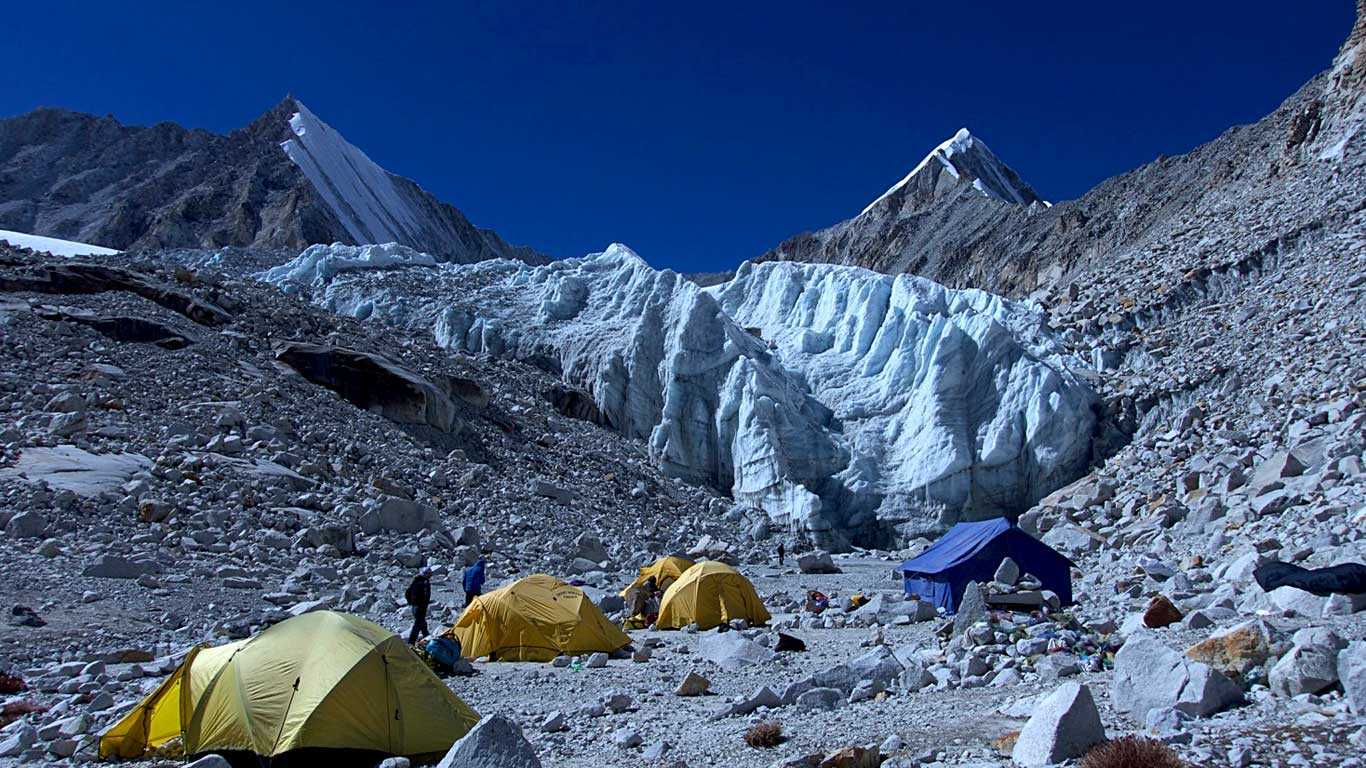
Few treks in Nepal ask as much of you as the Makalu Sherpani Col Pass Trek. Over 22 days you walk from subtropical river valleys to Makalu Base Camp, camp above 5,000 m, and cross three high passes into the Everest (Khumbu) region. It is remote, cold and technical. It is also one of the most rewarding journeys in the Himalaya.
This guide explains exactly how difficult the trek is, where the hardest sections are, and how to prepare so you arrive confident and strong.
How Difficult Is the Makalu Sherpani Col Pass Trek?
Short answer: it is a very challenging, expedition-style trek. It is not recommended for beginners, but it is achievable for fit trekkers with high-altitude experience and good preparation.
| Difficulty Factor | Level |
|---|---|
| Overall grade | Very challenging (expedition-style) |
| Altitude | Very high (passes up to about 6,150 m) |
| Technical skill | Moderate to high (fixed ropes, crampons, ice axe) |
| Remoteness | Extreme (camping, limited help) |
| Cold and weather | Severe at high camps and pass mornings |
| Physical demand | 6–8 hours of walking on many days |
You do not need to be a professional mountaineer. You do need endurance, altitude experience and a willingness to learn basic glacier skills before the pass crossings.
Makalu Sherpani Col Trek Altitude: Passes and High Camps
Altitude is the biggest challenge on this route. The three passes are:
| Pass | Approx. Altitude |
|---|---|
| Sherpani Col | About 6,135–6,155 m |
| West Col | About 6,143 m |
| Amphu Laptsa | About 5,845 m |
Pass heights vary slightly between sources, so treat them as approximate.
You also sleep high for several nights: Makalu Base Camp (4,870 m), Swiss Base Camp (5,150 m), Sherpani Col Base Camp (5,688 m) and Amphu Laptsa Base Camp (5,527 m). That is a lot of time in thin air, which is why a well-designed acclimatization plan matters more than raw fitness.
The Toughest Challenges on the Trek
1. Crossing Sherpani Col and West Col (Day 14)
This is the hardest day of the trek. You leave camp before dawn, when snow is firm and winds are lower. You then climb steep snow and ice using fixed ropes, crampons and an ice axe, cross both passes, and descend a long glacier to Baruntse Camp. Expect a long, cold, tiring day with spectacular views of Makalu, Baruntse and Everest.
2. Amphu Laptsa Pass (Day 18)
The final technical crossing is a rope-assisted climb and steep descent toward the Imja Valley. From the top, Ama Dablam, Lhotse and the south face of Everest fill the horizon. You then drop about 1,200 m to Chhukung, where lodges and warm meals return.
3. Glacier and Moraine Terrain
Between Makalu Base Camp and Swiss Base Camp, and again through the Hongu Basin, you walk on loose moraine and glacier edges. Progress is slow, the ground is uneven, and good footwork is essential.
4. Remoteness
There are no lodges between Makalu Base Camp and Chhukung. You live in tents, and rescue depends on weather and landing sites. That is why expedition-style support, with guides, climbing Sherpas, a camping crew, oxygen and a first-aid kit, is essential rather than optional.
5. Cold and Weather
Nights at high camps are well below freezing, and pass mornings are colder and windier still. Good gear and a flexible schedule are part of staying safe.
Altitude Sickness and Acclimatization
Anyone can be affected by altitude, including strong, healthy trekkers. The itinerary builds in rest days at Khongma Danda (3,500 m), Swiss Base Camp (5,150 m) and Amphu Laptsa Base Camp (5,527 m), so your body has time to adapt.
Practical rules that work:
- Walk slowly. If you cannot hold a conversation, you are going too fast.
- Climb high, sleep low on rest days with short, easy hikes.
- Drink 3–4 litres of water daily and keep eating even when appetite drops.
- Avoid alcohol and sleeping pills at altitude.
- Report symptoms early. Headache, nausea, dizziness or poor balance should go straight to your guide.
- If symptoms worsen, descend. Descent is the most effective treatment.
Ask your doctor about altitude medication before you travel. For a deeper read, see our guide to high-altitude travel and altitude illness and our first aid, medical kit and high-altitude safety advice.
Technical Skills You Should Have
Your guides brief you and coach you before each crossing, but arriving with the basics makes everything easier and safer:
- Walking confidently in crampons on snow and ice
- Carrying and using an ice axe for balance and arrest
- Clipping into fixed ropes and using an ascender
- Handling a harness and carabiners
- Moving as a roped team on glacier terrain
A one- or two-day basic mountaineering course before the trek is a smart investment.
Fitness Preparation: A 3–6 Month Plan
You will walk 6–8 hours a day for many days in a row, with ascents or descents of 700–1,200 m on some days.
- Cardio, 4–5 times a week: running, cycling, swimming or fast hill walking
- Strength, 3 times a week: squats, lunges, step-ups and core work
- Weekend hikes with an 8–12 kg pack, building up to long days
- Back-to-back hiking days to practise recovering
- Stair or hill repeats for climbing power
- Cold-weather outings or camping if possible
Also try to have at least one trek above 5,000 m behind you, such as Everest Base Camp, Manaslu or the Everest Three High Passes Trek.
Is This Trek Right for You? Experience Check
This trek suits you if:
- You have trekked above 5,000 m before
- You enjoy camping and cold conditions
- You are fit, motivated and willing to train
- You want remote, uncrowded trails
Consider a stepping stone first if:
- You have never been above 4,000 m
- You dislike camping or cold
- You have limited time to train
Good preparation routes include the Manaslu Circuit Trek, Mera Peak Climbing and Island Peak Climbing. You can browse more options in our Makalu region trips.
Best Time for the Sherpani Col Pass Trek
- Autumn (October–November): The most stable weather, clear skies and the best conditions for the passes
- Spring (April–May): Warmer days and rhododendron blooms, with more snow and cloud on the passes
- Winter and monsoon: Not recommended because of heavy snow, extreme cold, rain and landslides
Book early. This is a specialist route, and the best dates fill quickly.
Gear and Packing Essentials
Group equipment such as ropes, tents and cooking gear is supplied by the team. You bring or rent your personal kit:
- Insulated mountaineering boots, crampons and ice axe
- Harness and helmet
- Four-season sleeping bag
- Expedition down jacket, hard shell and insulated trousers
- Mittens, liner gloves, balaclava and glacier sunglasses
- Headlamp with spare batteries
Most technical items can be rented in Kathmandu. See our trekking equipment list for Nepal and peak climbing equipment guide, and confirm exactly what is provided when you book.
Insurance, Safety and Emergency Support
Your travel insurance must cover trekking above 6,000 m, technical terrain, emergency helicopter evacuation and repatriation. Read the fine print, because many standard policies stop at 3,000–4,500 m.
Read more in our guides to trekking and expedition insurance and helicopter evacuation and rescue.
Top 10 Preparation Tips
- Start training 3–6 months early and build endurance first.
- Gain altitude experience on a trek above 5,000 m.
- Learn basic crampon, ice axe and rope skills before you arrive.
- Break in your boots and test crampons on them at home.
- Pack for real cold, especially for sleeping and pass days.
- Buy proper insurance covering altitude and helicopter evacuation.
- Add buffer days for Tumlingtar and Lukla flight delays.
- Eat and hydrate even when you do not feel hungry.
- Tell your guide everything, including symptoms, cold hands or doubts.
- Respect the mountain. A turnaround is better than an accident.
Why Choose Nepal Voyage Treks for the Makalu Sherpani Col Pass Trek?
A trek this serious deserves a team you can trust. With Nepal Voyage Treks, your 22-day journey includes:
- Licensed guides and climbing Sherpas for the high passes
- Porters, cooks and a full camping crew for the remote section
- Built-in acclimatization days at Khongma Danda, Swiss Base Camp and Amphu Laptsa Base Camp
- Group climbing equipment, an oxygen cylinder and a first-aid kit
- Permits, domestic flights (Kathmandu–Tumlingtar), airport transfers and Kathmandu hotel stays
- A flexible plan that puts safety ahead of the schedule
The package starts from €3,500 per person. Check the live page for current rates and full inclusions on the Makalu Sherpani Col Pass Trek page.
FAQs About Makalu Sherpani Col Pass Trek Difficulty
1. Is the Makalu Sherpani Col Pass Trek harder than Everest Base Camp?
Yes, by a wide margin. It reaches higher altitudes, involves technical glacier travel, and includes remote camping with no lodges for several days.
2. How high is the Sherpani Col pass?
About 6,135–6,155 m depending on the source. West Col is about 6,143 m and Amphu Laptsa about 5,845 m.
3. Can a beginner do this trek?
It is not recommended for first-time trekkers. Gain experience on a high-altitude trek first, such as Manaslu, Three Passes or Mera Peak.
4. Do I need technical climbing experience?
You need basic skills with crampons, an ice axe and fixed ropes. Guides coach you on the trail, but prior practice is strongly advised.
5. What is the hardest day?
Day 14, crossing Sherpani Col and West Col to Baruntse Camp, is the longest and most demanding day.
6. How many acclimatization days are included?
Three: Khongma Danda, Swiss Base Camp and Amphu Laptsa Base Camp.
7. What is the best season?
October–November is best, with April–May as a good second choice.
8. Is helicopter evacuation possible?
It can be, depending on weather, altitude and landing sites. High camps may require a descent first, so strong insurance is essential.
Ready to Take On Nepal's Great High-Pass Crossing?
The Makalu Sherpani Col Pass Trek is not for everyone. For prepared trekkers it offers something rare: solitude, glaciers, Makalu at close range and an unforgettable arrival in the Everest region.
👉 View the full itinerary and book your trip
👉 Make an enquiry or contact our team
👉 Join a group departure to share the cost
WhatsApp / Call: +977 9851080223 | Email: info@nepalvoyagetreks.com




Leave a Comment