





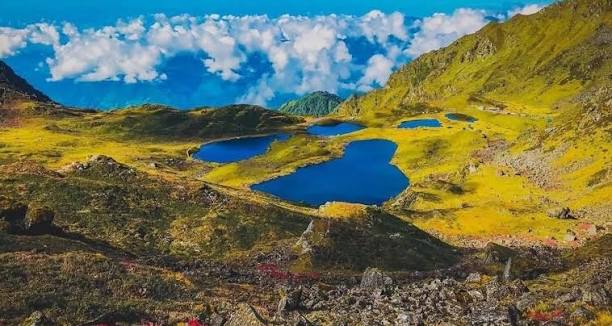
Tucked in the hills northeast of Kathmandu, Panch Pokhari ("five holy lakes") sits at about 4,100 meters in Sindhupalchok. It is one of Nepal's most peaceful and spiritual trekking destinations. The lakes are sacred to Hindus and Buddhists, the trails see far fewer trekkers than Everest or Annapurna, and the views take in the Jugal Himal, Langtang Lirung, Dorje Lakpa and the Rolwaling range.
If you want a quieter, off-the-beaten-path Himalayan trek that is close to Kathmandu, this is a great choice. This guide covers the itinerary, cost, difficulty, permits, best season and preparation tips for 2027, based on our 10-Day Panch Pokhari Trek.
Panch Pokhari Trek at a Glance
| Fact | Details |
|---|---|
| Duration | 10 days |
| Region | Sindhupalchok, Jugal Himal area |
| Highest point | About 4,100 m (13,451 ft) at Panch Pokhari |
| Difficulty | Moderate to challenging |
| Accommodation | Teahouses or lodges where available, camping at higher stops |
| Best seasons | March to May and September to November |
| Special time | Janai Purnima (usually August), a major pilgrimage festival |
| Start/end | Kathmandu |
Why Trek to Panch Pokhari?
- Sacred lakes. The five lakes are a holy pilgrimage site, and the setting feels deeply spiritual.
- Fewer crowds. Compared with Annapurna or Everest, the trails are quiet, so you walk in peace.
- Close to Kathmandu. You can reach the trailhead by road in a day, with no flights needed.
- Mountain views. Wide Himalayan panoramas open up as you climb above the forest.
- Culture. You pass through Tamang and Sherpa-influenced villages with warm hospitality.
- A good bridge trek. It is higher and more remote than a short hike, but gentler than major high-altitude circuits.
Panch Pokhari Trek Itinerary (10 Days)
This is a typical 10-day route. The exact day-by-day plan, stops and timings can vary by season and group, so use the official itinerary on our trip page as the final reference. [CONFIRM: replace with the live itinerary]
| Day | Plan | Notes |
|---|---|---|
| 1 | Arrive in Kathmandu (about 1,350 m) | Airport pickup, hotel, trip briefing |
| 2 | Drive from Kathmandu toward Chautara and the trailhead | Long scenic drive by road |
| 3 | Trek through villages and forest | Steady uphill walking begins |
| 4 | Trek to higher forest and ridge areas | Views start to open up |
| 5 | Continue climbing through ridges | Longer day, cooler nights |
| 6 | Trek to Nasim Pati (about 3,700 m) | Spectacular views, rest house or camp |
| 7 | Trek to Panch Pokhari (about 4,100 m) | Highest point, sacred lakes |
| 8 | Explore the lakes, then begin the descent | Optional viewpoint time |
| 9 | Trek down to the road head and drive back | Return to lower altitude |
| 10 | Final departure from Kathmandu | Airport transfer |
The final stretch to Panch Pokhari from Nasim Pati takes a few hours on rocky ridge sections, which feel tougher than the distance suggests because of the altitude.
Panch Pokhari Trek Cost in 2027
Prices depend on group size, season, accommodation style (lodge or camping) and extras. Across Nepal, the Panch Pokhari trek is sold at a wide range of prices because itineraries vary from 10 to 14 days. Our 10-day package is priced at [CONFIRM: US$ ___ per person, plus any group discounts].
What's usually included
- Airport transfers and Kathmandu hotel nights with breakfast
- Private or shared road transport to and from the trailhead
- Meals during the trek (breakfast, lunch and dinner) and tea or coffee
- Accommodation during the trek (teahouse, homestay or camping)
- Experienced licensed trekking guide, porters and support staff
- Required trekking permits and local entry fees
- Camping equipment and cook team where camping is used
- First-aid kit and staff insurance
- Farewell dinner [CONFIRM against the live inclusion list]
What's usually not included
- International flights and Nepal visa
- Lunches and dinners in Kathmandu
- Travel and medical insurance, including emergency evacuation
- Personal equipment and clothing
- Drinks, Wi-Fi, hot showers, laundry and charging
- Tips for guides, porters and drivers
Budget tips
- Join a group to lower your cost per person.
- Book early for spring and autumn.
- Rent a sleeping bag and down jacket in Kathmandu if you do not own them.
- Keep an extra US$ 200 to US$ 400 aside for tips, drinks and personal spending.
Permits Required for Panch Pokhari
Panch Pokhari is a remote area, so permit and local entry rules can change. Your trekking operator normally arranges everything. Ask your agency to confirm the current permit requirements and fees before departure, and carry your passport and copies of your permits during the trek. [CONFIRM exact permit names and fees included in your package]
For general information, see our guides on [trekking permit fees in Nepal](ADD LINK) and [Nepal travel permits and visa](ADD LINK). [ADD LINK: Nepal Voyage Treks pages]
Best Time to Trek Panch Pokhari
Spring (March to May): rhododendrons bloom, days are warm and mountain views are good. Higher camps can still be cold at night.
Autumn (September to November): clear skies, stable weather and the best long-distance views. It is the most popular season.
Janai Purnima (August): thousands of pilgrims visit the lakes. It is culturally fascinating but crowded and wet, so expect monsoon conditions.
Winter: possible with proper gear, but cold, snowy and challenging. Monsoon: leeches, rain and slippery trails make it less suitable for regular trekkers.
How Difficult Is the Panch Pokhari Trek?
The trek is moderate to challenging. The altitude is not extreme, but the climbs are steady and some days are long. The main challenges are:
- Steep uphill sections through forest and ridges
- Basic facilities, with limited teahouses at higher stops
- Cold nights near 3,700 to 4,100 m
- Altitude effects above 3,500 m, even though the highest point is "only" 4,100 m
- Remote trails, so you need to be self-reliant
If you can hike 5 to 6 hours a day on consecutive days, you can complete it. Previous multi-day trekking experience helps a lot.
For related routes, you can also explore our Langtang Gosainkunda Trek as a longer, higher alternative.
Altitude Tips
Panch Pokhari is high enough for altitude symptoms to appear. Walk slowly, drink 3 to 4 liters of water a day, eat regularly and tell your guide about headache, nausea or dizziness. If symptoms worsen, descend. Never ignore warning signs.
What to Pack
- Broken-in waterproof hiking boots and spare laces
- Warm sleeping bag (rated to at least -10°C) and insulated mat if camping
- Thermal layers, fleece, down jacket and waterproof shell
- Warm gloves, hat, buff and sun hat
- Sunglasses, sunscreen and lip balm
- Headlamp, trekking poles and a 30 to 40 L daypack
- Water bottles and purification tablets
- Personal first-aid kit, blister care and medication
- Power bank and spare batteries
- Travel insurance that covers trekking up to 4,500 m and emergency evacuation
Fitness and Preparation
Start training 6 to 8 weeks before departure:
- Cardio 3 to 4 times a week (running, cycling, brisk walking)
- Leg strength: squats, lunges and step-ups
- Weekend hikes with a 6 to 8 kg pack, increasing to 5 to 6 hours
- Back-to-back long walking days if you can
Responsible Trekking at a Sacred Site
Panch Pokhari is a holy place. Respect local customs, dress modestly, avoid loud noise near the lakes, do not swim or wash in the sacred water, carry out all trash and follow your guide's advice on camping areas.
Why Trek with Nepal Voyage Treks?
Our team arranges your logistics from arrival to departure, including permits, transport, meals, guides and support staff. We keep groups small, brief you on safety and altitude, and adapt the plan if weather or trail conditions change. You can also customize the trip to add extra days or combine it with other treks. See [Nepal Voyage Treks – About Us](ADD LINK) to learn more. [ADD LINK]
Frequently Asked Questions (FAQs)
1. How many days is the Panch Pokhari Trek?
Our package is 10 days from Kathmandu to Kathmandu. Other operators offer longer versions.
2. What is the highest altitude on the Panch Pokhari Trek?
About 4,100 m at the Panch Pokhari lakes.
3. Is Panch Pokhari difficult?
It is moderate to challenging. Daily walks are steady uphill, nights are cold, and the altitude requires care, but no technical skills are needed.
4. What is the best time to trek Panch Pokhari?
March to May and September to November. August is busy because of the Janai Purnima pilgrimage.
5. How much does the Panch Pokhari Trek cost in 2027?
Our 10-day package is priced at [CONFIRM price] per person. Check the trip page for current rates.
6. Do I need a guide for Panch Pokhari?
A guide is strongly recommended because of the remote trails, camping and altitude. Our package includes one.
7. Where will I sleep on the trek?
Expect basic teahouses or lodges at lower stops and camping or simple rest houses at higher points. [CONFIRM against the live page]
8. Can beginners do the Panch Pokhari Trek?
Fit beginners with some hiking experience can complete it. Tell us about your background so we can advise you.
9. Is there Wi-Fi or mobile signal?
Signal is limited or absent in higher areas. Plan for patchy contact.
10. What should I do if I get altitude sickness?
Tell your guide immediately, rest, drink water and descend if symptoms worsen. Always carry travel insurance with evacuation cover.
Final Thoughts
Panch Pokhari is a rare combination of spirituality, mountain views and solitude, all within reach of Kathmandu. With 10 days, a reliable team and good preparation, it is one of the best off-the-beaten-path treks in Nepal for 2027.
Ready to plan your trek? View the full Panch Pokhari Trek – 10 Days itinerary, send an enquiry or message us on WhatsApp
+9779851080223 for a personalized 2027 quote.






Leave a Comment