


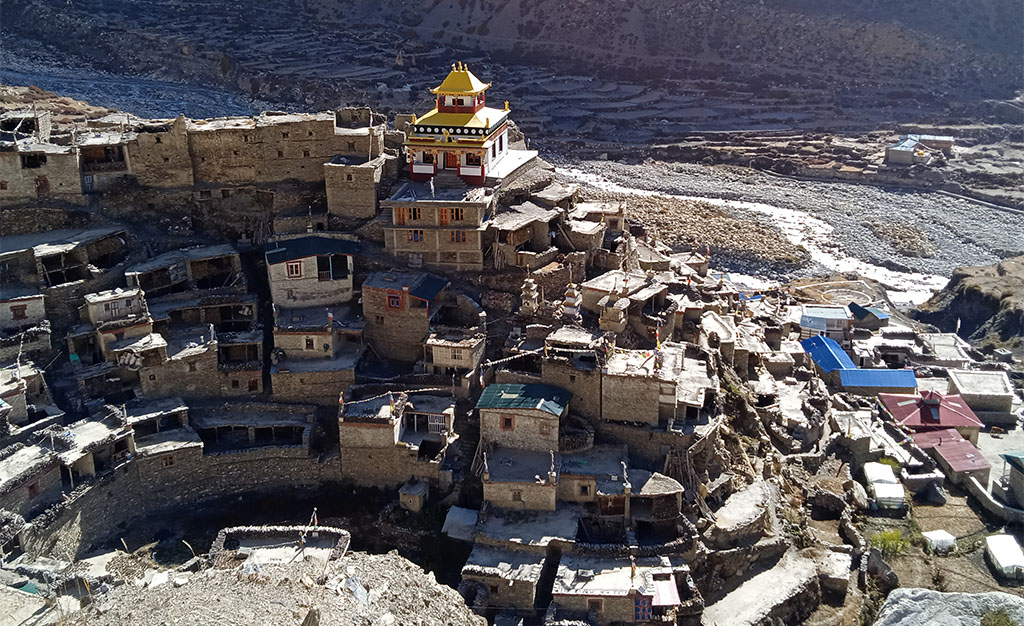
The Nar Phu Valley is one of the most atmospheric corners of the Annapurna region. Stone villages cling to cliffs, Tibetan Buddhist monasteries sit above deep gorges, and the trail ends with a crossing of Kang La Pass before dropping into Manang. Because the valley is a restricted area and sees far fewer trekkers than the main Annapurna Circuit, many people ask the same question: how hard is it really?
The honest answer: it is moderate to challenging, and the Kang La crossing makes it one of the tougher short treks in the Annapurna region. It needs no technical climbing, but it combines high altitude, a long pass day, remote terrain, and basic facilities. This guide breaks down every part of the difficulty so you can decide whether you are ready. You can see the full itinerary and booking details on the 12-Day Nar Phu Valley Trek & Kang La Pass page by Nepal Voyage Treks.
Nar Phu Valley Trek Difficulty at a Glance
| Factor | Rating | Notes |
|---|---|---|
| Overall difficulty | Moderate to challenging | The Kang La crossing is the main reason |
| Technical difficulty | Low | No ropes or climbing skills, but some rocky and exposed sections |
| Altitude difficulty | High | Nights at about 4,080 m and 4,110 m, pass at about 5,320 m |
| Daily walking | 4 to 10 hours | The pass day is the longest |
| Remoteness | High | Limited facilities and slower evacuation |
| Comfort level | Basic | Simple teahouses, shared bathrooms, cold nights |
| Best for | Fit, experienced trekkers | Fit beginners can attempt it with strong preparation |
The trip page labels the grade as “Easy” in its fact box, but its own FAQ and itinerary describe the trek as moderate to challenging. The more cautious description is the accurate one.
Quick Facts
| Detail | Information |
|---|---|
| Duration | 12 days (Kathmandu to Kathmandu) |
| Highest Point | Kang La Pass, about 5,320 m |
| Highest Overnight Stops | Phu (about 4,080 m) and Nar (about 4,110 m) |
| Start / End | Koto / Ngawal, then Manang |
| Region | Annapurna region (Manang district) |
| Accommodation | Teahouses and lodges |
| Group Size | 1 to 30 trekkers |
| Best Season | March to May and September to November |
| Permits | Nar Phu Restricted Area Permit and Annapurna Conservation Area Permit |
| Price | From about €1,500 per person |
What Makes the Nar Phu Trek Hard?
1. Kang La Pass (About 5,320 m)
This is the single biggest challenge. Pass day starts before sunrise and takes about 8 to 10 hours, with roughly 1,150 to 1,250 m of ascent and more than 1,600 m of steep descent toward Ngawal. The trail is rocky and exposed, and snow, ice, and strong wind are possible. The descent is hard on knees after a very long climb.
2. Altitude
Most trekking happens above 3,500 m. You sleep at about 4,080 m in Phu and about 4,110 m in Nar before reaching 5,320 m. Even fit trekkers can feel headaches, poor sleep, or loss of appetite at these heights.
3. Remote Terrain
The route follows a deep gorge, then enters dry, Tibetan-style landscape. Trails are rugged, with rocky surfaces, steep sections, narrow cliff-side paths, loose stones, and suspension bridges. Phu and Nar have few facilities and slower evacuation options than busier routes.
4. Long Walking Days
Several days involve 6 to 8 hours of walking. The Phu day is about 16 to 18 km, and the Nar Phedi day can be 15 to 18 km. Pass day is longer still.
5. A Fast Ascent
The 12-day itinerary climbs from Koto (about 2,600 m) to Meta (about 3,560 m) in one day, a gain of roughly 900 m. There is one rest day at Phu. That is tight for a trek that crosses 5,320 m, so strong acclimatization discipline matters.
6. Basic Facilities and Cold
Lodges are simple, rooms are unheated, hot showers are rare, and Wi-Fi and charging are limited. Nights at Phu, Nar, and the pass approach can be well below freezing.
7. Long Drives
The drive from Kathmandu to Koto takes about 9 to 10 hours, and the return from Manang to Kathmandu can take 12 to 16 hours or be split over two days. The roads are rough in places.
Day-by-Day Difficulty Rating
| Day | Route | Walking Time | Difficulty |
|---|---|---|---|
| 1 | Arrive in Kathmandu | None | Easy |
| 2 | Kathmandu sightseeing | None (optional) | Easy |
| 3 | Drive Kathmandu to Koto (about 2,600 m) | 9 to 10 hours by road | Easy, but tiring |
| 4 | Koto to Meta (about 3,560 m) | 6 to 7 hours | Moderate to hard (+900 m) |
| 5 | Meta to Phu (about 4,080 m) | 7 to 8 hours | Hard |
| 6 | Acclimatization day in Phu | 4 to 5 hours (optional) | Easy to moderate |
| 7 | Phu to Nar Phedi (about 3,490 m) | 5 to 7 hours | Moderate to hard |
| 8 | Nar Phedi to Nar (about 4,110 m) | 4 to 5 hours | Moderate (+600 m) |
| 9 | Nar to Kang La (about 5,320 m) to Ngawal | 8 to 10 hours | Very hard |
| 10 | Ngawal to Manang (about 3,540 m) | 3 to 4 hours | Easy |
| 11 | Manang to Kathmandu by road | 12 to 16 hours (or split) | Easy, but very tiring |
| 12 | Departure | None | Easy |
Walking times, distances, and altitudes are approximate and can change with weather, snow, and trail conditions.
How It Compares With Other Treks
| Trek | Max Altitude | Typical Difficulty | Notes |
|---|---|---|---|
| Nar Phu Valley with Kang La | About 5,320 m | Moderate to challenging | Remote, restricted, high pass |
| Mardi Himal Trek | About 4,500 m | Moderate | Shorter, no high pass |
| Annapurna Base Camp Trek | About 4,130 m | Moderate | Steady climb, more facilities |
| Annapurna Circuit (15 days) | About 5,416 m | Challenging | Thorong La crossing, better infrastructure |
| Manaslu Circuit Trek | About 5,100 m | Challenging | Longer, restricted area |
Nar Phu is harder than most Annapurna short treks because of remoteness and the pass, but easier than long expedition-style routes. It sits in the middle: serious, but achievable for well-prepared trekkers.
Who Is the Nar Phu Trek Suitable For?
It suits you if:
- You have done at least one multi-day trek, ideally above 3,500 m
- You can walk 6 to 8 hours on consecutive days
- You are comfortable with basic lodges and cold nights
- You can train for 8 to 12 weeks
- You have a flexible schedule with a spare day or two
It may not suit you if:
- You have never done a multi-day hike
- You have untreated heart, lung, or blood pressure conditions
- You dislike long, rough road journeys
- You expect comfort, fast evacuation, or reliable connectivity
Fit beginners can attempt it, but it is not an ideal first high-altitude trek. Nepal Voyage Treks says the same, recommending it for fit and experienced trekkers.
Altitude and Acclimatization
Altitude sickness is the biggest health risk on this trek. It can affect anyone, regardless of fitness.
Key rules:
- Walk slowly and steadily
- Drink 3 to 4 liters of fluids daily
- Eat regularly, even when appetite drops
- Avoid alcohol and sleeping pills
- Tell your guide about headache, nausea, dizziness, or unusual fatigue early
- Descend if symptoms worsen, and never go higher while unwell
- Discuss altitude medication such as acetazolamide with your doctor before the trip
Tip: If you have the time, ask for a longer itinerary with an extra rest day. The standard 12-day schedule has only one acclimatization day, so an extra day at Meta or Nar can make the pass crossing safer and more comfortable. Read the company’s guide to high-altitude travel and altitude illness before you go.
Fitness and Training Plan
Aim to start 8 to 12 weeks before departure.
| Phase | Focus | Weekly Sessions |
|---|---|---|
| Weeks 1 to 4 | Base fitness | 3 cardio sessions (30 to 45 min), 2 short strength sessions, 1 easy hike |
| Weeks 5 to 8 | Strength and endurance | 3 to 4 cardio sessions (45 to 60 min), 2 strength sessions, 1 hike of 3 to 5 hours |
| Weeks 9 to 11 | Trek-specific | Long hikes of 5 to 6 hours with a 5 to 8 kg daypack, plus back-to-back days |
| Week 12 | Taper | Easy walks, gear checks, rest |
Key training elements:
- Cardio: Hill walking, running, cycling, or stair climbing
- Legs and core: Squats, lunges, step-ups, calf raises, and planks
- Downhill practice: Controlled descents with poles to protect your knees
- Boot break-in: Use the same boots and pack you will take on the trek
Get a medical check-up first, especially if you have heart, lung, or blood pressure conditions.
Best Season and Weather
Spring (March to May): Stable weather, better visibility, and warmer temperatures. Snow may remain on the pass early in the season.
Autumn (September to November): The most popular season, with clear skies and excellent mountain views. Nights are cold at Phu and Nar.
Winter (December to February): Very cold, with heavy snow that can make Kang La difficult or unsafe, and some local residents move to lower villages.
Monsoon (June to August): The valley lies in a rain-shadow area and can be drier than other parts of Nepal, but the road, lower sections, and trail conditions still need careful checking.
For a first attempt, mid-April to May or October to early November gives the safest conditions. Temperatures at the pass fall well below freezing, and strong wind can make it feel colder.
Permits and Costs
You need two permits: a Nar Phu Valley Restricted Area Permit and an Annapurna Conservation Area Permit (ACAP). A licensed guide is required, and permits must be arranged through a registered trekking agency. Nepal Voyage Treks includes both permits in the package. Restricted-area permit fees are commonly quoted per person for the first 7 days with a higher rate in autumn, and ACAP is commonly quoted at about NPR 3,000, but rules and fees change, so confirm current details with your operator.
The package is listed from about €1,500 per person. It typically includes a licensed guide, porter service, permits, teahouse accommodation, meals, ground transport, and basic first-aid support. International flights, visa, travel insurance, Kathmandu hotels and meals (unless listed), personal expenses, tips, and emergency costs are extra. Check the trip page for the latest inclusions and exclusions.
Accommodation, Food, and Connectivity
- Accommodation: Simple teahouses and lodges, usually twin-sharing, with shared bathrooms. Facilities are more basic than on the main Annapurna Circuit.
- Food: Dal bhat, noodles, soups, momos, pasta, eggs, potatoes, Tibetan bread, and tea. Vegetarian meals are easy to find.
- Water: Boiled, filtered, or treated water only.
- Connectivity: Wi-Fi and mobile signal are limited and unreliable in the valley. Carry a power bank and download offline maps.
Packing Essentials
- Broken-in, waterproof trekking boots and warm socks
- Moisture-wicking base layers, fleece, down jacket, and waterproof shell
- Warm hat, gloves, buff, and UV sunglasses
- Sleeping bag rated for cold conditions
- Trekking poles, headlamp, and spare batteries
- Water bottles and purification tablets
- Personal first-aid kit, blister care, and medication
- Power bank, charging cables, and universal adapter
- Passport, permits, insurance papers, and Nepali rupees
For a complete checklist, see the trekking equipment list for Nepal. For insurance and rescue advice, read the guide to travel insurance, emergency rescue, and helicopter evacuation in Nepal.
Tips to Make the Trek Easier
- Train for 8 to 12 weeks, with long hikes and back-to-back days
- Add an extra acclimatization day if your schedule allows
- Start pass day early, usually before sunrise, to avoid afternoon wind and weather
- Walk slowly and keep a steady rhythm
- Use trekking poles for the long descent to Ngawal
- Keep warm layers, water, and snacks in your daypack on pass day
- Tell your guide how you feel, and speak up early about symptoms
- Carry enough cash, since there are no ATMs on the trail
- Buy insurance covering trekking to at least 5,500 m and helicopter evacuation
- Keep a spare day in your travel plans for weather or road delays
Explore Related Treks
- Annapurna Circuit Trek with Tilicho Lake (13 days)
- Annapurna Balcony Trek (11 days)
- Khopra Danda Trek (13 days)
- All Annapurna region treks
Top 15 FAQs About the Nar Phu Valley Trek Difficulty
1. How difficult is the Nar Phu Valley Trek?
The trek is moderate to challenging. There is no technical climbing, but you face high altitude, remote terrain, long walking days, basic facilities, and the Kang La crossing at about 5,320 m. Most of the difficulty comes from altitude and the length of pass day rather than steep technical sections. Previous trekking experience and good fitness make a big difference.
2. Is the Nar Phu Valley Trek harder than the Annapurna Circuit?
They are similar in difficulty, but the challenges differ. Nar Phu is more remote, with fewer facilities and a steeper, rockier pass crossing, while the Annapurna Circuit is longer overall and crosses Thorong La at about 5,416 m with more infrastructure and trekkers. Many people find Nar Phu feels more rugged and isolated, even though it is shorter.
3. How hard is the Kang La Pass crossing?
It is the hardest day of the trek. You start well before sunrise and walk about 8 to 10 hours, climbing roughly 1,150 to 1,250 m to the pass and then descending more than 1,600 m toward Ngawal. The trail is rocky and exposed, and snow, ice, and strong wind are possible. Your guide decides whether to cross based on weather, snow, and the group’s condition.
4. What is the highest altitude on the trek?
The highest point is Kang La Pass at about 5,320 m, listed by Nepal Voyage Treks and sometimes quoted slightly differently elsewhere. The highest overnight stops are Nar at about 4,110 m and Phu at about 4,080 m. Most trekking days take place above 3,500 m.
5. Can beginners do the Nar Phu Valley Trek?
Fit beginners can attempt it with good preparation and an experienced guide, but it is not an ideal first high-altitude trek. The pass crossing and remote conditions are demanding. If you have never trekked before, a shorter route such as Mardi Himal or Annapurna Base Camp is a better start, and you can return to Nar Phu with more experience.
6. How fit do I need to be?
You need good cardio fitness, strong legs, and the stamina to walk 6 to 8 hours on consecutive days, with one very long pass day. Plan 8 to 12 weeks of training with cardio, strength work, and long hikes with a loaded daypack. A medical check-up is wise before you commit.
7. How many days does the Nar Phu Valley Trek take?
The listed itinerary is 12 days from arrival in Kathmandu to departure, with about 7 days of trekking, a sightseeing day, and long drives at each end. Longer versions of 14 days or more add acclimatization days or combine Nar Phu with the Annapurna Circuit and Tilicho Lake. Extra days make the pass crossing safer.
8. How serious is the risk of altitude sickness?
It is a real risk, because you sleep above 4,000 m and cross a 5,320 m pass. The itinerary includes only one dedicated rest day at Phu, so careful acclimatization matters. Walk slowly, drink 3 to 4 liters of fluids daily, avoid alcohol, and report symptoms early. If symptoms worsen, descend, because that is the safest treatment.
9. What is the best season for the Nar Phu Valley Trek?
March to May and September to November are the best seasons, with stable weather and good visibility. Autumn is the most popular, and spring is slightly warmer with possible snow on the pass early on. Winter is very cold with heavy snow, and the monsoon can disrupt roads, so both need extra caution.
10. Do I need a guide and permits?
Yes. Nar Phu is a restricted area, so you need a Restricted Area Permit and an Annapurna Conservation Area Permit, and you must trek with a licensed guide arranged through a registered agency. Nepal Voyage Treks includes both permits and a guide in the package. Rules and fees can change, so confirm current details with your operator.
11. What is the trail like?
The trail follows a deep gorge, crosses suspension bridges, and climbs through forest into dry, rocky, high-altitude terrain. Surfaces include rocky paths, uneven steps, narrow cliff-side sections, loose stones, and exposed ridges. It is not technical, but it is rugged and demands careful footing, especially on the pass day.
12. What is the accommodation like?
You stay in simple teahouses and lodges, usually twin-sharing, with shared bathrooms and unheated rooms. Facilities are more basic than on the main Annapurna Circuit, and private rooms are limited in remote villages. Hot showers and charging may cost extra or be unavailable at higher stops. Bring a warm sleeping bag and wet wipes.
13. What food and drinking water are available?
Teahouses serve dal bhat, noodles, soups, momos, pasta, eggs, potatoes, Tibetan bread, porridge, and tea. Vegetarian meals are easy to find, and special diets may be possible with advance notice, though choices are limited. Drink only boiled, filtered, or treated water, and carry purification tablets or a filter.
14. What happens if I cannot cross Kang La Pass?
Safety comes first. If weather, snow, altitude sickness, or trail conditions make the pass unsafe, your guide may delay the crossing, change the plan, or return along a safer route. Because the pass cannot be guaranteed, keep a spare day or two in your travel plans and confirm what the package covers if the crossing is not possible.
15. What travel insurance do I need?
You need a policy that covers trekking to at least 5,500 m, emergency medical treatment, and helicopter evacuation. Because Nar Phu is remote, rescue can be slower and more complicated than on busier routes. Check that trekking and the altitude limit are named in the policy, review exclusions for pre-existing conditions, and keep a copy of your policy number and emergency contact with your guide.
Final Thoughts
The Nar Phu Valley Trek is not an easy walk, but it is far from out of reach. It rewards prepared, patient trekkers with ancient villages, Tibetan Buddhist culture, dramatic gorges, and a memorable crossing of Kang La. If you train well, respect the altitude, and keep your itinerary flexible, it is one of the most rewarding treks in the Annapurna region.
Ready to plan your trek? Visit the 12-Day Nar Phu Valley Trek & Kang La Pass page for the full itinerary, then make an inquiry, book your trek, or contact Nepal Voyage Treks to check dates and customize the schedule. Solo travelers can also look at the group joining options.
Note: Altitudes, walking times, prices, permit rules, and inclusions are approximate and can change. Confirm current details with your trekking operator before booking. This guide is general information and not medical advice, so consult a doctor before trekking at high altitude.





Leave a Comment