


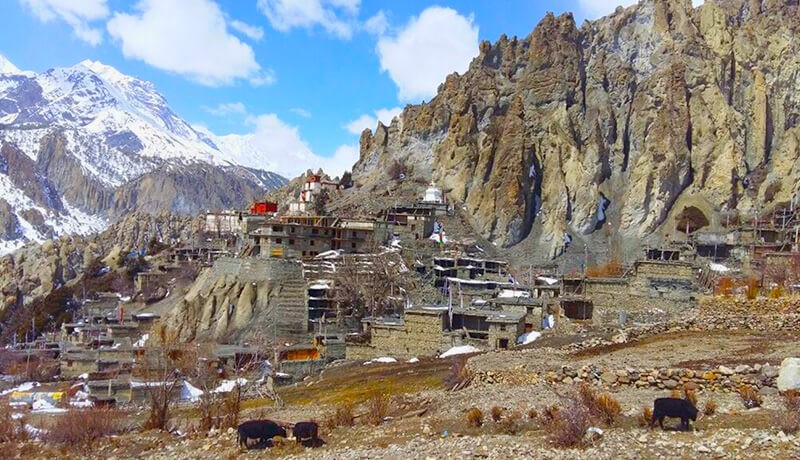
Photos of Phu and Nar make it easy to fall in love with this trek. Stone villages sit beneath enormous cliffs, prayer flags snap in the wind, and Tibetan-style monasteries feel a world away from the busy Annapurna Circuit. If you are planning your first Himalayan trek, you may wonder whether you can start here.
The honest answer: the Nar Phu Valley Trek is not an ideal first trek, but a fit, well-prepared beginner can do it. The trek is remote, high, and ends with a crossing of Kang La Pass (about 5,320 m). Nepal Voyage Treks itself says it can be done by fit beginners with proper preparation but is not an ideal first high-altitude trek. This guide explains what that means in practice and how to decide. You can see the full itinerary on the 12-Day Nar Phu Valley Trek & Kang La Pass page by Nepal Voyage Treks.
The Short Answer
Suitable for fit beginners with preparation. Not recommended for someone who has never done a multi-day hike or been at altitude.
It can work for you if:
- You are physically fit and exercise regularly
- You have done at least a few multi-day hikes, even at lower altitude
- You can train for 8 to 12 weeks
- You are happy with basic teahouses, cold nights, and limited connectivity
- You can add a spare day or two to the schedule
- You will trek with a licensed guide and follow their advice
Consider an easier first trek if:
- You have never done a multi-day hike
- You have never slept above 3,000 m
- You have heart, lung, or blood pressure conditions that have not been checked
- You want comfort, quick evacuation options, or reliable Wi-Fi
- You are short on time and cannot allow buffer days
Nar Phu Valley Trek at a Glance
| Detail | Information |
|---|---|
| Duration | 12 days (Kathmandu to Kathmandu), about 7 days of trekking |
| Overall Difficulty | Moderate to challenging |
| Highest Point | Kang La Pass, about 5,320 m |
| Highest Overnight Stops | Phu (about 4,080 m) and Nar (about 4,110 m) |
| Start / End | Koto / Ngawal, then Manang |
| Technical Skills Needed | None, but rocky and exposed sections |
| Accommodation | Teahouses and lodges |
| Guide Required | Yes (restricted area) |
| Group Size | 1 to 30 trekkers |
| Best Season | March to May and September to November |
| Price | From about €1,500 per person |
The trip page lists the grade as “Easy” in its fact box, while its own FAQ and itinerary describe it as moderate to challenging. For beginners, treat it as challenging.
What Works in a Beginner’s Favor
1. No Technical Climbing
There are no ropes, ice axes, or crampons. The route is a trekking trail, even at the pass, though snow and ice can appear.
2. A Guide Is Mandatory
Because Nar Phu is a restricted area, a licensed guide is required. For beginners that is a big advantage, since the guide sets the pace, makes weather and altitude decisions, and handles permits and logistics.
3. Porters Carry the Load
Porters carry your main luggage, so you only need a light daypack. That makes long days much more manageable.
4. Short Trekking Window
The core trekking section is about 7 days, so it is shorter than the Annapurna Circuit or Manaslu Circuit. Less time on the trail means less accumulated fatigue.
5. Quiet Trails
Fewer trekkers means less pressure to rush, and a calmer, more personal experience.
6. Culture That Keeps You Motivated
Meta, Phu, and Nar offer stone houses, monasteries, mani walls, and chortens. Beginners often find a trek easier when every day brings something new to see.
What Makes It Hard for Beginners
1. Altitude Without Prior Experience
You sleep at about 4,080 m and 4,110 m, then cross 5,320 m. If you have never been that high, you will not know how you respond. Fitness does not protect you from altitude sickness.
2. Kang La Pass Day
Pass day takes about 8 to 10 hours, starts before sunrise, climbs roughly 1,150 to 1,250 m, and descends more than 1,600 m. Snow, ice, and wind are possible. This is the day beginners find hardest.
3. A Fast Ascent
The itinerary climbs about 900 m in a single day from Koto (about 2,600 m) to Meta (about 3,560 m), with one rest day at Phu. That is quick for first-timers, so extra acclimatization time is wise.
4. Remoteness
Evacuation and medical help are slower than on busier routes. Good judgment and conservative decisions matter.
5. Basic Facilities
Expect shared bathrooms, unheated rooms, cold nights, and limited hot water, charging, and connectivity.
6. Long Rough Drives
The drive to Koto takes about 9 to 10 hours, and the return from Manang to Kathmandu can take 12 to 16 hours or be split over two days. The roads can be bumpy and dusty.
Day-by-Day Difficulty for Beginners
| Day | Route | Walking Time | Beginner Difficulty |
|---|---|---|---|
| 1 to 2 | Arrive and sightseeing in Kathmandu | None | Easy |
| 3 | Drive to Koto (about 2,600 m) | 9 to 10 hours by road | Easy, but tiring |
| 4 | Koto to Meta (about 3,560 m) | 6 to 7 hours | Moderate to hard |
| 5 | Meta to Phu (about 4,080 m) | 7 to 8 hours | Hard |
| 6 | Rest and acclimatization in Phu | 4 to 5 hours (optional) | Easy |
| 7 | Phu to Nar Phedi (about 3,490 m) | 5 to 7 hours | Moderate to hard |
| 8 | Nar Phedi to Nar (about 4,110 m) | 4 to 5 hours | Moderate |
| 9 | Kang La Pass (about 5,320 m) to Ngawal | 8 to 10 hours | Very hard |
| 10 | Ngawal to Manang | 3 to 4 hours | Easy |
| 11 | Drive Manang to Kathmandu | 12 to 16 hours (or split) | Easy, but very tiring |
| 12 | Departure | None | Easy |
Walking times and altitudes are approximate and can change with weather, snow, and trail conditions.
Beginner Readiness Checklist
You are likely ready if you can say yes to most of these:
- I have completed at least one multi-day trek, even at lower altitude
- I can walk 6 hours with a loaded daypack and recover well the next day
- I have trained consistently for 8 or more weeks
- I am comfortable with simple lodging and cold nights
- I have 2 or more spare days in my travel plans
- I have travel insurance covering trekking to at least 5,500 m and helicopter evacuation
- My doctor has cleared me for high-altitude trekking
- I am willing to turn back if my guide advises it
If you said no to several, build experience first.
A Smarter Path: Build Up to Nar Phu
If Nar Phu is your dream, a stepping-stone plan makes success far more likely. Here is a sample progression using routes from Nepal Voyage Treks:
| Step | Trek | Why It Helps |
|---|---|---|
| 1 | Helambu Circuit Trek (8 days) or short and easy treks | Test your boots, pack, and stamina at low altitude |
| 2 | Langtang Valley Trek | Multi-day walking with a moderate altitude gain |
| 3 | Mardi Himal Trek (8 days) or Annapurna Base Camp Trek | Your first time at about 4,000 to 4,500 m |
| 4 | Annapurna Balcony Trek (11 days) or Khopra Danda Trek | Longer, quieter routes that build endurance |
| 5 | Nar Phu Valley Trek | A confident, informed attempt |
If you would like to see Annapurna with fewer unknowns, the Annapurna Circuit with Tilicho Lake (13 days) and the 15-day Annapurna Circuit offer more infrastructure. Browse all options in the Annapurna region trekking collection.
Fitness and Training for Beginners
Beginners need more preparation, not less. Aim for 8 to 12 weeks.
| Phase | Focus | Weekly Sessions |
|---|---|---|
| Weeks 1 to 4 | Build a base | 3 cardio sessions (30 to 45 min), 2 short strength sessions, 1 easy hike |
| Weeks 5 to 8 | Endurance and strength | 3 to 4 cardio sessions (45 to 60 min), 2 strength sessions, 1 hike of 3 to 5 hours |
| Weeks 9 to 11 | Trek-specific | Long hikes of 5 to 6 hours with a 5 to 8 kg daypack, plus back-to-back days |
| Week 12 | Taper | Easy walks, gear checks, rest |
Key elements:
- Cardio: Hill walking, running, cycling, or stair climbing
- Legs and core: Squats, lunges, step-ups, calf raises, and planks
- Downhill practice: Controlled descents with trekking poles to protect your knees
- Boot break-in: Use the same boots and pack you will take on the trek
- Mental preparation: Practice being comfortable with cold, tiredness, and basic conditions
Get a medical check-up before you start, especially if you have heart, lung, or blood pressure conditions.
Altitude Tips for First-Time High-Altitude Trekkers
- Walk slowly and steadily, even when you feel strong
- Drink 3 to 4 liters of fluids daily
- Eat regularly, even if your appetite drops
- Avoid alcohol and sleeping pills
- Tell your guide immediately about headache, nausea, dizziness, or unusual fatigue
- Never hide symptoms to stay on schedule
- Descend if symptoms worsen, and never go higher while unwell
- Discuss altitude medication such as acetazolamide with your doctor before the trip
- Ask about a longer itinerary with an extra rest day at Meta or Nar
Read the company’s guide to high-altitude travel and altitude illness and its advice on first aid, medical kits, and high-altitude safety.
Best Season for First-Timers
Spring (March to May): Stable weather, good visibility, and warmer temperatures. Some snow may remain on the pass early in the season.
Autumn (September to November): The most popular season, with clear skies and excellent mountain views. Nights are cold.
Winter (December to February): Very cold, with heavy snow that can make Kang La difficult or unsafe. Not recommended for beginners.
Monsoon (June to August): The valley sits in a rain-shadow area, but roads and lower sections can be disrupted, so it needs careful checking.
For a first attempt, choose mid-April to May or October to early November.
Permits and Costs
You need two permits: a Nar Phu Valley Restricted Area Permit and an Annapurna Conservation Area Permit (ACAP). Permits must be arranged through a registered trekking agency, and a licensed guide is required. Nepal Voyage Treks includes both permits in the package. Fees and rules change, so confirm current details with your operator.
The package is listed from about €1,500 per person and typically includes a licensed guide, porter service, permits, teahouse accommodation, meals, ground transport, and basic first-aid support. International flights, visa, travel insurance, personal expenses, tips, and emergency costs are extra. Check the trip page for the latest inclusions.
Accommodation and Food
- Accommodation: Simple teahouses and lodges, usually twin-sharing, with shared bathrooms and unheated rooms
- Food: Dal bhat, noodles, soups, momos, pasta, eggs, potatoes, Tibetan bread, and tea
- Water: Boiled, filtered, or treated water only
- Connectivity: Wi-Fi and mobile signal are limited and unreliable, so carry a power bank and download offline maps
Packing Essentials for First-Timers
- Broken-in, waterproof trekking boots and warm socks
- Layered clothing: base layer, fleece, down jacket, and waterproof shell
- Warm hat, gloves, buff, and UV sunglasses
- Sleeping bag rated for cold conditions
- Trekking poles, headlamp, and spare batteries
- Water bottles and purification tablets
- Personal first-aid kit, blister care, and medication
- Power bank, charging cables, and universal adapter
- Passport, permits, insurance papers, and Nepali rupees in small notes
See the trekking equipment list for Nepal for a full checklist, and read the guide to travel insurance, emergency rescue, and helicopter evacuation in Nepal.
Practical Tips if You Decide to Go
- Train for 8 to 12 weeks, with long hikes and back-to-back days
- Complete a lower-altitude trek first so you know how your body responds
- Ask for an extra acclimatization day, since the standard plan has only one
- Start pass day early, usually before sunrise
- Use trekking poles for the long descent to Ngawal
- Keep warm layers, water, and snacks in your daypack at all times
- Walk slowly, and never compete with other trekkers
- Tell your guide how you feel, and speak up early
- Carry enough cash, since there are no ATMs on the trail
- Keep 2 spare days in your plans for weather, road, or flight delays
Top 15 FAQs: Nar Phu Valley Trek for Beginners
1. Is the Nar Phu Valley Trek suitable for beginners?
It can be, but only for fit beginners who prepare well. The trek is moderate to challenging, with altitude above 4,000 m, a pass crossing at about 5,320 m, remote terrain, and basic facilities. Nepal Voyage Treks says it can be done by fit beginners with proper preparation but is not an ideal first high-altitude trek. If you have never done a multi-day hike, build experience first.
2. Do I need previous trekking experience?
Previous experience is strongly recommended, ideally a multi-day trek at moderate altitude. You do not need technical skills, but experience teaches you how to pace yourself, how your body handles altitude, and how to cope with basic conditions. If you are new to trekking, try a shorter route first.
3. How hard is the Kang La Pass for a beginner?
It is the hardest day of the trek. You start before sunrise and walk about 8 to 10 hours, climbing roughly 1,150 to 1,250 m and then descending more than 1,600 m toward Ngawal. The terrain is rocky, and snow, ice, and wind are possible. Beginners can manage it with good fitness, slow pacing, and a guide who makes sensible weather decisions, but it is physically and mentally demanding.
4. How fit do I need to be?
You should have strong cardio fitness, solid leg strength, and the stamina to walk 6 to 8 hours on consecutive days. Plan 8 to 12 weeks of training with cardio, strength work, and long hikes with a loaded daypack. Practice downhill walking with poles, and see a doctor before you start if you have any health conditions.
5. Will I get altitude sickness?
It is a real risk, because you sleep at about 4,080 m and 4,110 m before crossing 5,320 m. Altitude sickness can affect anyone regardless of fitness. Reduce the risk by walking slowly, drinking 3 to 4 liters of fluids daily, eating regularly, avoiding alcohol, and telling your guide about symptoms early. Descent is the safest treatment if symptoms worsen.
6. How many days do I need?
The listed itinerary is 12 days from arrival to departure, with about 7 days of trekking, a sightseeing day, and long drives at each end. Because the schedule has only one acclimatization day, beginners should consider a longer version with an extra rest day, and keep a spare day or two for weather and road delays.
7. What is the highest altitude on the trek?
The highest point is Kang La Pass at about 5,320 m. The highest overnight stops are Nar at about 4,110 m and Phu at about 4,080 m, and most trekking days take place above 3,500 m. Published figures vary slightly, so treat the numbers as approximate.
8. What is the best time of year for beginners?
March to May and September to November offer the most stable weather and best visibility. Autumn is the most popular, and spring is slightly warmer with possible snow on the pass early on. Winter is very cold with heavy snow, and the monsoon can disrupt roads, so both are best avoided on a first attempt.
9. Do I need a guide and permits?
Yes. Nar Phu is a restricted area, so you need a Restricted Area Permit and an Annapurna Conservation Area Permit, and you must trek with a licensed guide arranged through a registered agency. Nepal Voyage Treks includes both permits and a guide in the package. Rules and fees can change, so confirm current details with your operator.
10. What is the accommodation like?
You stay in simple teahouses and lodges, usually twin-sharing, with shared bathrooms and unheated rooms. Facilities are more basic than on the main Annapurna Circuit, and private rooms are limited in remote villages. Hot showers and charging may cost extra or be unavailable at higher stops. Bring a warm sleeping bag, wet wipes, and a power bank.
11. What food can I expect?
Teahouses serve dal bhat, noodles, soups, momos, pasta, eggs, potatoes, Tibetan bread, porridge, and tea. Vegetarian meals are easy to find, and special diets may be possible with advance notice, though choices are limited in remote villages. Drink only boiled, filtered, or treated water, and bring snacks for pass day.
12. Is the Nar Phu Valley Trek safe for first-timers?
With proper preparation, an experienced guide, careful acclimatization, and good weather, the trek can be done safely, but it is remote and high, so risks cannot be fully removed. The main concerns are altitude sickness, extreme weather, snow, falls, dehydration, and fatigue. Follow your guide’s decisions, and be willing to turn back if conditions or your health demand it.
13. What if I cannot cross Kang La Pass?
Safety comes first. If weather, snow, altitude sickness, or trail conditions make the pass unsafe, your guide may delay the crossing, change the plan, or return along a safer route. The pass cannot be guaranteed, so keep spare days in your plans and confirm with your operator what happens if the crossing is not possible.
14. What travel insurance do I need?
You need a policy that covers trekking to at least 5,500 m, emergency medical treatment, and helicopter evacuation. Because Nar Phu is remote, rescue can be slower than on busier routes. Check that trekking and the altitude limit are named in the policy, review exclusions for pre-existing conditions, and keep a copy of your policy number and emergency contact with your guide.
15. What easier treks should I try first?
Start with a short, low-altitude route such as the Helambu Circuit Trek or another short and easy trek. Then try the Langtang Valley Trek, followed by Mardi Himal or Annapurna Base Camp to experience about 4,000 to 4,500 m. Finish your build-up with a longer, quieter route such as the Annapurna Balcony or Khopra Danda trek, then return to Nar Phu with confidence.
Final Thoughts
The Nar Phu Valley Trek is a beautiful, culturally rich journey, but it is better treated as a goal than a starting point. If you are fit, have some hiking experience, and are willing to train and acclimatize carefully, a beginner can complete it. If you have never done a multi-day trek, a shorter route first will make the experience far safer and more enjoyable.
When you feel ready, visit the 12-Day Nar Phu Valley Trek & Kang La Pass page for the full itinerary, then make an inquiry, book your trek, join a group departure, or contact Nepal Voyage Treks to discuss a longer, beginner-friendly schedule.
Note: Altitudes, walking times, prices, permit rules, and inclusions are approximate and can change. Confirm current details with your trekking operator before booking. This guide is general information and not medical advice, so consult a doctor before trekking at high altitude.





Leave a Comment