


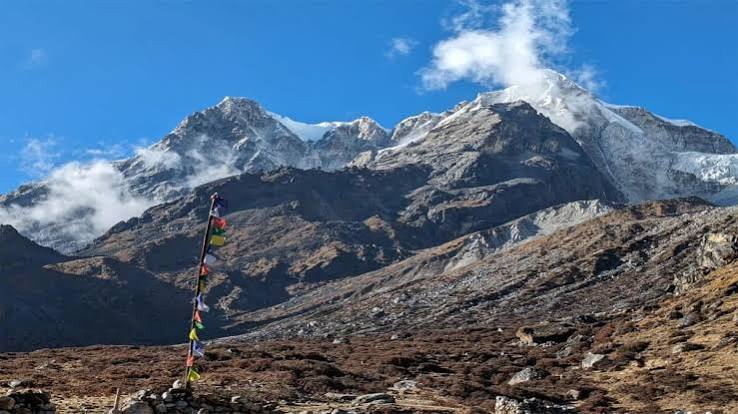
Most trekkers in Nepal follow well-trodden trails with teahouses on every ridge. The Lumba Sumba Pass Trek is the opposite. It is a long, wild crossing through far-eastern Nepal that links two of the world’s great mountain regions: Kanchenjunga (8,586 m), the third-highest peak on Earth, and Makalu (8,485 m), the fifth-highest.
Over about three weeks, you walk from warm river valleys into high yak pastures, over a snowy pass above 5,000 m, and down into the green Arun Valley. You meet Limbu, Rai, Sherpa, and Tibetan-influenced communities, and you will likely see more yaks than trekkers. This guide covers the route, difficulty, permits, season, and what to expect. You can see the full details on the Lumba Sumba Pass Trek page by Nepal Voyage Treks.
What Is the Lumba Sumba Pass Trek?
The Lumba Sumba Pass Trek is a point-to-point crossing from the Kanchenjunga Conservation Area into Makalu Barun National Park. You start in Taplejung, follow the Tamor River upstream, climb through rhododendron and bamboo forest to high pastures, visit the Tibetan-style village of Olangchung Gola, cross the pass, and descend through the remote Sherpa village of Thudam to finish at Num in the Arun Valley.
The trail follows old trade paths once used by local communities and Tibetan traders. Because it links two regions in one journey, it feels more like an expedition than a standard trek, yet no technical climbing is required.
A note on the pass height: Nepal Voyage Treks gives the pass as roughly 5,160 to 5,180 m (published figures vary slightly), so treat it as “about 5,177 m” and expect to be above 5,000 m on crossing day.
Lumba Sumba Pass Trek at a Glance
| Detail | Information |
|---|---|
| Duration | 21 days (about 14 days of trekking) |
| Difficulty | Moderate to strenuous |
| Highest Point | Lumba Sumba Pass, about 5,177 m |
| Start / End | Taplejung / Num, then Tumlingtar and Kathmandu |
| Daily Walking | 5 to 10 hours |
| Accommodation | Hotels, village lodges, homestays, and tented camps |
| Best Season | March to May and October to November |
| Permits | Restricted area permit plus conservation area and national park permits |
| Trek Style | Remote, guided, with camping on high sections |
Why Trek the Lumba Sumba Pass?
- Real wilderness: Quiet trails, high pastures, and very few other trekkers.
- Two regions in one trek: Kanchenjunga and Makalu connected in a single journey.
- A true high-pass crossing: Cross above 5,000 m without technical climbing.
- Living culture: Visit Limbu, Rai, Sherpa, and Tibetan-influenced villages.
- Rich biodiversity: Pass through protected areas with rhododendron forests, orchids, and rare wildlife.
- Big mountain views: Kanchenjunga, Makalu, Jannu, Chamlang, Baruntse, and endless snowy ridges.
Lumba Sumba Pass Trek Itinerary (21 Days)
Day 1: Arrive in Kathmandu (1,350 m)
Meet your team, check into your hotel, and join a trek briefing and welcome dinner.
Day 2: Preparation day in Kathmandu
Check your gear, rent a sleeping bag or down jacket if needed, confirm permits and insurance, and visit a nearby heritage site such as Boudhanath or Swayambhunath.
Day 3: Fly to Bhadrapur, drive to Taplejung (1,820 m)
Take a 45-minute flight to Bhadrapur, then drive about 240 km north through tea gardens and foothills to Taplejung, the gateway to the Kanchenjunga region. Allow 8 to 10 hours for the drive.
Day 4: Trek to Mitlung (921 m), 5 to 6 hours
Descend through terraced farmland and Limbu villages beside the Tamor River.
Day 5: Trek to Chiruwa (1,270 m), 6 to 7 hours
Follow the river through bamboo and rhododendron forest, crossing suspension bridges into the Kanchenjunga Conservation Area.
Day 6: Trek to Lelep (1,687 m), 6 to 7 hours
Climb gradually through dense forest to Lelep, home to Limbu and Sherpa families. This is the last easy-living stop before the high country.
Day 7: Trek to Ela Danda (3,200 m), 6 to 7 hours
A big climbing day of about 1,500 m through rhododendron, bamboo, and juniper forest to a remote campsite in wildlife country.
Day 8: Trek to Selep Kharka (3,525 m), 5 to 6 hours
Leave the forest for open alpine meadows, cliffs, and high pastures where herders graze their yaks.
Day 9: Trek to Olangchung Gola (3,208 m), 6 hours
Descend to this ancient trade village, known for its stone houses, prayer flags, and Buddhist monastery.
Day 10: Rest and acclimatization day at Olangchung Gola
Visit the monastery, meet local families, and take an optional short hike above the village before returning to sleep at the same altitude.
Day 11: Trek to Lumba Sumba Pass Base Camp (4,750 m), 6 to 7 hours
Leave the last village and climb through yak pastures and rocky valleys into pure high-altitude terrain. Camp at the foot of the pass.
Day 12: Cross Lumba Sumba Pass (about 5,177 m) and descend to Yak Kharka (about 4,200 m), 8 to 10 hours
Start before sunrise for the most stable weather. From the pass, you see Kanchenjunga, Makalu, Jannu, Chamlang, and Baruntse. Then descend carefully over rock and snow to a high pasture camp.
Day 13: Trek to Thudam (3,500 m), 6 to 7 hours
Descend through quiet valleys to Thudam, a remote Sherpa and Tibetan village far from any road.
Day 14: Trek to Chyamtang (2,229 m), 7 to 8 hours
A long descent of about 1,300 m through bamboo, rhododendron, oak, and fern forest. Overgrown sections need a guide who knows the route.
Day 15: Trek to Hatiya (1,595 m), 6 to 7 hours
Enter the lower Arun Valley, with farmland, cardamom fields, and warmer air.
Day 16: Trek to Gola (1,128 m), 5 to 6 hours
Walk through terraced fields and forest, passing Sherpa, Bhote, and Rai communities.
Day 17: Trek to Num (1,560 m), 6 to 7 hours
Follow the Arun River valley over suspension bridges to Num, a gateway for Makalu-region treks. Celebrate with your crew.
Day 18: Num to Tumlingtar (400 m)
Walk downhill for 2 to 3 hours, then take a jeep (4 to 5 hours) down the Arun Valley to Tumlingtar.
Day 19: Fly to Kathmandu
Take the scenic 45-minute flight back to Kathmandu, with possible views of Makalu and the Everest region.
Day 20: Kathmandu sightseeing and farewell dinner
Explore UNESCO World Heritage Sites such as Kathmandu Durbar Square, Swayambhunath, Pashupatinath, and Boudhanath.
Day 21: Departure
Transfer to the airport for your flight home, or extend your stay in Nepal.
Altitudes, walking times, and logistics are approximate and may change with weather, trail conditions, and flight schedules.
How Difficult Is the Lumba Sumba Pass Trek?
The trek is moderate to strenuous. You do not need mountaineering skills, but you need strong endurance, good leg strength, and the mindset for a remote, multi-week journey.
What makes it demanding:
- Long days: 5 to 10 hours of walking, with the pass day the longest
- Big altitude gains: About +1,500 m on Day 7 (Lelep to Ela Danda) and about +1,540 m on Day 11 (Olangchung Gola to the pass base camp)
- Remote terrain: Steep forest, loose moraine, snowfields, and overgrown bamboo trails
- Camping: Basic facilities in the high sections, with cold nights well below freezing
- Limited support: Rescue depends on weather and distance
Who it suits: Fit, experienced trekkers who have already completed multi-day treks at altitude and want a quieter alternative to the popular routes.
How to prepare:
- Train for 12 to 16 weeks with cardio, leg strength, and core work
- Do long hikes with a loaded daypack of about 5 to 8 kg
- Practice downhill walking with poles to protect your knees
- Break in your boots well before departure
- Get a medical check-up before you go
Altitude and Acclimatization
The trek climbs from about 900 m to roughly 5,177 m, so altitude management is critical. The itinerary includes a rest day at Olangchung Gola (3,208 m), but two days have large altitude gains, so go slowly on both.
Key rules:
- Walk at a pace where you can still talk comfortably
- Drink 3 to 4 liters of water daily
- Eat regularly, even when your appetite drops
- Avoid alcohol and sleeping pills
- Tell your guide immediately about headache, nausea, dizziness, or unusual fatigue
- Descend if symptoms worsen, and never go higher while unwell
Your guide checks health daily, and the decision to cross the pass depends on weather and group condition. Read more in Nepal Voyage Treks’ guide to high-altitude travel and altitude illness.
Best Season for the Lumba Sumba Pass Trek
Autumn (October to November): The best window. Clear skies, crisp air, and stable weather give the sharpest mountain views and the safest pass conditions. November nights are colder at high camps.
Spring (March to May): Rhododendrons bloom in the forests, wildlife is active, and the lower valleys are pleasant. Early spring may still have snow near the pass, and late spring brings afternoon cloud.
Winter (December to February): Very cold, with snow likely on the pass. Only for highly experienced trekkers with flexible plans.
Monsoon (June to September): Heavy rain, leeches, slippery trails, landslides, and poor views make the trek uncomfortable and risky.
Our recommendation: Mid-October to mid-November for clear views, or mid-April to mid-May for flowers and warmer days.
Weather and Temperatures
Because the route spans about 400 m to 5,177 m, you pass through several climates in one trek. As a rule of thumb, temperatures drop roughly 6°C for every 1,000 m of climb.
| Zone | Altitude | Typical Daytime | Typical Night |
|---|---|---|---|
| Lowland and foothills | 400 to 1,800 m | 18 to 28°C | 10 to 18°C |
| Mid-hills forest | 1,200 to 2,300 m | 14 to 22°C | 6 to 12°C |
| Upper forest and pastures | 3,200 to 3,525 m | 8 to 15°C | -3 to 4°C |
| High camps | 4,200 to 4,750 m | 0 to 8°C | -12 to -5°C |
| Lumba Sumba Pass | about 5,177 m | -8 to 2°C | Crossed by day |
Figures are indicative for spring and autumn. Wind chill on the pass can feel much colder.
Top Attractions Along the Route
- Lumba Sumba Pass: The highlight, with panoramas of Kanchenjunga, Makalu, Jannu, Chamlang, Baruntse, and endless snowy ridges toward Tibet.
- Olangchung Gola: A Tibetan-influenced trade village with stone houses, prayer flags, a monastery, and views of Jannu on clear days.
- Thudam: A remote Sherpa and Tibetan village where life still follows the rhythm of herding and farming.
- Tamor River valley: Terraced fields, suspension bridges, and traditional Limbu villages.
- Kanchenjunga Conservation Area: Rhododendron, bamboo, and juniper forest with rich birdlife.
- Makalu Barun National Park: A protected area known for biodiversity, connected to the route after the pass.
- Arun Valley: Cardamom fields, subtropical farmland, and a gentle finish after the high country.
- Wildlife: Possible sightings or signs of red panda, Himalayan tahr, blue sheep, musk deer, Himalayan monal, and blood pheasant.
Permits and Restricted Area Rules
The route crosses a restricted border zone and two protected areas, so you cannot trek it independently. A registered agency must arrange your permits. Indicative requirements include:
- Kanchenjunga Restricted Area Permit: Commonly quoted at about USD 20 per person per week
- Kanchenjunga Conservation Area Permit: Commonly quoted at about NPR 2,000 to 3,000
- Makalu Barun National Park Permit: Commonly quoted at around NPR 3,000, plus taxes
- Other local entry fees or TIMS: Depends on route and current rules, so confirm with your operator
Restricted-area treks require a licensed guide and, traditionally, a minimum of two trekkers, though some sources report rule changes in 2026 for solo trekkers. Fees and rules change, so confirm current details with your operator. Nepal Voyage Treks arranges permits and paperwork once you send your passport scan, photos, visa details, and insurance information.
Food, Water, and Accommodation
Food: Meals are prepared by village lodges in the lower sections and by a camp kitchen crew at remote camps. Expect porridge, eggs, and chapati for breakfast, and dal bhat, noodles, soups, pasta, and fried rice for lunch and dinner. Vegetarian, vegan, and gluten-free meals can be arranged with advance notice, though choices are simpler at higher camps.
Water: Drink only boiled or treated water, and carry purification tablets or a filter for refills. Aim for 3 to 4 liters a day at altitude.
Accommodation: You stay in a Kathmandu hotel, simple village lodges, homestays, and tented mountain camps near the pass. Rooms are basic and unheated, and bathrooms are shared. Bring a sleeping bag rated to about -15°C to -20°C.
Your Guide and Crew
Because this is a restricted-area trek, you walk with a licensed, English-speaking guide, with porters carrying your main bags at a typical ratio of one porter per two trekkers. Camping sections are supported by cooks and camp crew, so you only need to walk, rest, and enjoy the scenery. Your guide manages navigation, altitude safety, permits, and local culture, and makes the final call on crossing the pass based on weather and group condition.
Packing Essentials
- Sleeping bag rated to about -15°C to -20°C, plus a liner
- Down jacket, fleece, thermal layers, and a waterproof shell
- Broken-in, waterproof boots with ankle support, plus gaiters
- Warm hat, sun hat, buff, and gloves (including heavy gloves for pass day)
- UV-protective sunglasses, sunscreen, and lip balm
- Trekking poles, headlamp, and spare batteries
- Water purification tablets or a filter
- Personal first-aid kit, blister care, and medication
- Power bank and universal adapter
- Travel insurance covering helicopter evacuation up to 6,000 m
For a full checklist, see Nepal Voyage Treks’ trekking equipment list for Nepal. For insurance advice, read the guide to travel insurance, emergency rescue, and helicopter evacuation in Nepal.
Culture and Local Etiquette
You pass through communities that rarely see visitors, so respectful behavior matters.
- Greet people with Namaste and a smile
- Dress modestly in villages and monasteries
- Remove shoes before entering homes and monasteries
- Walk clockwise around chortens, mani walls, and prayer wheels
- Ask permission before photographing people or ceremonies
- Avoid giving sweets or money directly to children, and ask your guide about supporting a local school instead
- Buy local products to support village families
Explore Related Treks in the Region
If you want to compare routes, consider these related options from Nepal Voyage Treks:
- Kanchenjunga East West Base Camp Trek: A classic circuit around Kanchenjunga
- Panch Pokhari Trek: A shorter 10-day option
- More Lumba Sumba and Kanchenjunga itineraries
- Kanchenjunga and Makalu region collection
Top 10 FAQs About the Lumba Sumba Pass Trek
1. How difficult is the Lumba Sumba Pass Trek?
The trek is moderate to strenuous. You walk 5 to 10 hours a day for about two weeks, with steep forest climbs, remote high-altitude camps, and a pass crossing above 5,000 m. No technical climbing is needed, but strong endurance and previous multi-day trekking experience at altitude are strongly recommended. The pass day, which can take 8 to 10 hours, is the toughest part.
2. How high is Lumba Sumba Pass?
Nepal Voyage Treks lists the pass at roughly 5,177 m, though some published figures show about 5,159 m. Either way, the crossing takes you above 5,000 m. The base camp before the pass is at about 4,750 m, and you descend afterward to a camp at around 4,200 m.
3. How many days does the Lumba Sumba Pass Trek take?
The standard itinerary is 21 days from arrival to departure, including about 14 days of trekking, travel days by air and road, a preparation day, a rest day at Olangchung Gola, and a day of sightseeing in Kathmandu. Flight delays or bad weather can add days, so keep a buffer in your plans.
4. What is the best time to do the Lumba Sumba Pass Trek?
October to November is the best window, with clear skies, stable weather, and excellent views. March to May is also good, with blooming rhododendrons and warmer days, though some snow may remain near the pass early in spring. Winter is very cold, and the monsoon brings rain, leeches, and landslides, so both are generally not recommended.
5. Do I need a permit for the Lumba Sumba Pass Trek?
Yes. You need a Kanchenjunga Restricted Area Permit, a Kanchenjunga Conservation Area Permit, and a Makalu Barun National Park permit. Restricted-area permits can only be arranged through a registered trekking agency. The restricted-area fee is commonly quoted at about USD 20 per person per week, but fees and rules change, so confirm current details with your operator.
6. Can I do the Lumba Sumba Pass Trek independently?
No. The route passes through a restricted border area, so you must trek with a registered agency and a licensed guide. Beyond the legal rules, the trail past Thudam is remote and often overgrown, with limited signs, so a guide who knows the route is essential for safety and navigation.
7. Is altitude sickness a risk on this trek?
Yes. The trek reaches about 5,177 m, and you camp as high as 4,750 m. Two days involve large altitude gains of roughly 1,500 m each, which is more than the usual guideline for sleeping altitude, so you need extra care. Use the rest day at Olangchung Gola, walk slowly, drink 3 to 4 liters of water daily, and tell your guide about any symptoms immediately. Descent is the most effective treatment.
8. What is the accommodation like?
You stay in a 3-star hotel in Kathmandu, simple lodges and homestays in villages, and tented camps in remote high-altitude sections where no lodges exist. Rooms and tents are basic, unheated, and shared, with limited bathrooms and hot water. A warm sleeping bag rated to about -15°C to -20°C is essential, and the camp crew handles tents, cooking, and setup.
9. What kind of food can I expect?
Meals are freshly prepared and include porridge, eggs, chapati, dal bhat, noodles, soups, pasta, rice, and potatoes. Lower villages offer more variety, while high camps have simpler menus cooked by the crew. Vegetarian and special diets can be arranged if you tell the operator in advance. Drink only boiled or treated water, and bring favorite snacks for pass day.
10. What kind of travel insurance do I need?
You need a policy that covers trekking to at least 6,000 m, emergency medical treatment, and helicopter evacuation. Because the route is remote, rescue depends on weather and distance and can be expensive without coverage. Check that “trekking” and the maximum altitude are named in the policy, review exclusions for pre-existing conditions, and keep a copy of your policy number and emergency contact with your guide.
Final Thoughts
The Lumba Sumba Pass Trek is not for everyone, but for experienced trekkers it is one of Nepal’s most rewarding journeys. You cross two great mountain regions, camp beneath huge peaks, visit living Himalayan villages, and rarely meet another trekker on the trail.
Ready to plan your crossing? Visit the Lumba Sumba Pass Trek page for the full itinerary, then make an inquiry, book your trek, or contact Nepal Voyage Treks to check dates and customize the route.
Note: Fees, altitudes, walking times, permit rules, and inclusions are approximate and can change. Confirm current details with your trekking operator before booking.




Leave a Comment